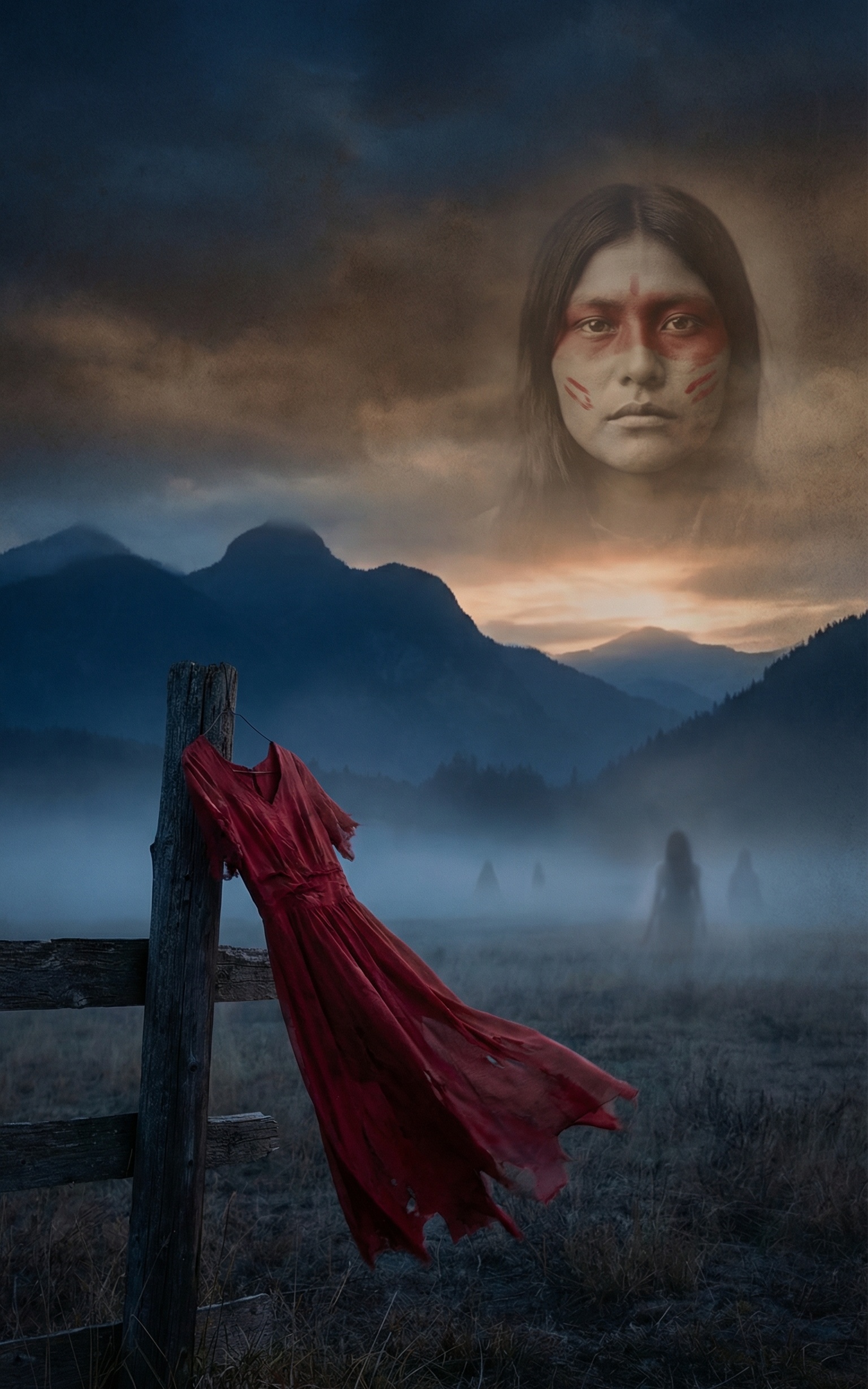
Hear Their Cries
Breaking the silence on the devastating epidemic of missing and murdered Indigenous women
by Lonnie Jordan
Six thousand. That is the staggering number of Indigenous women and children who go missing in the United States every single ySix thousand. That is the staggering number of Indigenous women and children who go missing in the United States every single year. The majority are girls between the ages of one and seventeen—lives interrupted by a crisis that the world chooses to ignore. Hear Their Cries is a haunting and necessary exploration of the Missing and Murdered Indigenous Women (MMIW) epidemic. L. S. Jordan pulls back the veil on a systemic failure fueled by centuries of colonization, jurisdictional red tape, and blatant racism. From the 'Missing White Woman Syndrome' in the media to the legal loopholes that allow predators to vanish into the shadows of tribal lands, this book exposes why these crimes remain unsolved and why the federal government remains silent. But this is more than a record of loss. It is a tribute to the spiritual resilience of Native communities and a roadmap for restorative justice. Through heart-wrenching case studies and stories of 'ambiguous loss' shared by families, Jordan demands that we look closer, listen harder, and join the movement for change. Discover the truth behind the headlines. It is time to hear their cries and fight for the justice they deserve.ear. The majority are girls between the ages of one and seventeen—lives interrupted by a crisis that the world chooses to ignore. Hear Their Cries is a haunting and necessary exploration of the Missing and Murdered Indigenous Women (MMIW) epidemic. L. S. Jordan pulls back the veil on a systemic failure fueled by centuries of colonization, jurisdictional red tape, and blatant racism. From the 'Missing White Woman Syndrome' in the media to the legal loopholes that allow predators to vanish into the shadowSix thousand. That is the staggering number of Indigenous women and children who go missing in the United States every single year. The majority are girls between the ages of one and seventeen—lives interrupted by a crisis that the world chooses to ignore. Hear Their Cries is a haunting and necessary exploration of the Missing and Murdered Indigenous Women (MMIW) epidemic. L. S. Jordan pulls back the veil on a systemic failure fueled by centuries of colonization, jurisdictional red tape, and blatant racism. From the 'Missing White Woman Syndrome' in the media to the legal loopholes that allow predators to vanish into the shadows of tribal lands, this book exposes why these crimes remain unsolved and why the federal government remains silent. But this is more than a record of loss. It is a tribute to the spiritual resilience of Native communities and a roadmap for restorative justice. Through heart-wrenching case studies and stories of 'ambiguous loss' shared by families, Jordan demands that we look closer, listen harder, and join the movement for change. Discover the truth behind the headlines. It is time to hear their cries and fight for the justice they deserve.s of tribal lands, this book exposes why these crimes remain unsolved and why the federal government remains silent. But this is more than a record of loss. It is a tribute to the spiritual resilience of Native communities and a roadmap for restorative justice. Through heart-wrenching case studies and stories of 'ambiguous loss' shared by families, Jordan demands that we look closer, listen harder, and join the movement for change. Discover the truth behind the headlines. It is time to hear their cries and fight for the justice they deserve.
- Historical Non-Fiction
- Religion & Spirituality
- True Crime
- Parenting & Family
- Missing Persons
- Police Corruption
Shadows of the Frontier: The Roots of Devaluation
The morning air in the late nineteenth century was often heavy with the scent of damp earth and the sharp, metallic tang of an approaching winter. For a young girl named Alowan, a member of a proud Plains nation whose name has been smoothed over by the abrasive grit of time, that morning was the last time she would feel the breath of her mother against her hair. She was ten years old, a child of wide skies and rhythmic seasons, until the arrival of men in dark suits and military brass. They came with papers and promises of a "better future," a concept that, to Alowan’s family, sounded like a hollow echo of the winds that swept across the tall grass prairie. She was taken, placed on a train that roared like a captured beast, and transported leagues away from the only world she had ever known. Her destination was a sprawling complex of brick and discipline, a place designed to "kill the Indian" to "save the man."
Alowan’s story is not found in the official ledgers of the state, nor is it highlighted in the triumphant narratives of American westward expansion. Within six months of her arrival at the boarding school, her name ceased to appear in the school’s attendance records. There was no telegram sent to her parents, no search party organized by the local constabulary, and no mention of her in the local newspapers. She simply evaporated into the gray mist of institutional neglect. To the administrators, she was a statistic that had failed to calibrate; to the state, she was a logistical hurdle that had conveniently removed itself. Her disappearance was not treated as a tragedy, but as an administrative oversight. This silence, this profound and chilling indifference, was not an accident. It was the intended outcome of a system designed to devalue Indigenous life until it became invisible.
This erasure is the ancestor of the modern crisis we face today. When we speak of the thousands of missing and murdered Indigenous women and children who vanish every year in the United States, we are not looking at a new phenomenon. We are looking at the contemporary manifestation of a historical architecture built on the premise that Native bodies are expendable. The shadows of the frontier have never truly dissipated; they have merely shifted form, stretching from the dusty trails of the nineteenth-century "Removal" policies to the neon-lit highways and rural backroads where Indigenous women continue to go missing without a trace. To understand why a young girl can disappear from a reservation today without triggering a massive federal response, we must first understand how the foundation of the American legal and social system was poured over the graves of those who were never meant to be remembered.
The Ideology of Expansion: Manifest Destiny and Devaluation
The mid-nineteenth century was defined by the intoxicating and dangerous ideology of Manifest Destiny. It was the belief that the United States was divinely ordained to expand its dominion from the Atlantic to the Pacific, spreading "democracy and civilization" across the continent. However, this expansion required the displacement, and often the destruction, of the people who had inhabited the land for millennia. Historians who study this era note that for Manifest Destiny to succeed, the Indigenous population had to be framed not as sovereign humans with inherent rights, but as obstacles to progress. This framing was essential because it allowed the state to bypass the moral and legal quagmires of land theft and violence.
In the eyes of the expansionists, the devaluation of Indigenous bodies was a pragmatic tool. If a person is seen as "savage" or "subhuman," their disappearance does not require an explanation. If a community is viewed as "vanishing," then its individual members are already ghosts in the eyes of the law. This ideological framework created a culture of impunity. When a settler or a soldier committed an act of violence against an Indigenous woman, there were rarely consequences. The legal systems of the time were built to protect the property and lives of the colonizers, while the lives of the colonized were relegated to a legal "no man's land." This lack of initial value placed on Native lives by the state persists in the modern era, manifesting as investigative apathy and a lack of media concern when an Indigenous woman goes missing.
The Indian Removal Act of 1830
The formalization of this devaluation can be traced to the Indian Removal Act of 1830, signed into law by President Andrew Jackson. This act authorized the forced relocation of the "Five Civilized Tribes" from their ancestral homelands in the Southeastern United States to territory west of the Mississippi River. The resulting "Trail of Tears" was a catastrophic event that saw thousands die from exposure, disease, and starvation. But beyond the immediate loss of life, the Removal Act established a precedent of state-sanctioned displacement that shattered the traditional safety nets of Indigenous communities.
When a community is forcibly uprooted, its internal structures of protection—the clan systems, the elder councils, and the warrior societies—are severely compromised. For Indigenous women and children, this meant a sudden and terrifying vulnerability. They were no longer protected by the familiar geography of their homes or the cohesive strength of their villages. Instead, they were treated as cargo, moved across a landscape where they were at the mercy of federal agents and opportunistic outlaws. The Trail of Tears was not just a journey of physical distance; it was a journey into a new reality where Indigenous lives were legally and socially peripheral. The "removal" was not just of people from land, but of people from the protections of justice.
Legal Fractures: The Marshall Trilogy and Domestic Dependent Nations
To understand the modern "jurisdictional red tape" that hampers investigations into missing persons on tribal lands, we must look at the legal framework established in the early nineteenth century. Between 1823 and 1832, the Supreme Court, under Chief Justice John Marshall, issued three landmark decisions known as the "Marshall Trilogy." These cases—Johnson v. M'Intosh, Cherokee Nation v. Georgia, and Worcester v. Georgia—defined the legal status of tribal nations and their relationship to the United States government.
The most consequential of these for our discussion was the 1831 decision in Cherokee Nation v. Georgia. In this ruling, Marshall described Indian tribes as "domestic dependent nations" rather than foreign sovereign states. He famously characterized the relationship of the tribes to the United States as resembling that of a "ward to his guardian." This paternalistic classification had devastating long-term effects. By labeling tribes as "dependent," the Court essentially stripped them of full sovereignty while simultaneously denying them the full protections afforded to American citizens. It created a legal limbo that would eventually evolve into a complex web of overlapping and conflicting jurisdictions.
This legal status created the first significant cracks in the American justice system regarding Indigenous people. Because the federal government claimed "guardianship," it assumed primary authority over major crimes committed on tribal lands. However, the federal government was often an absentee guardian, more interested in acquiring land and resources than in policing the safety of the "wards." When an Indigenous person was victimized, the question of who had the authority to investigate—the tribe, the state, or the federal government—became a bureaucratic nightmare. This confusion allowed perpetrators to operate in the gaps, knowing that the tangled lines of authority would likely prevent a swift or effective response. This is the structural foundation for the law enforcement neglect we see today.
The Case of Major Ridge and Cherokee Sovereignty
The internal struggles of tribal nations during this period also highlight the immense pressure placed on Indigenous leadership. Major Ridge, a prominent Cherokee leader, initially fought against removal but eventually came to believe that the only way for his people to survive was to sign a treaty and relocate. He believed that by ceding land, the Cherokee could maintain a semblance of sovereignty in the West. His decision led to the Treaty of New Echota, which was signed without the consent of the majority of the Cherokee people. Ridge was eventually assassinated for his role in the treaty, a tragic example of how colonial pressures forced impossible choices upon Indigenous leaders.
The story of Major Ridge illustrates the "no-win" situation created by the U.S. government. Whether tribes resisted or cooperated, the end result was the same: the erosion of their ability to protect their own people. The loss of sovereign control over their territory meant the loss of control over the safety of their women and children. The state’s insistence on being the "guardian" of these nations was never about protection; it was about control. When that guardian fails to act—as it has for nearly two centuries—the "wards" are left in a state of perpetual vulnerability.
The Boarding School System: Institutionalized Erasure
In 1879, Richard Henry Pratt founded the Carlisle Indian Industrial School in Pennsylvania. Pratt, a former military officer, believed that the "Indian problem" could be solved through forced assimilation. His philosophy was simple: "All the Indian there is in the race should be dead. Kill the Indian in him, and save the man." This marked the beginning of the boarding school era, a period of decades where Indigenous children were systematically removed from their families and sent to government-run or religious schools.
The boarding school system was an engine of historical trauma. Children were forbidden from speaking their native languages, forced to cut their hair, and punished for practicing their traditional religions. But beyond the cultural genocide, these schools were sites of profound physical and sexual abuse. Because the children were viewed as wards of the state—or worse, as experimental subjects for assimilation—their well-being was a secondary concern. Many children died of disease, malnutrition, or abuse, and their bodies were buried in unmarked graves on school grounds.
The disappearance of Alowan, mentioned at the start of this chapter, is a representative story for the thousands of children who never returned home. These disappearances were rarely investigated. The schools operated with a high degree of autonomy and a low degree of accountability. If a child ran away, they were often dismissed as "lost" or "runaways," with little effort made to find them. If a child died, the records were frequently incomplete or falsified. This institutionalized erasure trained the American public and the government to accept the idea that Indigenous children could simply vanish without consequence. It normalized the absence of the "other."
Historical Trauma as a Structural Foundation
The trauma inflicted by the boarding school system was not a temporary injury; it was a structural change in the Indigenous experience. This is what experts call "historical trauma"—a collective emotional and psychological injury that spans generations. When we look at the modern MMIW crisis, we must recognize that it is occurring in communities that have already been systematically weakened by the loss of their children. The grief of a family today whose daughter has gone missing is layered upon the unresolved grief of their ancestors whose children were taken to Carlisle or Haskell.
Furthermore, the boarding school era cemented the practice of law enforcement and government agencies ignoring Indigenous victims. For over a century, the state was the very entity that was taking and harming Indigenous children. It is little wonder, then, that there is a profound lack of trust between Indigenous communities and law enforcement today. This historical context explains why families are often hesitant to report crimes to the authorities, and why, when they do, they are often met with skepticism or indifference. The police are seen not as protectors, but as the modern face of the same system that once forcibly removed their grandparents.
The Persistence of Apathy: From Frontier to Modernity
The transition from the nineteenth-century frontier to the modern day has not changed the underlying devaluation of Indigenous lives; it has only changed the scenery. The "frontier" was once a physical space where law was sparse and violence was common. Today, the "frontier" exists in the legal loopholes of Public Law 280, the inadequacies of the National Crime Information Center (NCIC), and the lack of funding for tribal police departments. The state continues to place a low value on Native lives, and this is reflected in the way missing persons cases are handled.
When a white woman from an affluent suburb goes missing, the media coverage is often instantaneous and exhaustive—a phenomenon known as "Missing White Woman Syndrome." The public is mobilized, resources are flooded into the search, and the victim is humanized through childhood photos and interviews with grieving relatives. In contrast, when an Indigenous woman goes missing, the response is frequently silence. If there is coverage, it often focuses on negative stereotypes—suggesting the victim was "at risk," had a "history of substance abuse," or was "known to run away." These characterizations serve to shift the blame from the perpetrator and the system onto the victim herself, further devaluing her life and justifying the lack of investigative effort.
- Systemic Bias: Law enforcement officers may harbor conscious or unconscious biases that lead them to prioritize cases involving non-Indigenous victims.
- Jurisdictional Confusion: The "checkerboard" nature of land ownership on many reservations creates confusion over whether a crime falls under tribal, state, or federal jurisdiction, leading to delays in the critical first 48 hours of a disappearance.
- Resource Disparity: Tribal police departments are often chronically underfunded and understaffed, lacking the forensic tools and manpower necessary to conduct large-scale searches.
- Data Gaps: Until recently, there was no centralized, reliable database for missing and murdered Indigenous people, making it impossible to track the true scale of the crisis.
These barriers are not accidental; they are the legacy of the legal and social frameworks discussed earlier. The "domestic dependent" status of tribes still haunts the justice system, and the ideology of Manifest Destiny still informs the cultural perception of whose lives matter. The devaluation that was once a tool of expansion is now a tool of maintenance—maintaining a status quo where some populations are protected and others are left to fend for themselves.
Expert Perspectives: The Devaluation of Bodies
Historians and sociologists emphasize that the crisis of missing and murdered Indigenous women is a "slow-motion genocide." It is not a single event, but a continuous process of attrition. By failing to provide justice, the state effectively sanctions the violence. As one historian notes, "The frontier never closed for Indigenous women; it just moved into the shadows of the justice system." The devaluation of Indigenous bodies was not just about land; it was about the removal of any presence that might challenge the legitimacy of the settler-colonial state.
By treating Indigenous women as "disposable," the state reinforces its own power. If the most vulnerable members of a community can be taken without consequence, then the community itself is effectively powerless. This is why the fight for MMIW justice is also a fight for tribal sovereignty. It is an assertion that Indigenous lives have inherent value and that tribal nations have the right and the responsibility to protect their own citizens. The experts argue that until the United States reckons with its history of devaluation, no amount of modern legislation will fully solve the crisis. The change must be foundational.
The Cause-Effect Chain of Vulnerability
The historical trajectory of this crisis can be mapped as a clear chain of cause and effect. It begins with the forced removal and the loss of traditional lands, which led to the dismantling of community protection systems. This displacement was followed by the legal classification of tribes as "dependent," which created the jurisdictional gaps that allow predators to flourish. The boarding school system then introduced a cycle of institutional violence and historical trauma, further isolating Indigenous individuals from their support networks. Finally, the persistent cultural devaluation of Native lives ensures that when violence does occur, it is met with investigative apathy.
- Forced Removal: Loss of community protection and familiar geography.
- Legal Dependency: Creation of jurisdictional gaps and federal neglect.
- Institutional Abuse: Normalization of violence and erasure in boarding schools.
- Modern Apathy: Media silence and law enforcement bias.
Each link in this chain strengthens the next. The lack of justice today is not a failure of the system; it is the system working exactly as it was designed. It was designed to prioritize expansion over Indigenous life, and it continues to do so by failing to adapt its legal and investigative tools to meet the needs of Native communities. To break this chain, we must acknowledge every link and understand how the weight of the past still hangs around the necks of the present.
A Call to Justice: Acknowledging the Centuries-Old Crisis
Justice for the missing and murdered begins with a fundamental acknowledgment: this crisis is not a modern accident. It is a centuries-old emergency that has been simmering beneath the surface of the American consciousness. To treat it as a contemporary "spike" in crime is to ignore the historical reality that has made Indigenous women targets for generations. We cannot solve a problem we refuse to name, and we cannot name it without looking back at the shadows of the frontier.
The first step toward restorative justice is the validation of the experiences of Indigenous families. For too long, their cries have been ignored or dismissed. When a mother tells a police officer that her daughter would never just "walk away," she is not just speaking about her child; she is speaking against a century of being told that her children don't matter. Acknowledging the historical roots of the devaluation of Indigenous lives is an act of resistance. It is a refusal to let the erasure continue.
Furthermore, the legal system must be overhauled to close the jurisdictional gaps that have existed since the Marshall Trilogy. This means empowering tribal nations with the authority and resources to investigate and prosecute crimes committed on their lands, regardless of the race of the perpetrator. It means mandating federal cooperation and ensuring that data collection is accurate and transparent. But more than that, it requires a cultural shift—a collective realization that the safety of Indigenous women is a barometer for the health of our democracy. If the law does not protect the most historically marginalized, it protects no one.
As we move forward through the chapters of this book, we will explore the specific mechanisms of this crisis—the human trafficking rings that exploit the jurisdictional "no man's land," the domestic violence cases that are often ignored by outside authorities, and the grassroots movements of families who are tired of waiting for a government that has failed them for over two hundred years. But through it all, we must remember Alowan, the girl on the train, and the thousands of girls like her who were the first to disappear into the silence of the state. Their stories are not just a record of the past; they are a demand for a different future.
The roots of devaluation are deep, but they are not immortal. By shining a light into the shadows of the frontier, we can begin the work of uprooting the systemic racism and legal neglect that have allowed this epidemic to persist. We must hear their cries—not just as echoes from the past, but as a passionate and urgent call to action in the present. The journey toward justice is long, and it begins with the truth: that every Indigenous woman and child who has gone missing was a person of infinite value, and their absence is a void that can only be filled by the presence of justice.
The devaluation of Indigenous lives was a foundational element of the building of the United States. It was the "original sin" of the American legal system. Today, we see the legacy of that sin in the cold cases that pile up in rural sheriff's offices and the silent hallways of the Department of Justice. But the resilience of Indigenous communities is also a historical fact. For as long as there has been erasure, there has been resistance. For as long as there has been silence, there have been those who refused to be quiet. This book is a part of that resistance. It is a record of the vanished, a map of the broken system, and a road-map for the change that must come. We begin here, in the shadows, so that we may eventually walk into the light of a world where no one is allowed to disappear without a trace.
Stolen Generations: The Boarding School Legacy
The year was 1954, a decade often remembered in the American consciousness for its white picket fences, the birth of rock and roll, and a burgeoning sense of national prosperity. But for a twelve-year-old girl named Mary, a member of a Northern Plains tribe whose traditional lands stretched beneath the infinite blue of the Montana sky, the reality …