

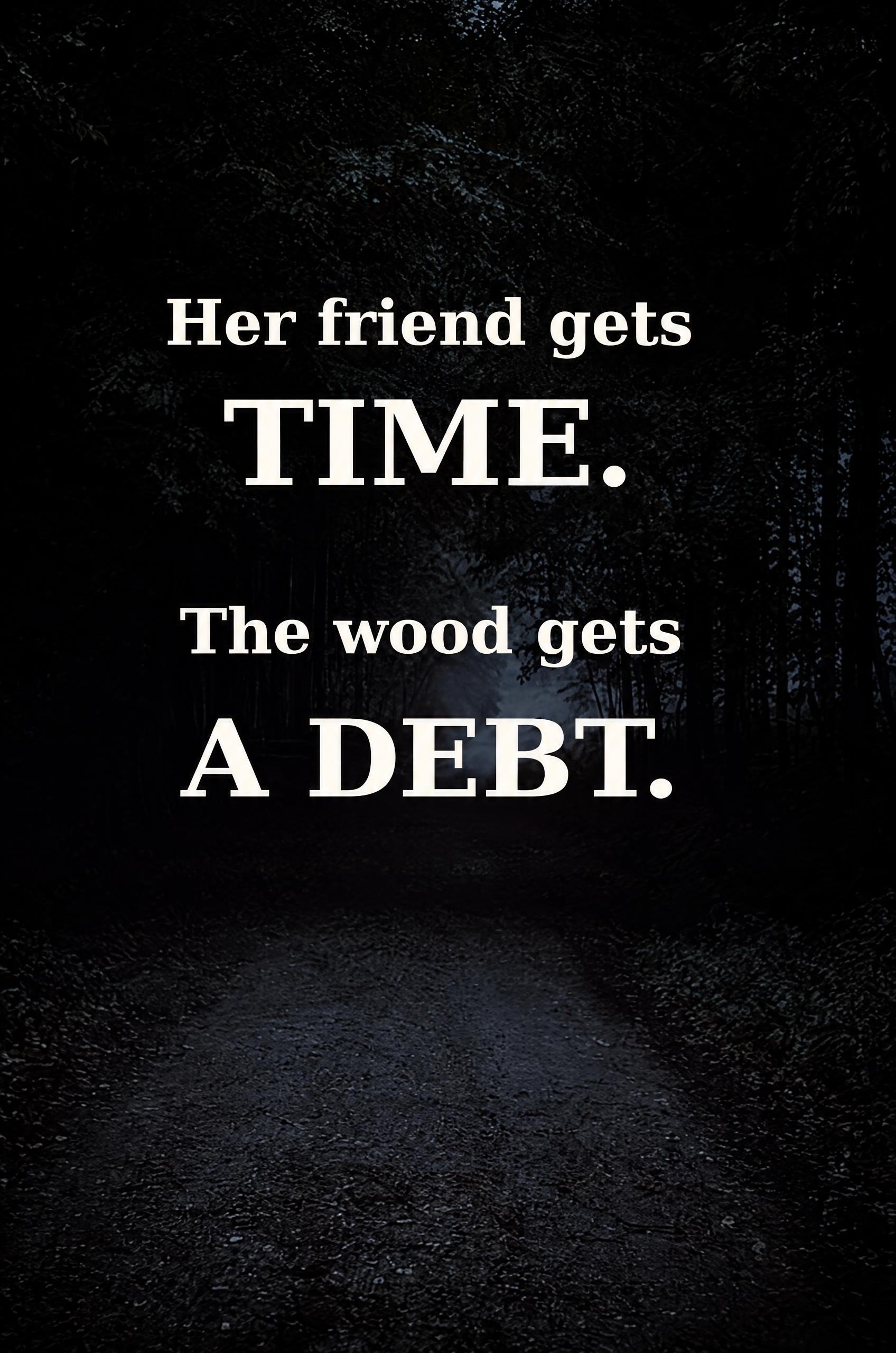
Hollow Thorns
The woods claim her as ward, then as hunger she cannot refuse
by Luna Asli Kolcu Uslu
Audrey Wolfe comes to the Black Hills to photograph a rotting ancestral house, sell the ridge, and drive back to Denver. The woods refuse that plan. From the first night something older than the estate watches her—not to kill her, but to keep her. Gavin Chambers wears a man when he must and thorn and shadow when he hunts. A fraying compact once kept Wolfe blood mostly intact and trespassers as meat. Now the compact is failing, townsfolk vanish, and fouler hungers in the timber want her opened instead of guarded. Claire Sutton feeds the living and chalks the missing. Rangers log predation that is not a bear. A deputy writes animal attack so files close. A speculator wants the ridge for a resort and will charm, squeeze, then remove anyone who will not sell. Winter seals the roads. Audrey documents until naming stops feeling like control. She wants the creature’s protection and its attention and hates both wants. Safety offered by a monster is still a cage. Desire does not blunt the teeth. If she surrenders her humanity, she might survive the dark—or become it.
- Horror
- Romance
- Gothic Horror
- Paranormal Romance
- Dark Romance
- Supernatural Horror
The Listing That Lies
I packed the cameras first. Two bodies, three lenses, a tripod that never sat right in the trunk, and the lawyer letter that had turned my name into an inheritance I did not want. Denver was still dark when I locked the apartment. The too-thin coat went over the passenger seat like an apology. I told myself I was driving to sell, not to stay, and I said it out loud so the empty room would remember.
The highway west ate hours. Pines replaced billboards. The last paved mile died into mud without warning, and the estate rose at the end of it the way a drunk rises from a chair, listing, stubborn, already half gone. Porch boards gave under my first step. I caught the rail and laughed because the alternative was swearing at a house that had outlived people I never met.
Inside smelled like wet plaster and old paper. I photographed the rot in the kitchen, the thorns grown through a parlor window, the cracked hall mirror that threw my face back in two pieces. The white streak at my left temple looked worse in that glass. I had never dyed it. I still did not. I talked to the rooms because silence felt like a dare.
"Nice listing," I said. "Mice. Bad roof. Charm."
Nothing answered. I kept shooting until the light went gold and then gray. At dusk I walked the tree line with my phone recording wind. The woods did not break brush. Something large moved anyway, a shift of dark that stopped when I stopped. I held the phone still and got nothing but trees and a sound like breathing that might have been mine.
"The listing will mention mice," I told the recorder. "It will not mention this."
I went back in. I slept with every light on that still worked, which was three, and I left the bedroom door shut because I am from the city and city people believe in doors. Morning came thin and cold. The scratches were on the outside of the bedroom door, too high for any dog, claw-track deep, facing inward as if something had counted my breaths through the wood. They spelled no word. I photographed them anyway. Naming a thing has always felt like control, even when the thing does not care what you call it.
I made coffee from grounds I found in a tin that might have been older than my mother. The kitchen window looked into timber that did not look back, or looked back too well. I sent the photos to a folder labeled SALE and then stared at the scratches until the coffee went bitter. My boots were already mud-eaten. The fashionable part of them had died on the drive.
The house had more rooms than I needed and fewer that felt empty. I opened doors. I closed them. I photographed a parlor table scarred by something that was not a knife. I photographed the white streak again in a different mirror because I am stubborn about evidence. When I went outside the second time, the porch listed under me like it wanted company. The tree line held still. I did not walk to it. I stood on the mud and recorded wind again, and the movement came without sound, large, patient, stopping when I stopped, as if it had learned my timing overnight.
"I am not staying," I said, which was a lie I had not meant to test yet.
Back in the hall I put my palm near the scratches and did not touch them. They were too high. They faced me. I photographed the height against my own hand for scale, because a listing needs scale, and because I needed something ordinary to do with my fingers. The lawyer letter sat on the kitchen table. Intestate. Heir. A great-aunt I barely knew. I had come to strip the place for cash and leave. The woods had other ideas, or no ideas at all, only hunger that had decided not to finish me yet.
I joked at the empty parlor. "If you wanted a roommate you should have put that in the notice."
The joke landed nowhere. I packed the cameras again by habit and then unpacked them because I was not done documenting the rot. Thorns through glass. A porch that listed. A door marked from the outside while I slept with the lights on. I would put mice in the listing. I would put a bad roof. I would not put the dark that stopped when I stopped, or the way my mouth had almost said okay to a claim I had not heard in words.
Night would come again. I knew that the way you know a storm is building when the hills go the color of wet stone. I checked the bedroom latch. I left the lights. I set the phone on the nightstand with the recorder running, just in case the wind wanted to confess. Outside, something large did not break brush. I lay still and counted my own breaths, and I hated that I was listening for an answer that would not be human.
In the morning the scratches would still be there. I already knew I would photograph them a second time. Control is a habit. The woods do not care about habits. I closed my eyes anyway, city girl in a hunting ground, and I did not turn the last light off.
Chili and Chalk
The county road unrolled in ruts that slapped the undercarriage. I needed gas, food, and a place where the walls did not listen. Town announced itself with a single blinking light and a parking lot of gravel that ate the last of my city tread. The diner sat behind a plywood sign that had lost two letters. Heat leaked from the door when I opened it,…