T

Tim

6 booksBusiness & EntrepreneurshipScience & TechnologyBusiness Strategy

Tim is the founder of My Thinking Company, a firm dedicated to helping executives build proprietary thinking structures that create enduring competitive advantage. Over the past fifteen years, he has coached hundreds of senior leaders across technology, finance, and professional services — from startup founders to Fortune 500 executives — on how to replace reactive decision-making with deliberate, defensible choices. A recovering consultant and lifelong student of cognitive science, Tim lives in Austin, Texas, where he runs ultramarathons and tests his own thinking frameworks against the most unpredictable variable of all: reality.

Books

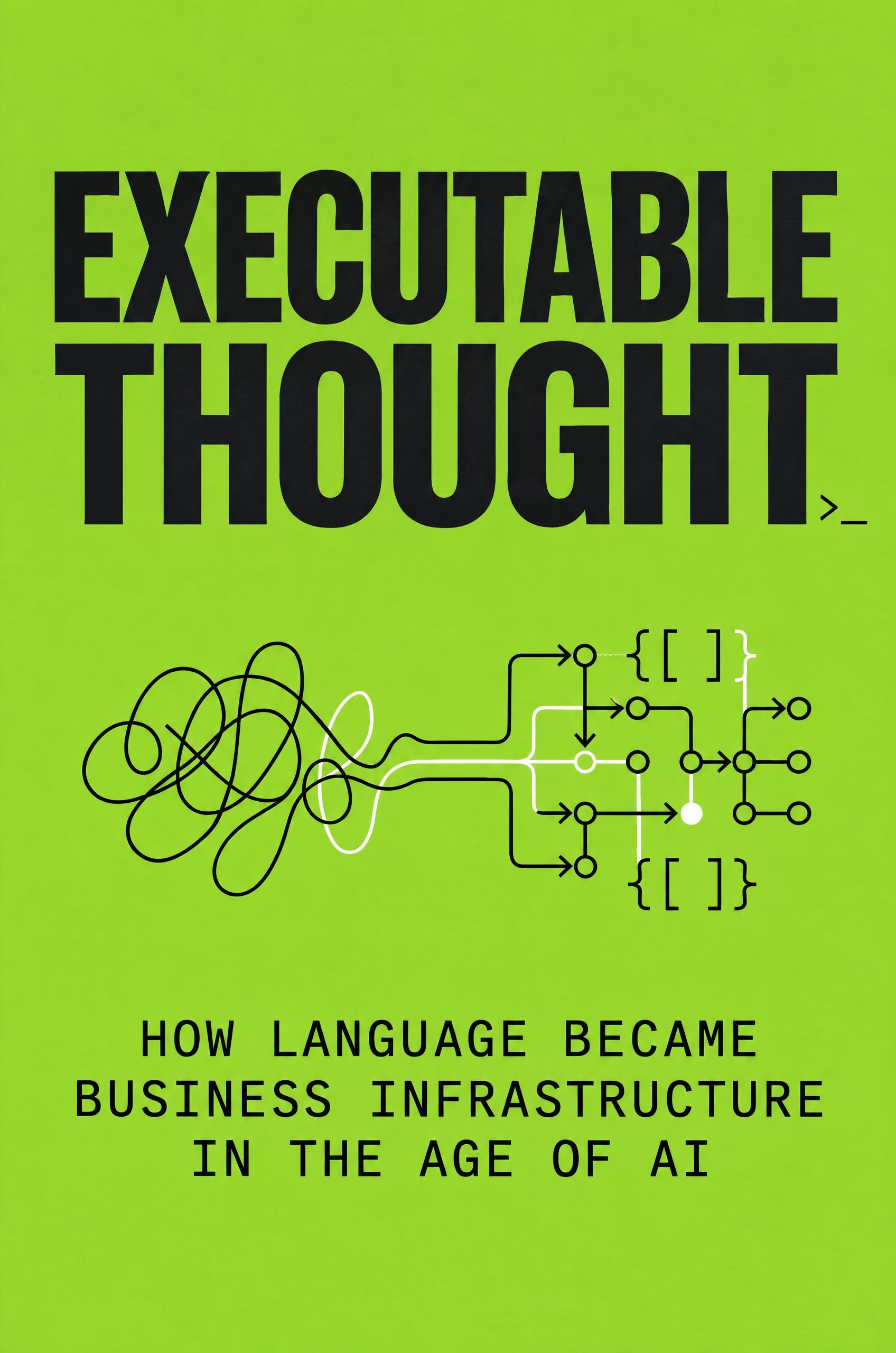
Executable Thought: How Language Became Business Infrastructure in the Age of AI

Executable Thought: How Language Became Business Infrastructure in the Age of AI

How precise language became the only strategic moat in an age of infinite answers

  • Business & Entrepreneurship
  • Science & Technology

Answers have become free. The hard part now is asking the right questions. For decades, organizations treated business writing as a soft skill designed to persuade, soften blows, or duck accountability. Then generative AI arrived and turned language directly into operational output: code, workflows, capital allocation. Vague corporate language is no longer just annoying. It is an active systems failure. Drawing on the cognitive philosophies of Vygotsky and Wittgenstein, Executable Thought reframes language not as a vehicle for finished thought but as the generative machinery of thought itself. When articulate output becomes free and precise specification becomes expensive, linguistic rigor is no longer optional—it is a balance-sheet asset. This book gives you an operational blueprint. Learn how to conduct linguistic debt audits, build conceptual inventories, and treat enterprise prompts as version-controlled source code. Replace passive prompt-engineering habits with rigorous Socratic inquiry systems that preserve human judgment and prevent cognitive atrophy. In a world where any answer costs nothing, the only competitive advantage belongs to the architects of deliberate inquiry. This book shows you how to become one.
Ten Types of Innovation: Architecting Business Model Breakthroughs

Ten Types of Innovation: Architecting Business Model Breakthroughs

Turn Brainstorming into a Predictable Assembly Line for Business Breakthroughs

  • Business & Entrepreneurship

You have fifty ideas on a whiteboard. You are executing none of them well. You lack a framework. This is the book that installs one. Most businesses remain trapped on a treadmill of minor feature tweaks, spending immense capital to build products that competitors imitate within ninety days. They mistake invention and technological novelty for genuine business model leverage. This book dismantles that myth. "Ten Types of Innovation" reframes innovation across ten distinct business model levers — from how you make money to how you engage the customer — categorized into three critical zones: Configuration, Offering, and Experience. You will learn how to: - Redesign unit economics without inventing new technology - Borrow external capabilities through strategic networks - Monetize dormant organizational exhaust - Codify proprietary operational methods that competitors cannot copy - Build locked-in product systems and risk-reversing customer support - Design transformative engagement habits that create real loyalty This is not a book about creative inspiration. It is a rigorous architectural methodology that converts unstructured luck into repeatable quarterly innovation cadences. For solopreneurs and strategic consultants, this is the ultimate leverage: you do not need to out-invent giants. You just need to reconfigure the value equation. Stop brainstorming. Start building breakthroughs.

a REVOLUTION in thinking: engineering the impossible

a REVOLUTION in thinking: engineering the impossible

Stop chasing answers. Start engineering breakthroughs.

  • Business & Entrepreneurship
  • Educational & Academic

Most intractable problems are not failures of effort or resources. They are flaws in cognitive architecture. This is not another book about positive thinking or productivity hacks. It is an engineering manual for the mind. Tim, a veteran strategist who has guided founders and sovereign operators through trillion-dollar markets and organizational collapse, reveals why the smartest people get stuck on the same problems for years. The culprit is not a lack of intelligence but a broken mental operating system — one that treats all problems as puzzles to solve rather than structures to dismantle. Dividing problem-dissolving into civil, electrical, and mechanical principles of thought, this book teaches you to: rebuild the load-bearing logic that holds your assumptions in place, ignite high-voltage insights by cross-pollinating concepts from entropy to tensegrity, and convert potential energy into kinetic action using physical action statements and guarded deep-work blocks. You will learn to reframe questions rather than chase evasive answers. To shift from horizontal problem-solving to vertical problem-dissolving. To treat strategic thinking as a formal engineering discipline, not a vague art. By the end, you will possess a comprehensive mental operating manual to reliably engineer breakthroughs under deep uncertainty — no matter how impossible the problem looks.

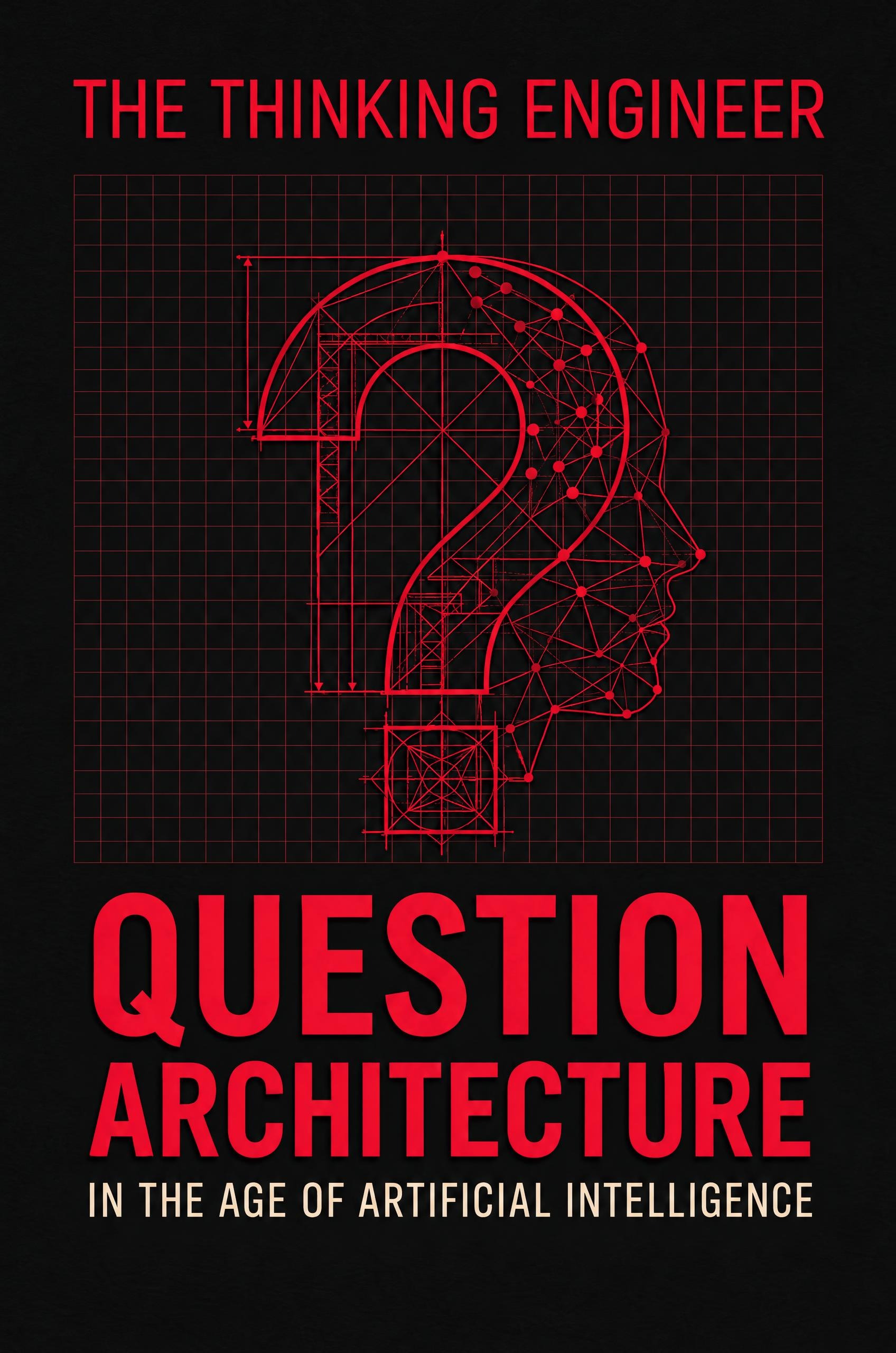
The Thinking Engineer: Question Architecture in the Age of Artificial Intelligence

The Thinking Engineer: Question Architecture in the Age of Artificial Intelligence

Answers are cheap. The right question is worth everything.

  • Science & Technology
  • Business & Entrepreneurship
  • Self-Help

For all of human history, answers were scarce and valuable. Experts hoarded them. Professionals built careers on what they knew. Then generative AI made answers instant, abundant, and virtually free. Now the bottleneck has shifted. The scarce resource is no longer the answer — it is the question. Anyone can produce a hundred plausible responses in seconds. But only a thinking engineer knows which ones to ask for, and which ones to trust. This book is for the knowledge worker who refuses to become a rubber stamp for machine output. It introduces Question Architecture: a structured discipline for designing high-leverage inquiries that determine what any AI output is actually worth. You will learn the six-layer Question Stack for framing problems, auditing hidden assumptions, and triaging evidence. You will master practical tools like the Assumption Ledger, the Evidence Triage Protocol, and the Inversion Pass. And you will discover how to build human-machine centaur loops that protect original thought while amplifying your strategic relevance. The age of the answer is over. The age of the thinking engineer has begun.

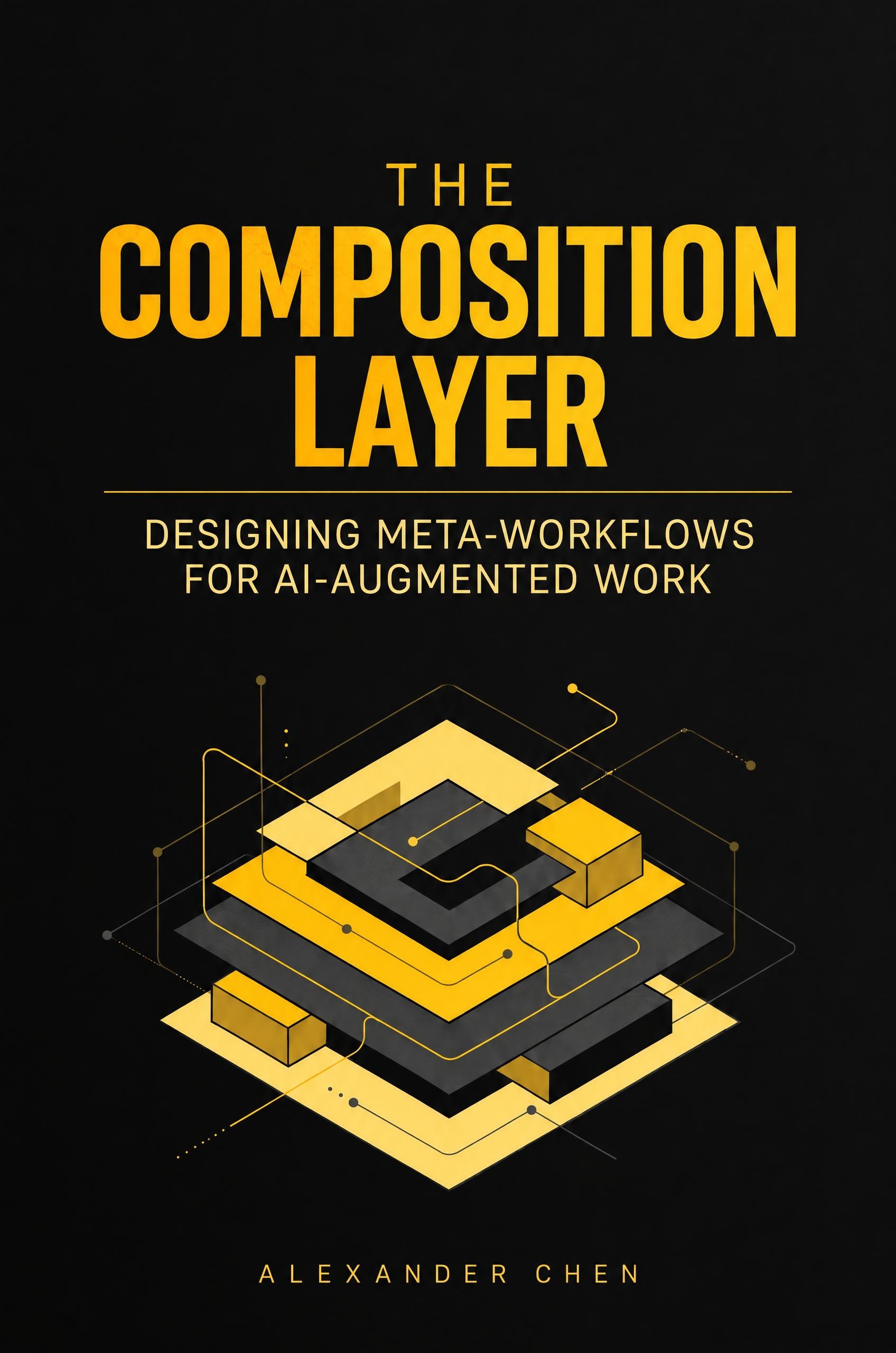
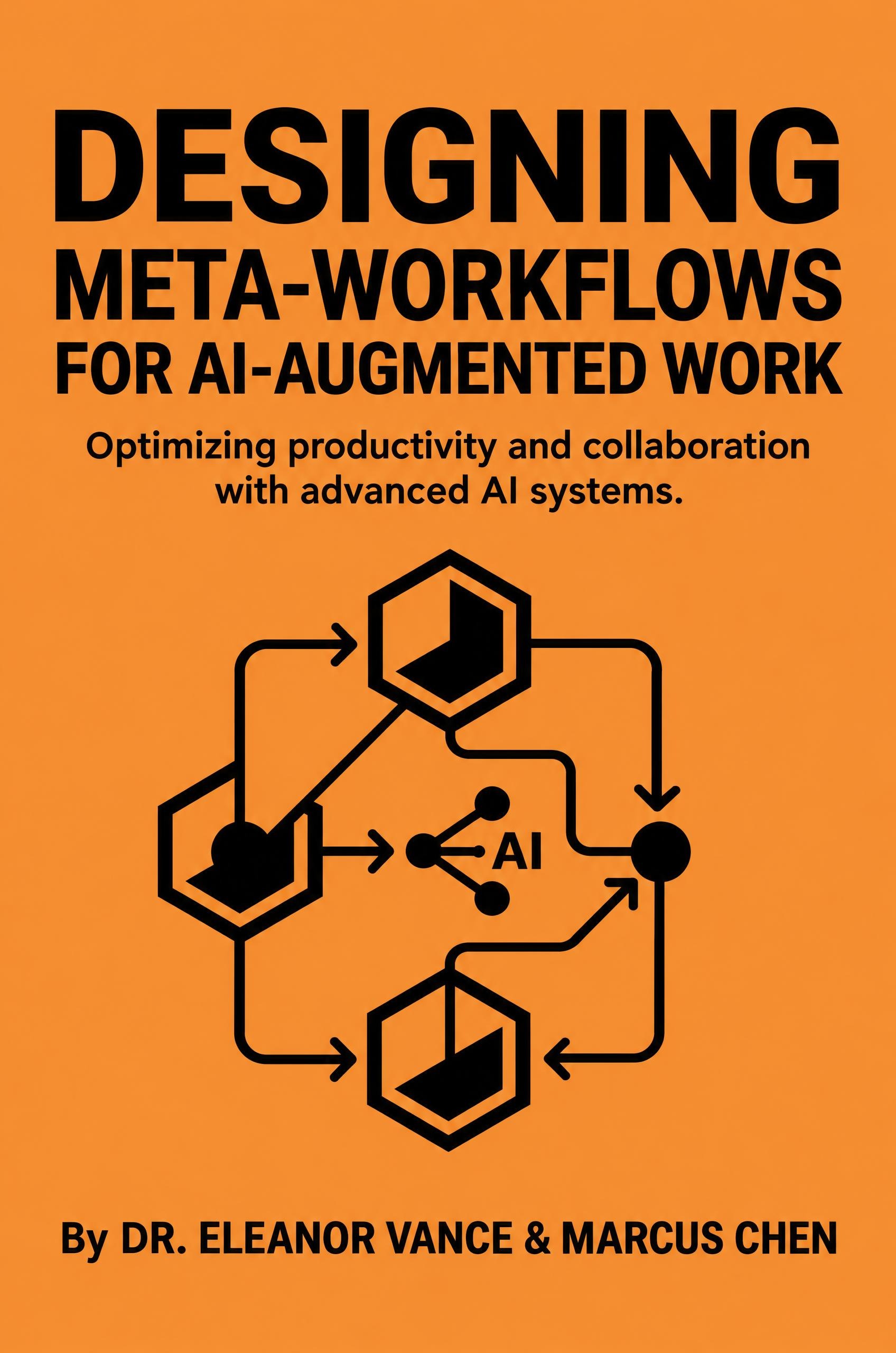
The Composition Layer: Designing Meta-Workflows for AI-Augmented Work

The Composition Layer: Designing Meta-Workflows for AI-Augmented Work

From AI experiments to operational intelligence: the meta-workflow blueprint

  • Business & Entrepreneurship
  • Science & Technology
  • Instructional Guide

Most organizations are trapped in the prompt pit. They race to automate isolated tasks—drafting emails, generating code, summarizing reports—and wonder why the output feels commoditized, not competitive. The problem isn't the AI. It's the architecture. A standard workflow orchestrates steps to produce an output. A meta-workflow orchestrates workflows to produce an outcome, holding runtime state, routing decisions, and the judgment that determines which tasks execute—and which ones need a human. This book is the first tool-agnostic blueprint for building that composition layer. It shows you how to move from fragmented pilot projects to a unified operational rhythm where autonomous agents, deterministic systems, and human experts work as one resilient system. Inside, you'll learn how to: - Design controllers that evaluate evidence, not just pass data - Handle boundary failures without cascading collapse - Programmatically allocate decision rights between AI and humans - Calculate and mitigate execution risk in non-deterministic workflows - Re-engineer human-in-the-loop oversight from rubber-stamp to architect-level steering Whether you're a technical leader, systems architect, or executive navigating the shift to AI-augmented operations, The Composition Layer gives you the frameworks to build durable, enterprise-scale intelligence engines—without surrendering human judgment.

Defensible Choices: Mental Structures for Decisive Leaders

Defensible Choices: Mental Structures for Decisive Leaders

Build Thinking Structures That Outlast Any Decision

  • Business & Entrepreneurship
  • Instructional Guide

Modern leaders don't drown in silence. They drown in noise. Algorithms hijack their attention. Reactive calendars consume their days. And the seductive promise of frictionless collaboration slowly replaces strategic clarity with frantic activity. This is strategic drift — and it is the single greatest threat to decisive leadership today. "Defensible Choices" is the operating manual for My Thinking Company and the antidote to drift. It reveals why speed is the enemy of conviction and shows you how to transform cognitive friction into your sharpest competitive advantage. Inside, you will learn to: • Diagnose your hidden executive drift before it derails your organization • Master the pre-decisional workshop — framing problems upstream before you commit resources • Engineer root-cause maps that expose the real constraints hiding beneath surface-level symptoms • Stress-test your unspoken premises and destroy alignment theater once and for all • Build your Defensible Contract: a concrete triad of named decision, explicit structure, and audit-proof metric Packed with actionable templates, field-tested frameworks, and diagnostic rubrics, this book equips you to stop seeking external validation, break the addiction to advisory dependency, and make high-stakes choices you can defend with enduring conviction — to your team, your stakeholders, and your future self.