

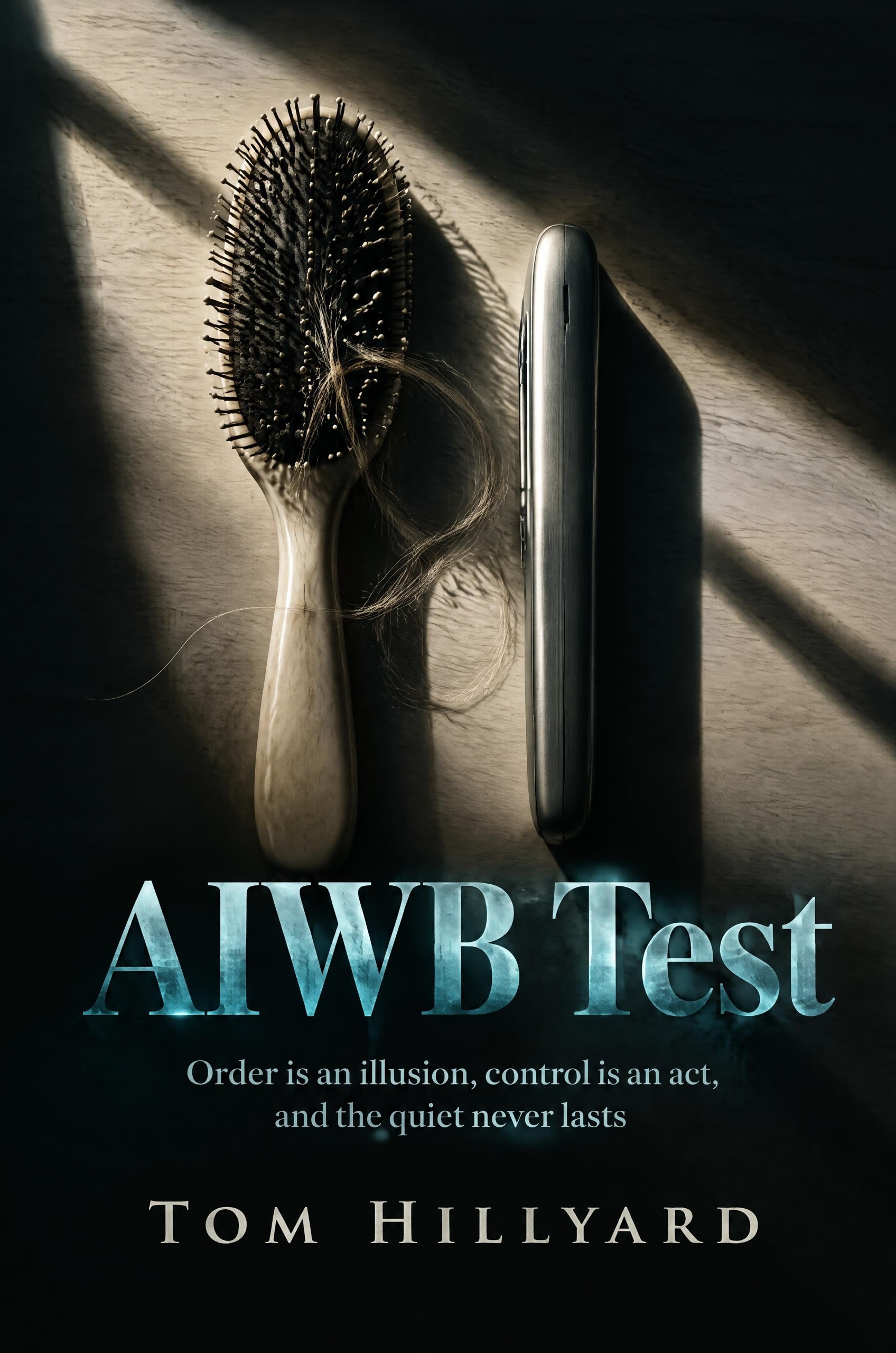
AIWB Test
Order is an illusion, control is an act, and the quiet never lasts
by silent river 664
In a modest flat arranged with mathematical precision, every single object has its designated place. The dressing table drawers contain three deliberately chosen items. The clothing rails stand meticulously categorised—professional, formal, casual, and special ensembles, all carefully assembled to satisfy commercial demands orchestrated by an associate named Max. Here, life is measured in counted brushstrokes and the comforting hum of domestic silence. Distant trains and radiator pipes provide the only permissible soundtrack to an existence sculpted entirely from discipline and deliberate detachment. The fittings may be cheap and the draughts persistent, but within these four walls, absolute control reigns supreme. Until the telephone buzzes. A single vibration shatters the fragile sanctuary, threatening to unravel the meticulous boundaries between private order and external duty. As the outside world presses in, the line between curated identity and total unraveling begins to blur. A taut, razor-sharp psychological study, AIWB Test explores the delicate architecture of obsession, isolation, and the terrifying cost of perfection when reality refuses to keep its distance.
- Literary Fiction
- Thriller
- Character Study
- Psychological Thriller
Order and Silence
I keep everything in order. That is not an exaggeration or a habit I am proud of in some performative way. It is simply how I live. The surfaces people might notice, the dressing table, the shelving unit from a flat-pack shop, the little table by the window that was never quite wide enough for two place settings, those are only the beginning. Underneath them are the drawers sorted by category, the folder of papers kept flat beneath the bed, every comb and clip resting in its own groove as though it had been measured for that exact space.
The flat itself is small. The entrance, the kitchen and the living area run together in one bent line, like a corridor that changed its mind halfway through, settling at last around a sofa I bought second-hand and still paid too much for.
I was sitting at my dressing table in my robe, the afternoon sun warm across my shoulders, drawing the brush through my hair in sets I always count without meaning to. Three strokes, then six, then nine, on each side. The building was quiet at that hour, which suited me. I have never understood the tenants who leave the radio running simply to fill a room. I would rather hear the brush moving through my hair, or the radiator ticking as it cooled, or the far-off clatter of a train passing somewhere behind the terrace.
The dressing table was new to me, bought online from someone clearing out a house, and the drawers still carried a faint trace of someone else’s perfume whenever I opened them. The bottom one held exactly three things. A black notebook. My wallet. A tube of hand cream I had not yet finished. Nothing else was permitted to live there, no receipts gone soft with age, no stray coins collecting in the corners.
Across the room stood the rail that did the real work of my days. I had split it into sections: business, evening, smart casual, and a smaller rack at the end for the specials, costumes mostly, chosen by whatever Max decided would sell this season. He had a way of knowing these things before the rest of us did, and I trusted him with it the way you trust a weather forecast you have no means of checking yourself.
The flat had cheap carpet the landlord had clearly chosen for cost rather than comfort, and a draught crept in along the window sill no matter how I dressed it with towels. But none of that touched the things I had built inside it. Everything on that rail, everything in that drawer, felt as though it had always belonged to me, as though it would go on belonging to me long after I had left this particular address behind.
The phone gave a soft buzz on the table beside me.