

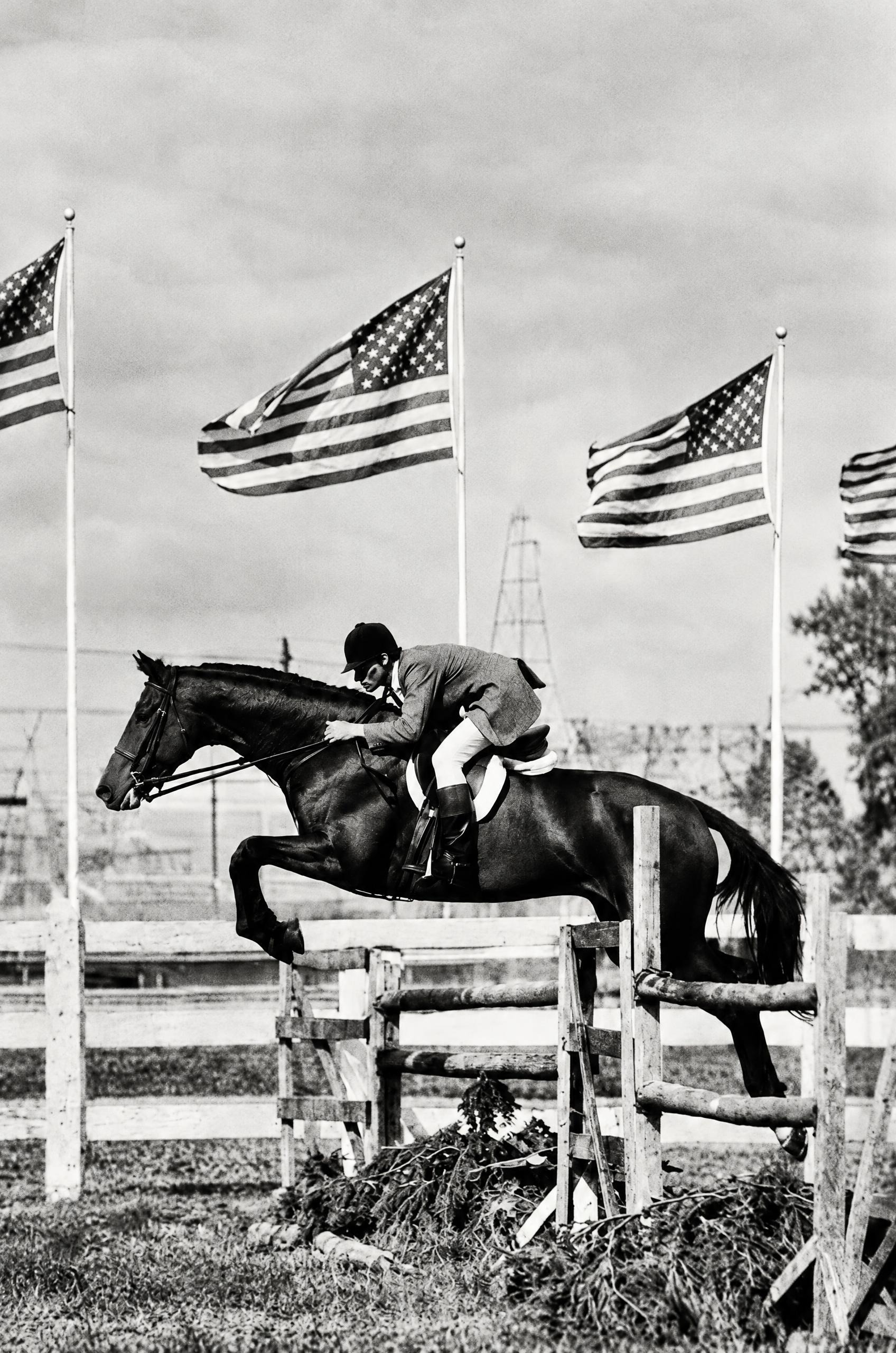
Bareback
by Tom Ellison
In the dusty scrub of Midland, Texas, young Tommy Ellison learned to find safety on the back of a horse. Inside his home, silence and alcohol reigned. Outside in the corral, tracing careful figure eights in the dirt, he discovered discipline, poise, and an uncanny gift for equestrian jumping. That extraordinary talent caught the eye of Hollywood veteran Tab Hunter, opening a doorway from rural Texas to the shimmering promise of Southern California. Under the wing of legendary talent agent Dick Clayton, Tommy ventured into film work and formed deep, lasting bonds within Hollywood’s inner circles, especially with actor Tony Hamilton. Yet as Tommy built a life out West, devastating tragedy arrived in waves: family deaths, personal illness, and the harrowing shadow of the AIDS crisis claiming those he held closest. Tested by catastrophic injury and immense grief, Tommy refused to break. Bareback is an unforgettable, unflinching memoir tracing one man's journey through darkness into hard-won freedom, ultimately finding sanctuary amidst the rugged foothills of the Sierra Nevada mountains.
- Non-Fiction
- Literary Fiction
- Biography
- Memoir
- Coming of Age
- Grief & Loss
Figure Eight
The tires ground off the two-lane blacktop, their treads biting into the decomposed granite with a steady, dry crunch I could feel right through the steering column. I eased my boot off the gas pedal of the pickup, letting the truck's momentum carry us forward through the heat shimmer of late morning. Ahead, sunk deep into the rugged fold where the Sierra Nevada foothills met the sky, two dry-stacked stone pillars anchored a gate of heavy, hand-forged wrought iron.
Welded flush into the center of the scrollwork, dark against the wild Northern California scrub, was my mark, a figure-eight brand, deliberate and clean against the tangle of buckeye and chaparral. In the back seat, Skooter, my little long-haired dachshund, rested his whiskered chin against the padded vinyl of the center console, dark eyes watching the fence line. Beside him, braced on all four paws sitting on the back seat, Mateo, the white lab mix, panted a steady, rhythmic cloud of breath against the passenger glass. I reached up and thumbed the small plastic remote clipped to my sun visor. A click echoed in the cab, followed by the low, familiar groan of iron hinges pulling against stone. The two gates parted, swinging inward to clear a path through the timber.
I idled through at a crawl beneath a vaulted canopy of valley oaks that knit their crooked, moss-draped limbs overhead, stippling the morning sun across the dusty hood of the truck. Where the oak grove fell away, the timberline opened abruptly into sweeping, sun-cured prairie grass. It rolled away for miles toward the jagged blue ridgeline of the mountains, standing stark and unyielding against the pale morning air. I shifted into park and cut the ignition. The engine gave a dying shudder, and silence rushed in.
At sixty, my face carried the unmistakable ledger of a life spent under scouring wind and open sun, deep crow's feet around the corners of my eyes, the skin across my cheekbones weathered into tough, sun-darkened leather. I leaned forward, crossing my forearms over the top arc of the steering wheel, and let my gaze drift across the stillness.
The silence in the foothills was vast, untroubled, and ancient; it seeped through the glass, through the cab, settling heavy and cold into the very marrow of my bones. That deep quiet had an undertow. It pulled backwards with a sudden, violent drag, stripping away the golden California light and dragging me back across fifty-five years of dust, straight into the stifling darkness of a boy's bedroom in West Texas.
Midland, 1961
The moon over the Permian Basin came through the thin glass of the bedroom window, throwing cold, sterile white bars across my mattress. At five years old, I lay flat on my back, stiff as an ironing board. My hair was buzzed down into a tight, prickly burr, leaving a tiny tuft of bumper hair bristling stubborn and erect above my brow. On the low bedside table, a cheap metal lamp cast a jaundiced yellow glow through a parchment shade stamped with galloping silhouettes of bucking broncs. The light threw long, looping shadows across the dresser top, where a rigid row of plastic toy horses stood shoulder-to-shoulder, matched leg-for-leg in an unyielding, unbroken line.
I pulled my knees up to my chest, digging my small toes into the starched weave of the cotton sheets. I squeezed my eyes shut until my eyelashes locked tight. Clamping my mouth shut and pinching my nostrils hard between two small fingers, I refused to draw breath. I don't want to be here, I told the dark. I wasn't trying to die. It wasn't about ending anything, it was an attempt to escape, to induce a kind of trance that might lift me out of that room and carry my spirit to another world entirely, somewhere far away from the quiet misery of that house. I forced the stale air down into the tight cage of my ribs, waiting for that crossing. A hot, humming pulse rose into my temples, hammering behind my ears like cicadas in the noon heat. I don't want to be here. My lungs burned like raw lye. The pressure mounted behind my eyes until red sparks danced against my lids, but my grip never faltered. Slowly, the searing heat in my throat went numb and cold. My fingers uncurled, my head lolled limp against the crease of the pillow, the room dissolved, and everything tipped into sweet, empty black.
When morning came, the flat dirt of West Texas was still there, untouched by whatever dreams I tried to drown out. The Permian Basin ran flat, bleached, and uninterrupted toward every horizon, broken only by thorny mesquite, skeins of dry tumbleweeds, and the lazy yellow twists of dust devils spiraling upward into a pale, washed-out sky. South of town, in the greasy, sulfurous heart of the oil patch, five roughnecks slick with black crude wrestled forty-foot lengths of iron drill pipe over an open hole. Their mud-caked boots slid on the greasy steel rig deck while metal slammed into metal with a relentless, rhythmic clatter that vibrated through the earth. A mile over, on the sun-baked caliche flats, hands lounged against the cedar rails of a bucking chute, laughing through their teeth as a lanky young cowboy tried to lower his weight onto an ill-tempered crossbred bull. The iron latch dropped with a screech, the bull dropped a shoulder and lunged, and the boy was pitched sideways into the alkali dirt, hitting with a hollow thud that drove the breath from his chest in a white puff of powder, his hat rolling through the tracks while the chalky dust coated his sweat-slicked jaw and gritty teeth.
1966
By the autumn of 1966, I had hit ten, though you wouldn't have guessed it to look at me. I remained scrawny, narrow-shouldered, and small, my head still cropped into that same prickly burr. My dad was a stickler on high and tight. I was crossing the schoolyard during afternoon recess, hands shoved deep into the front pockets of my dungarees, keeping my eyes pinned to the caliche gravel so I wouldn't catch a toe and take a spill. The afternoon heat radiated off the packed earth like waves from a stove. I kept to myself unless somebody got a game of kickball or dodgeball going.
A tall shadow dropped across the gravel. Three older boys swung out from the edge of the chain-link fence, flanking me to cut off my line to the blacktop, their heavy boots kicking up plumes of chalky dust. The biggest of them, an eighth-grader with broad, fleshy shoulders and dirty knuckles, stepped sideways and shoved a heavy steel-toed work boot out into my stride. I tripped hard, pitching forward onto the packed ground on my hands and knees. The sharp gravel tore clean through the denim over my knees and stripped the tender skin from the heels of both palms. The older boys broke into a jagged circle, laughing down at me like a pack of pasture curs circling an injured barn cat.
"Look at the little runty one," the big boy sneered, working up a mouthful of spit and dropping it into the white dust inches from my bruised knee.
"What're you gonna do, cry for your mama?"
I didn't look down at my palms, even as the raw grit bit into the red skin and the blood beaded. I didn't blink. I had spent enough years at home taking the brunt of Mike's fists and temper, learning early to read the tiny changes in a room, the stiffening of his shoulders, the tone of his voice, the way the floorboards creaked before a shove or an insult.
Growing up smaller meant memorizing the hallway's loose parquet blocks, stepping only where the floor didn't groan, and watching the corner of Mike's bedroom door to gauge the swing before a hand caught my collar. You learned the specific thud of his boots dropping by the nightstand, slipping into the shadow behind the cedar wardrobe, and swallowing the taste of your own split lip in the pantry darkness until keeping quiet was just how you breathed.
Yet standing in that schoolyard dirt, something broke through that conditioning. A cold fury took over. I swore to myself right then that I would never be like him; I wanted to be something completely different from him, someone who didn't use size to break people down, but someone who wouldn't ever be broken, either. I got my boots underneath my weight, rose up in one fluid, seamless motion, stepped in close, and drove my right fist straight into the soft flesh of the bigger boy's gut with every ounce of leverage in my narrow frame. The boy folded instantly with a wet, gagging grunt, his knees giving out beneath him as he crashed into the weeds, clutching his ribs and retching for air. The other two backed off three paces, stunned, their hands hanging open at their sides. I stood over the gasping boy, my jaw set like an iron clamp.
"I don't cry," I said, the taste of dry alkali dust and copper thick against my tongue. "I don't cry for nobody."
I turned my back on the three of them and walked toward the gate, keeping my shoulders level and my stride slow and measured so none of them would ever see me hurry.
At three o'clock, the dismissal bell clanged over the red-brick facade, and I took off down the wide, baking avenues of the residential grid. I had built that souped-up Schwinn myself to look like a motorcycle, leaning forward over the high rise of the butterfly handlebars, sitting low against the padded banana seat while the extended chopper forks tracked steady over the expansion joints in the concrete. Midland presented a spotless face to the world, orderly rows of pale-brick ranch homes sitting behind green Bermuda lawns watered by oil dividends, all clean edges and respectability. But behind the brick, things rotted quietly. I veered across the curb, dropped my bike onto the grass by the front walk, and stepped through the aluminum screen door. The cool breath of the refrigerated air conditioning washed over me, smelling of yesterday's cigarette butts, damp carpet shampoo, and a sharp, sour reek that turned my stomach over.
"Mom?" I called out, my sneakers tracking silent down the hallway runner. I could hear my brothers playing in the bedroom, Mike two years older and my younger brother Johnny, four years younger.
At the far end of the hall, the door to the master bedroom stood halfway off the latch. I nudged the painted wood aside with my knuckles and went still on the threshold. My mother, Mary, was sprawled facedown on the blue plush carpet near the mahogany lowboy dresser. She was only twenty-eight, a striking woman with thick dark hair, but she lay tangled in a faded nightgown, her cheek pressed against the carpet. Beside her mouth, a dark stain of sour vomit had soaked deep into the fibers of the rug, and a half-empty fifth of Smirnoff vodka lay on its side, wedged under the fringe of the dust ruffle. Her breath came in heavy, rattling wheezes through her nose.
I didn't scream, and I didn't run. My pulse didn't quicken; my breath went shallow and flat, muscles locking into a dull, familiar drill before my mind could catch up. I backed out of the doorway and walked down the hall to the smaller bedroom my brothers shared. After so many times, the shock had burned clean away into pure mechanics. Johnny was huddled on the bottom bunk among a nest of unmade sheets, his small fingers clutching a silver plastic cap gun, his wide eyes darting to the doorway in terrified expectation of a fight. Mike sat up on the top bunk, bouncing a solid rubber ball against the cedar paneling with rhythmic, thudding precision.
"Mike," I said, my voice flat. "It's Mom. She's on the floor again." Mike caught the ball against his palms and froze. His dark eyes and brown hair gave him a quiet, watchful countenance that set him apart from the rest of the family, and he didn't waste breath asking what had happened. He slid down from the bunk, walked down the hall without a word, and took in the sight of our mother on the rug. When his eyes flicked to me, I instinctively pulled my chin back and tucked my elbows tight to my ribs, braced for a cuff against the temple or a shove into the doorframe. But Mike held my gaze for one long, dark second, his jaw working, then looked away. He disappeared into the master bath and returned with a wet yellow washcloth folded over his knuckles. Mike dropped to his knees on one side of mom, and I went down on the other. Together, working with silent, practiced care, we cleaned the bile from her lips, chin, and hollow cheeks. Mom muttered something disjointed, her eyelids fluttering without ever quite taking in the light, her breath rank with the fermented burn of grain alcohol.
"Grab her arm and let's pull together," Mike said quietly.
I hooked my hands deep under mom's left shoulder, my small fingers bunching the flimsy nylon of her nightgown, while Mike braced his hands beneath her right arm. We lifted her dead weight off the floor, her bare heels dragging across the pile of the carpet until we managed to heave her hips onto the edge of the mattress. Working together, we swung her legs around and drew the floral bedspread up to her chin.
Mom turned her face into the pillow with a low, miserable groan and slipped back under.
I picked up the vodka bottle by its slender glass neck, carried it to the kitchen, and buried it deep in the bottom of the tin trash can under charred coffee grounds and old Midland newspapers so my father wouldn't spot it on the counter. I always wondered what kind of pain she was in to want to drink so much.
The walls of the house felt tight enough to choke me. I walked out the screen door, swung my leg over my bicycle, and pumped the pedals as hard as my legs could go, fleeing the manicured lawns. I pedaled due north until the pavement gave way to washboard caliche and the fenced pastures stretched flat toward the scrub horizon. A painted sign swinging between heavy timber posts announced the Midland Polo Club. Long barns constructed of dark, green-painted wood stood in an orderly row behind white iron pipe corrals. Thoroughbred polo ponies leaned their fine heads over the half-doors, flicking flies from their ears with casual snaps of their tails. There were four manicured grass polo fields beyond the stalls. Over by the wash rack, a small transistor radio rested on an upturned wooden crate, crackling with Jack Greene singing "There Goes My Everything" through a tinny speaker. I propped my bike against a split-rail post and walked down the damp center aisle. The sweet, heavy scent of alfalfa, saddle soap, neat's-foot oil, and warm horse sweat hit me all at once, clean, pungent, and honest, a world away from the sour air of my mother's bedroom. I was in heaven. Outside the end tack room, a tall man in his late thirties was running an oily rag down the cheekpiece of a leather headstall. Ray was lean, with dark hair combed straight back with pomade, sharp dark eyes, and prominent cheekbones. He was dressed sharply in a starched Western shirt tucked tight into clean denim, finished off with polished roper boots. "What are you looking for, boy?" Ray asked in his smooth, low voice, looking me up and down.
"Work," I said, rubbing my scraped, dirt-crusted palms against the thighs of my jeans. "I can clean stalls. I can brush the horses."
Ray leaned a shoulder against the wooden frame of the door, a thin, knowing grin touching the corner of his lips. "You're pretty small to be shoveling horse shit. How old are you?"
"Ten. But I work hard. I don't get tired."
Ray looked down at my split knuckles, taking in the square, unyielding posture of my narrow shoulders. "All right. Two dollars for the weekend. You clean stalls, haul water buckets, and maybe I let you walk the ponies when they come off the field. Be here Saturday morning at six." "I'll be here," I said with a single, firm nod, and turned back to my bicycle. This was my first paying job; there was no stopping me now.
Dinner that evening at home proceeded under a silence broken only by the scrape of steel forks against china. Tom, my dad, sat at the head of the long table, twenty-eight years old, his navy suit trousers pressed sharp and the cuffs of his white dress shirt turned back twice over his forearms. His dark blond hair had already begun to recede across the crown, and an unlit cigar was clamped tight between his back molars as he sawed methodically through his slice of roast beef. Across from him sat mom, buttoned into a high-collared dress, her skin waxy and bloodless, pushing green beans around the rim of her plate without meeting anyone's gaze. Somehow she always managed to have dinner and keep the house clean. I don't know how, maybe it was fear of my dad. Everything had to be a certain way. Johnny swung his legs beneath his chair, his eyes darting between my father's tightening jaw and my mother's lowered head, his little fists white around the handle of his fork. Mike ate steadily, keeping his eyes on his plate.
I rested my fork on the edge of my china. "Dad," I said, my breath hitching in my throat as my pulse kicked hard against my ribs.
The word cut through the heavy quiet like a stone dropped in a well. Tom continued slicing the beef, not looking up. "What is it, Tommy?" "Mom was on the floor today. She couldn't get up. We had to carry her into the bed."
The knife stopped midway through the meat. Tom's jaw clenched down hard on the dry wrapper of the cigar, the dried leaf making a dry, paper squeak against his teeth. He shifted his eyes toward mom. She didn't move; she kept her face pinned to her food, her thin fingers trembling against the base of her water goblet. Then Tom turned his gray eyes on me, cold, level, and flat.
"That's enough," dad said, his voice dropping into a dull, hard register.
He lowered his gaze back to his plate without blinking. "Your mother is tired. Eat your dinner and leave it alone."
"She was sick, Dad. There was a bottle..."
Tom's fork slammed against the rim of his plate with a sharp, ringing snap. "I said leave it alone, Tommy."
The room dropped several degrees, the air thick and rigid with everything we were forbidden to name.
"Eat your supper."
I looked at the heavy, immovable line of my father's profile. I glanced at my mother, who had pulled her shoulders in, shrinking down toward her plate as if trying to disappear entirely into the tablecloth. The house offered no other sound. I picked up my fork, but instead of dropping my gaze, I kept my eyes pinned straight on him across the table, chewing each mouthful in hard, unbroken defiance as I glared into the side of his face, feeling the cold weight of the silence settle behind my ribs like an iron stone.
Later that night, the house went black and still. Thirsty, I slipped out from beneath my thin cotton blanket and padded bare-soled down the hall toward the kitchen. Passing the open archway of the den, I caught a thin bar of yellow light angling across the carpet. I stopped in the shadows. My mother was perched on the edge of the leather wing chair under the weak circle of the brass desk lamp, wrapped in her faded robe. Beside her on the blotter sat a highball glass, half-full of clear vodka and melted ice. In her hands she held a single sheet of yellowed, creased stationery, her thumbs running over and over the paper folds.
She was weeping in absolute silence, tears running unchecked down her hollow cheeks to fall onto the writing. At the very top of the page, visible in the yellow glare of the bulb, were two words penciled in heavy, slanting script: My Love.
I stood motionless in the hall darkness, watching the quiet sweep of her fingers across the creased paper. I didn't say a word. I eased back down the hallway, keeping my bare heels soft against the floorboards until I reached the safety of my bed.
Saturday morning broke behind a raw, white West Texas sun climbing over the polo grounds. By six, the radio on the tack room bench was playing David Houston's "Almost Persuaded," the steel guitar weeping through the cool morning air. I had already mucked out six stalls, hauling heaped loads of soiled straw in a rusty wheelbarrow out to the steaming manure pile behind the barn. My narrow shoulders burned and my palms stung, but I never slowed down; I wasn't about to give Ray an excuse to run me off.
Ray emerged from the main barn aisle leading a tall, flea-bitten gray gelding with scarred hocks and lean, powerful legs. The gray snorted at the crisp air, throwing his head against the lead shank, the morning sun catching the silver in his coat.
"This is Ghost," Ray said, handing the reins to me. "He needs some wind knocked out of him. Take him out to the dirt track and ride him. Work him until he breaks a sweat, or he'll be too hot for the afternoon match."
I knew what leather felt like in my palms from the horse rental place south of town, where a wrangler would hoist me up onto Turkey, a high-headed bay, and leave me to neck-rein through the dust on loose leather. I gathered Ghost's split reins across my index fingers and clamped down with my thumbs the way I'd learned, testing the give of the bit against his tongue. The gray's shoulder stood taller than my chin. Behind me, Ray stepped in close, his roper boots crunching into the dry dirt. Ray laughed and said, "You ride him bareback." Without warning, Ray reached out and laid a heavy hand against the meat of my thigh, his fingers tightening through the denim, sliding slowly upward toward my hip while his thumb dug in deep.
"You're a strong boy, aren't you?" Ray murmured, his breath hot and damp against the back of my neck. "You got good legs for riding."
I blinked, furrowing my brow at the odd weight of the words. It felt like walking in on the middle of a joke I didn't understand. I didn't mind mounting the horse, but Ray's palm lingered on my thigh, heavy and strangely soft, and a prickle of static crawled under my collar. It wasn't fear, just a sudden, off-key itch in my chest, like hearing a wrong note played on a piano. Shifting my weight to shake the contact loose, I grabbed two fistfuls of Ghost's coarse mane as Ray gave me a leg up, swung my leg over the gelding's broad back, and settled onto the horse, glancing back down at Ray with a puzzled squint.
Out on the open flat, the wind hit me square in the chest, blowing the barn smell and the heat of the man away. Ghost was raw-boned and rough, his broad back shifting beneath my inner thighs. We cleared the perimeter fence, plunging deep into the mesquite where the maintained polo fields ended and the wild scrub took over where a makeshift galloping track ran. I hauled back on the reins to circle the horse, but Ghost set his jaw against the iron bit, fighting the pull, throwing his head high and tossing white foam across my knees.
Then I saw him. Standing beside a clump of twisted cedar at the edge of the scrub brush was an old man. His shirt was worn thin at the elbows, his boots caked with white caliche dust, and a single brown hawk feather was woven into the iron-gray strands of his hair. He hummed a low, droning note under his breath. The old man crouched down, reached out a brown, weathered finger, and dragged it through the fine caliche dirt, cutting two continuous, interlocking circles until the mark held a perfect figure eight. He stepped up to Ghost's flank and pressed the flat of his calloused palm against my lumbar, firm and warm through the cotton of my shirt. The pressure shoved the slump out of my spine, tipping my pelvis upright so my seat bones settled square and deep into the rhythm of the horse's back. He touched my wrists, nudging them upward until my hands floated well clear of the withers, soft on the bit. Following the line he carved in the dirt, I traced the crossing rings at a slow walk and then let the gray pick up an easy jog.
Ghost stopped fighting the bit. I sat still, staring at the figure by the cedar, the reins loosening between my fingers. I didn't feel afraid. The old man met my eyes and gave a single, quiet nod. I continued, leaning my weight just an inch into my left seat bone, looking ahead between Ghost's pricked ears along the line of the curve the man had drawn. Ghost answered instantly. The big gelding softened his jaw, stepping into a sweeping, balanced circle to the left, then shifted through the center and curved cleanly into a matching circle to the right. The horse's stride loosened, lengthening into a smooth, rhythmic glide, all the tension evaporating from his poll and shoulders. I rode the pattern again and again, watching the ears flick, feeling the horse's spine rise and fall beneath me like a wave, steady, collected, and calm.
When I finally turned Ghost back toward the polo stables an hour later, the gray was breathing slow and deep, his coat cool and dry, his head drooping in relaxed contentment. Ray was sitting on an upturned wooden crate near the wash rack, using a pocketknife to scrape dried mud from a pair of spurs. He rose to his feet as I slid down to the ground, his forehead creasing with anger as he laid a palm against Ghost's shoulder.
"What the hell is this?" Ray snapped, his voice sharp and aggressive. "He isn't even warm! I told you to run the piss out of him, boy. You've been gone an hour, and he's cooler than when you left. Did you just sit under a tree?"
"No," I said, holding the reins firm. "He was fighting me, but an old man showed me what to do. Out in the brush. He showed me how to ride him in a figure eight. It settled him down."
Ray stared at me, then let out a sharp, mocking bray of laughter. "An old man? What the hell kind of lie is that? There ain't nobody out there but jackrabbits and dirt. You don't know shit about horses, kid. If you're gonna ride for me, you do what I tell you, or you won't get a damn dime."
I said nothing. I led Ghost past him into the stall, unbuckled the throat-latch, and hung the bridle on the peg. I knew what had happened in the brush, and I knew how the horse had moved. Nothing Ray barked could change the feel of it.
The following morning, I reached the barn before the sun had cleared the horizon. The aisle was dark and still, the polo ponies munching their alfalfa in the quiet. I stepped into the feed room to drag out a fresh bale. As I hauled a heavy square off the stack, something bright slipped from the twine and fluttered down onto the dirt floor. I bent and picked it up. It was a dog-eared, glossy adult magazine, its corners soft and bent, filled with photographs of naked men and women. I looked at it for a moment with detached curiosity, having never laid eyes on anything like it, I kept turning page after page. I guess like any ten-year-old would.
A boot scraped softly against the dirt. The noise scared me to death. I hid the magazine behind my back. Ray stepped into the doorway, his broad shoulders blocking the frame, and leaned an arm against the jamb as he tilted his chin down toward me. "What've you got back there, boy?" he asked, his dark eyes heavy and narrowed.
"I found this magazine in here, is this yours?" I said.
He slipped into the feed room and pulled the door shut behind him, the latch clicking softly in the quiet. I jerked back, the gloss sticking to my sweaty palms. Ray laughed low under his breath. "Found my secret, huh?" He nodded at the pages. "You ever seen men and women doing it before?"
I shook my head. "No. Uh. But it's pretty neat."
Ray stepped closer, his boots sinking in the loose straw. "You ever play with yourself?"
I frowned. "All the time. I don't have many friends."
Ray laughed again, sharper this time. "No. With your dick. Pull your pants down."
I felt the heat climb up my neck. "You're kidding?"
"Don't be shy, kid. It's between us. Here, I'll show you." Ray flipped the magazine open to a photo of a man alone and held it out. "Look at this guy, see what he's doing."
I glanced and looked away fast. "Are you going to show me yours?" "No. Do it like this. You need to learn how. Try it like the guy in the magazine."
I backed up until the rough twine of an alfalfa bale pressed through my shirt. I stared at the man in the photo, then up at Ray's belt buckle. "Is that what grown-ups do?" I asked, tilting my head to see past his hip toward the harness hanging by the door. Ray took a half-step closer, the loose chaff crackling under his boots, his face split by an odd, greedy grin. "Yeah," Ray said softly, extending his arm. "Just reach down and undo your belt, kid." I looked from his outstretched hand down to my brass buckle, my fingers staying hooked casually into the front pockets of my dungarees. "My dad told me never to undo my pants around other folks," I said, blinking up into his face with honest confusion. "He said it's against the rules." Ray's grin hitched sideways, his jaw tightening as he stepped in to close the distance.
A splintering crash shattered the silence of the barn. The half-door of the adjoining stall slammed wide with the force of an explosion, wood splitting against the latch. Ghost charged into the open aisle with his ears pinned flat to his skull, his eyes rolling white in his head. The gray lunged straight for the feed room doorway, his front hooves striking the dirt with a shuddering crash, snapping his massive teeth right at Ray's shoulder with a vicious, guttural squeal.
Ray shrieked in terror, throwing his hands up and falling backward into the dirt of the aisle. "Get back! Get the hell back!" Ray scrambled backward on his hands and knees, clutching his torn shirt sleeve where Ghost's teeth had ripped the seam. The horse stepped squarely into the doorway, planting his massive frame directly between Ray and me, his nostrils flaring wide, iron-shod hooves stamping hard against the ground. Ray backed away down the dark aisle, his face pale as chalk, spitting broken Spanish curses until he tumbled through the tack room door and threw the bolt shut.
I stood trembling in the loose straw, my heart hammering against my ribs, the shock of the sudden violence finally sinking into my chest.
Shaking, I reached out and touched Ghost's neck. The gelding let out a long, blowing sigh, dropped his head low, and rested his velvet muzzle against my chest. I buried my face in the coarse white mane, breathing deep. "Good boy, it's OK, it's OK," I said, my fingers clutching the hair tight. "Good boy," I whispered, calming Ghost down.
Amberdoo and High Sky
Weeks later, walking back from the track on a polo pony, I caught sight of Missy, a blonde girl my age, riding a handsome chestnut horse with a broad white blaze down its nose. She wore beige breeches and tall black dress boots, sitting tall and still as she pointed the chestnut at a three-foot vertical. The horse rocked back onto its hocks, knees …