

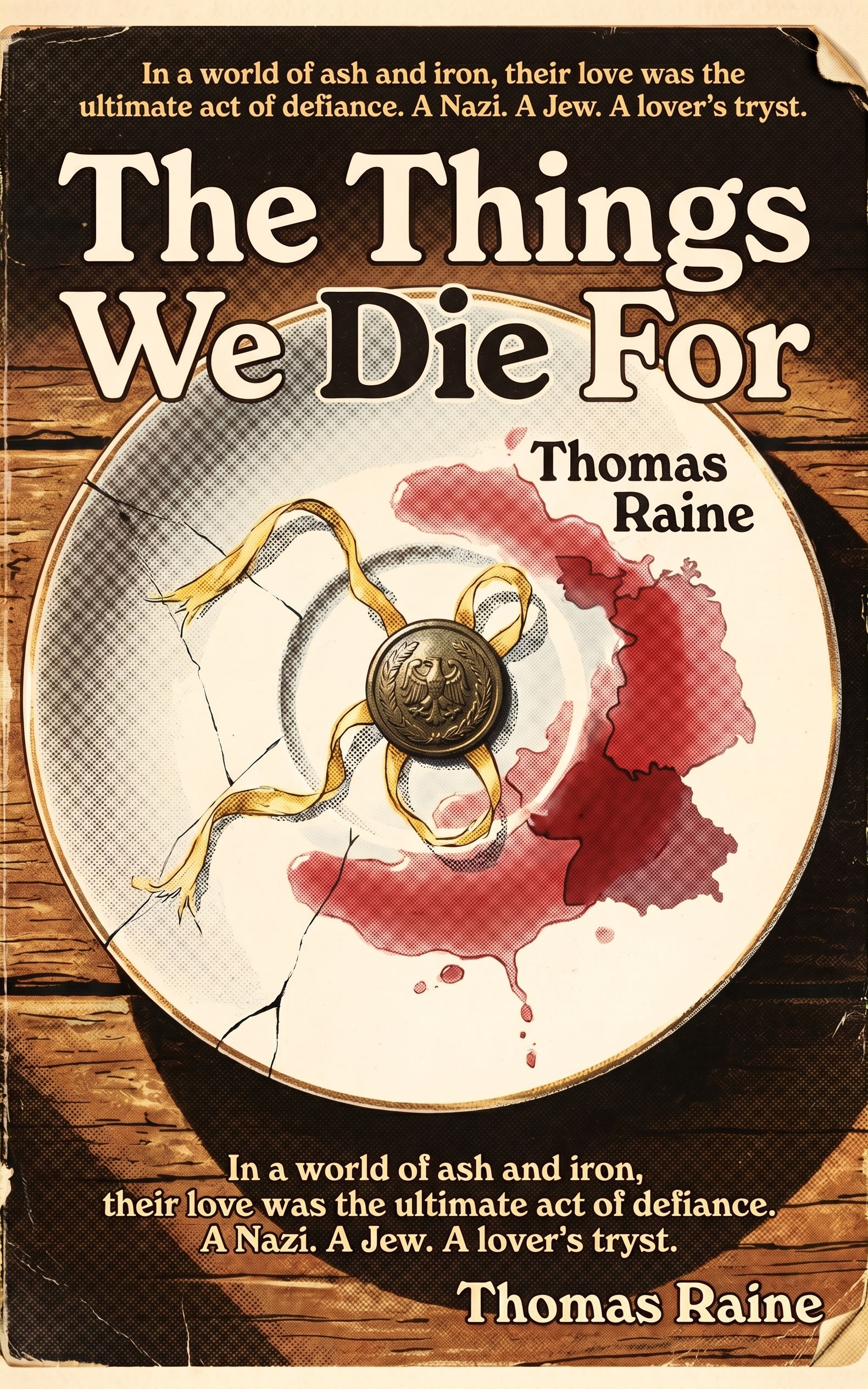
The Things We Die For
In a world of ash and iron, their love was the ultimate act of defiance
by Tom Jarreau
Bordeaux, 1940. The world is darkening under the shadow of the Swastika, and for Anastasia De La Rue, survival is a daily gamble. As a Jewish girl in occupied France, her life is measured in whispered prayers and stolen moments of safety. But the most dangerous threat to her heart isn't the enemy—it is the man wearing the enemy's uniform. Maximillian Barkhofen is a German officer hollowed out by the horrors of the Eastern Front. He has seen the worst of humanity, but when he meets Anastasia, he finds a flicker of light he thought was extinguished forever. Their bond is a crime; their love is a death sentence. From the cobblestone streets of Bordeaux to the treacherous 'free' zone of Lyon, Anastasia and Maximillian embark on a harrowing journey to escape the relentless pursuit of the SS. As the noose tightens and the machinery of war closes in, they must decide what they are willing to sacrifice for a chance at a life together. In a time when the world has forgotten how to live, they will discover the only things truly worth dying for. Thomas Raine delivers a hauntingly beautiful romantic tragedy that explores the thin line between duty and devotion, proving that even in the heart of darkness, love remains the ultimate resistance.
- Romance
- Historical Fiction
- Historical Romance
- World War 2
- Forbidden Love
- Romantic Tragedy
The Static of War
The steam from the panade still rose toward the kitchen ceiling, but the warmth in the room had already begun to thin. Anastasia sat on the edge of the canapé, her hands folded in her lap. She watched her parents move with the music. Emile held Manon close, his steps steady despite the years between them. The song filled the apartment with a kind of hope that felt almost out of place now.
Manon laughed softly as Emile spun her once more. "You still dance like a young man," she said.
"And you still let me lead," he answered. His voice carried the same easy charm it always had, even when the rest of the world grew colder.
Sacha leaned against the window frame. He kept one ear toward the radio and one eye on the street below. Anastasia noticed how his shoulders had tightened over the last few weeks. The boy who once adjusted the dial for music now watched for something else entirely.
The violins swelled again. Anastasia felt the pull of the melody, the same way her mother always had. She remembered nights when the radio brought only dance tunes and news from places that still felt safe. Tonight the notes sounded thinner, as if the signal itself sensed what was coming.
Emile pulled Manon into another slow turn. "One day, when all this passes, we'll still have the music," he said. His words were meant to comfort, yet Anastasia heard the strain beneath them.
Manon rested her cheek against his shoulder. "We keep what we can," she answered quietly.
The music cut off without warning. A sharp burst of static filled the room, loud enough to make everyone stop. Anastasia's heart jumped. Sacha turned quickly and reached for the dial, but the static only grew louder before a man's voice broke through.
"We interrupt this broadcast with an urgent report from the front. German forces have broken through remaining defenses. All citizens in the occupied zone are to comply with new census orders immediately. Failure to register will result in severe penalties."
The words landed like stones. Anastasia felt the air leave her lungs. She looked at the wooden radio as if it had betrayed them. The same machine that once brought Lucienne Boyer now carried only orders and threats.
Emile released Manon's hands. His swagger remained in the way he stood, but his fingers trembled at his sides. He cleared his throat. "They will come for names," he said. "Nothing more than names for now."
Manon moved to his side and touched his arm. "We will give them what they ask," she said. Her voice stayed calm, yet Anastasia saw the fear in her mother's eyes.
Outside, the sound of marching boots reached the apartment. The rhythm was heavy and regular, each step landing on the cobblestones near the wharf. Anastasia walked to the window and looked down. Soldiers in gray moved in formation, their rifles slung across their backs. The sight made her stomach tighten.
Sacha stood beside her. "They are already here," he said. His voice held none of his usual sarcasm. Only a new hardness that made him seem older than seventeen.
Emile crossed the room and placed a hand on his son's shoulder. "We stay inside tonight," he said. "No one answers the door unless we must."
The broadcast continued with a list of new restrictions. Jews were required to register at the town hall within forty-eight hours. Curfew began at sunset. Travel between zones needed special passes. Each rule settled over the family like another layer of ash.
Anastasia felt the weight of every word. She thought of the quiet evenings that once filled these rooms, the smell of bread, the sound of knitting needles. Those things seemed suddenly far away, as if the static had swallowed them whole.
Manon gathered her yarn and needles without looking at them. She set them on the small table beside the canapé. "We should eat while the soup is still warm," she said. The ordinary suggestion sounded brave in the silence that followed.
Emile nodded and moved toward the kitchen. His steps were slower now. Anastasia watched him go and realized how much effort it took for him to keep his shoulders straight. The radio voice kept speaking, but none of them reached to turn it off.
A knock sounded from the main door of the building. It was heavy and official, the kind of sound that did not wait for an answer. Footsteps echoed in the stairwell. Anastasia counted three distinct sets of boots climbing toward their floor.
Sacha moved away from the window. "They are here for the census," he said. His hands clenched at his sides.
Emile returned from the kitchen and stood between his children and the door. "We give them names," he repeated. "And we remember who we are when they leave."
Manon took Anastasia's hand. Her grip was firm despite the tremor in her fingers. "Stay close," she whispered.
The knock came again, louder this time. It carried the same steady rhythm as the marching outside. Anastasia looked once more at the radio. The dial glowed faintly in the dim room. The voice had gone silent, replaced only by the low hum of the machine waiting for whatever came next.
Emile walked to the door and placed his hand on the latch. He paused for a single breath, then opened it to the men in the hallway. The light from the corridor spilled into the apartment, carrying with it the cold certainty that nothing would be the same after this night.
Two German officers stood in the dim light, their gray coats damp from the river mist. The taller one, a man with a clipboard and a silver-buckled belt, didn't look up as he spoke. "De La Rue?" he asked, his French heavily accented and flat. Behind him, a younger soldier kept his hand resting casually on the holster of his sidearm, his eyes scanning the small apartment, lingering on the wooden radio and the small table where Manon's knitting lay. Emile nodded slowly, keeping his body positioned in the doorway to shield his family, his voice steady as he began to recite the names that would now be written in their ledgers, marking the official beginning of their long, dark journey under the shadow of the Reich.
Anastasia caught her breath as the officer with the clipboard scribbled their names. He paused on her name, his pencil hovering for a long second, before writing a small 'J' in the margin of his ledger. It was a simple, quiet stroke of graphite, but to Anastasia, it felt as though he had drawn a line directly through their lives, separating them from the rest of Bordeaux. She squeezed her mother's hand, feeling the cold weight of the future settling over them as the officers finally turned away into the damp corridor. E
The Emerald Gaze
The morning air carried a chill that settled deep into the bones. Anastasia stood in the public square, the line of people stretching ahead like a slow moving river of uncertainty. The sun hung pale above the rooftops, its light thin and without warmth. She kept her hands tucked into the folds of her coat, the fabric doing little to ease the cold t…