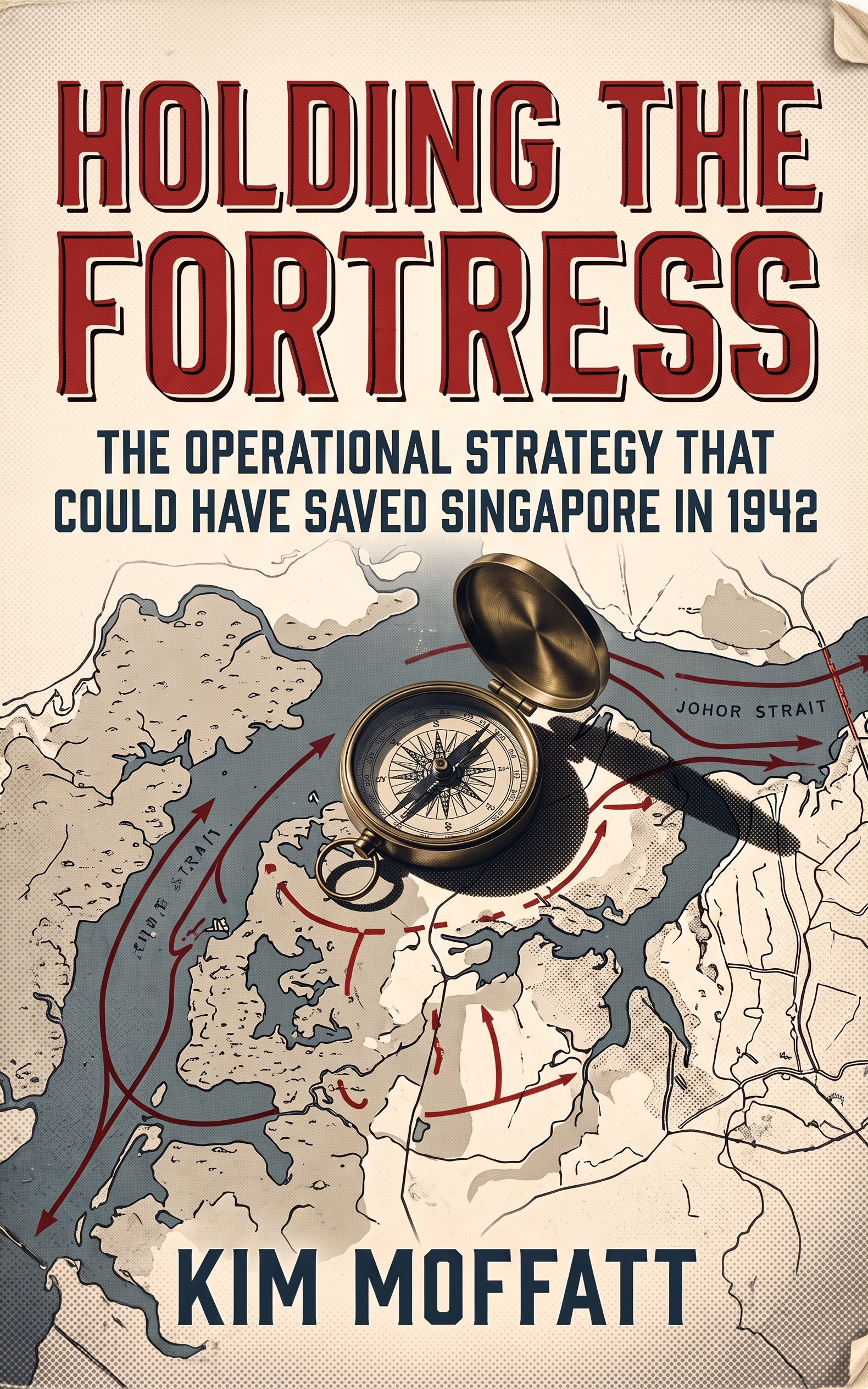
Holding the Fortress
The Operational Strategy That Could Have Saved Singapore in 1942
- Historical Non-Fiction
The catastrophic fall of Singapore in February 1942 has long been remembered as an inevitable disaster—a fortress doomed by Japanese superiority, inadequate defences and the famous story of great guns pointing the wrong way. But what if Singapore could have been saved? In Holding the Fortress, military historian Kim Moffatt challenges one of the most enduring assumptions of the Second World War and asks a provocative question: Did Singapore fall because it was impossible to defend—or because it was defended the wrong way? In this groundbreaking, meticulously researched counterfactual analysis, Kim Moffatt dismantles the myths of the Malayan campaign. By rigorously assessing authentic ordnance returns, troop dispositions, water supply logistics, and tactical terrain realities, Moffatt demonstrates that Malaya Command possessed the raw combat power necessary to repel General Yamashita’s assault. Rather than committing to a paper-thin cordon defence along a seventy-mile coastline, a doctrine centred on defence in depth, pre-registered massed artillery fires across the Johor Strait, and a concentrated mobile reserve could have shattered the Japanese bridgeheads before they expanded inland. Could different decisions have prevented Britain's greatest surrender? Could Yamashita's famous victory have become his first major defeat? Could the fortress have held? Holding the Fortress invites you to reconsider everything you thought you knew about Singapore in 1942. Holding the Fortress provides a gripping reassessment of command decisions, operational doctrine, and missed opportunities, presenting an alternative reality that would have fundamentally derailed the Japanese offensive timetable across the Pacific. History tells us what happened. Strategy asks whether it had to happen.