
T

Tanya Robie

5 booksHistorical Non-FictionEducational & AcademicAmerican History

MITA (Metapatha Institute for the Thrashing of Acedia) is an independent research and self-education collective and civic education initiative, and here, dedicated to examining the intersection of constitutional jurisprudence, natural law, and institutional accountability. Bringing together insights from history, legal philosophy, and prophetic literature, the author challenges the entrenched structures of modern political and corporate monopolies. Through rigorous analysis and accessible frameworks, MITA's self-directed contract learning pedegody seeks to facilitate a revitalize public understanding of local self-governance, individual liberty, and moral justice. When not writing or conducting independent legal research, the author engages in community education and constitutional literacy advocacy.

Books

Letters from the Archive: Exploring the History of Cornwall

Letters from the Archive: Exploring the History of Cornwall

  • Historical Non-Fiction
  • Educational & Academic

What if the secrets of the past were hidden in forgotten letters and dusty filing cabinets right down the street? Letters from the Archive takes young readers and curious historians inside the paper trail of Cornwall, New York. From seventeenth-century colonial maps and boundary lines along Moodna Creek to heated modern debates over land use, historic preservation, and community growth, this book reveals how everyday citizens shaped their town. Explore genuine historical documents, colonial land grants, and constitutional milestones. Follow the story into modern civic battles, discovering how Freedom of Information Law requests, open meetings, and environmental reviews empower people to challenge decisions and demand answers. Engaging, accessible, and grounded in real archival records, this guide demonstrates that history is not just a collection of dates in a textbook. It is an ongoing investigation into who we were, how our communities formed, and how young citizens can make their voices heard today.
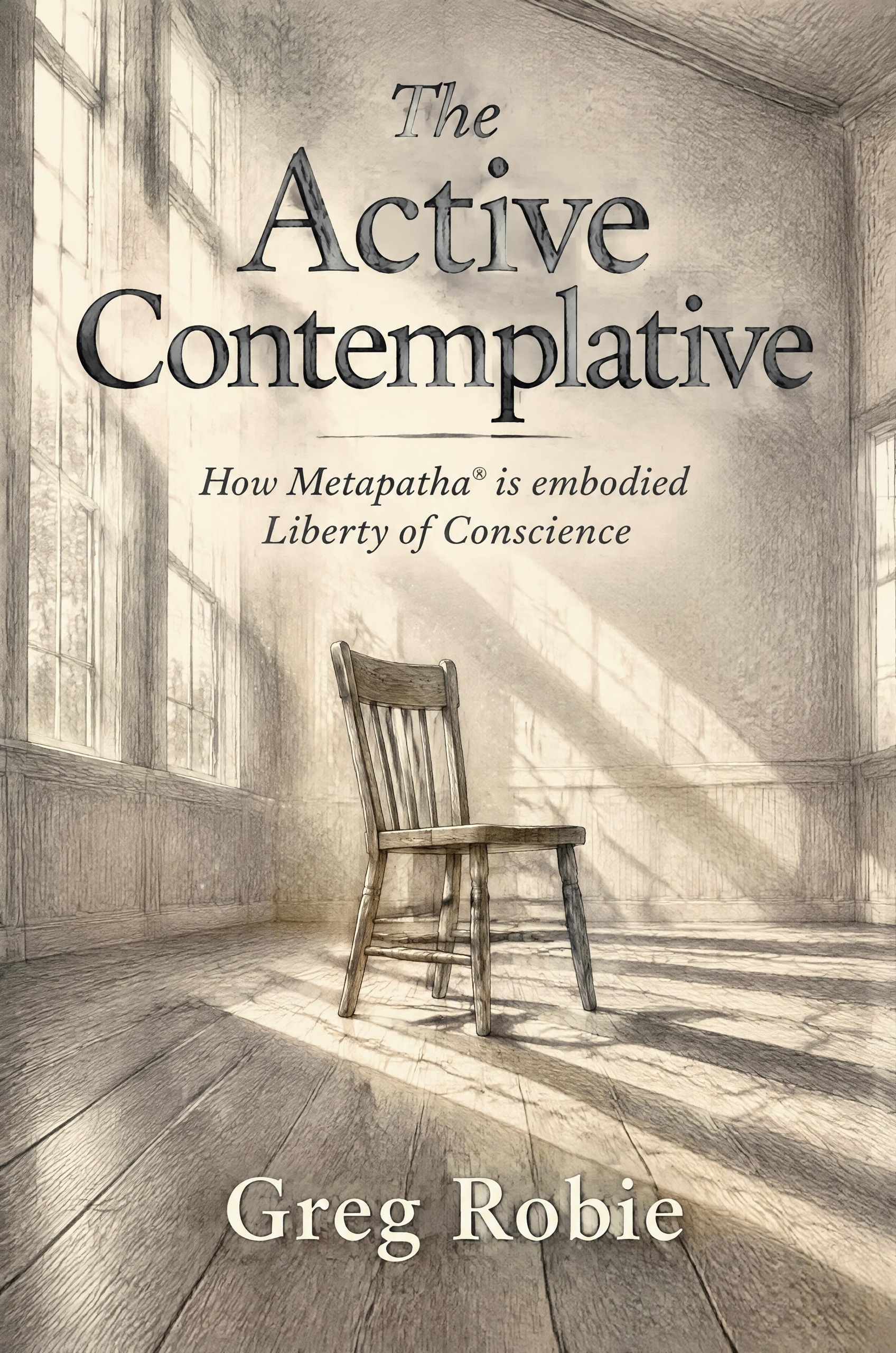
The Active Contemplative

The Active Contemplative

How Metapatha® is embodied Liberty of Conscience

The familiar swing between "now I work" and "now I pray" is a false choice. It comes from a narrow, beta-wave, word-bound way of seeing the world — and that way of seeing is what drives burnout. Greg Robie writes from fifty years of practice. It began when he refused military induction as a matter of Christian conscience and awakened his conscious experience of our internal energy flow in a prison Kundalini yoga class. His practice continued to mature through decades of life among Quakers. In The Active Contemplative, he shows you a recursive loop. Action supplies the raw material, both griefs and joys. Contemplation turns that material into wisdom and cleans up motive. Over time the loop tightens into an upward spiral. You will tune your own body using SPINE, a framework that links sociology, psychology, immunology, neurology and endocrinology. You will learn to notice all five brainwave bands instead of living in tense, analytical beta. You will build daily practices — a morning check-in tracked with a simple rubric, a fully annotated script for metapathic dialogue, and an evening reflection ritual. And when things go wrong, you will learn corrective plays that help you catch motivated reasoning, take real grief into silence as fuel, and tell healthy rest apart from systemic acedia. By the end you have a set of tools and are starting to live in the doorway between being and doing, no longer pacing back and forth between two separate rooms.

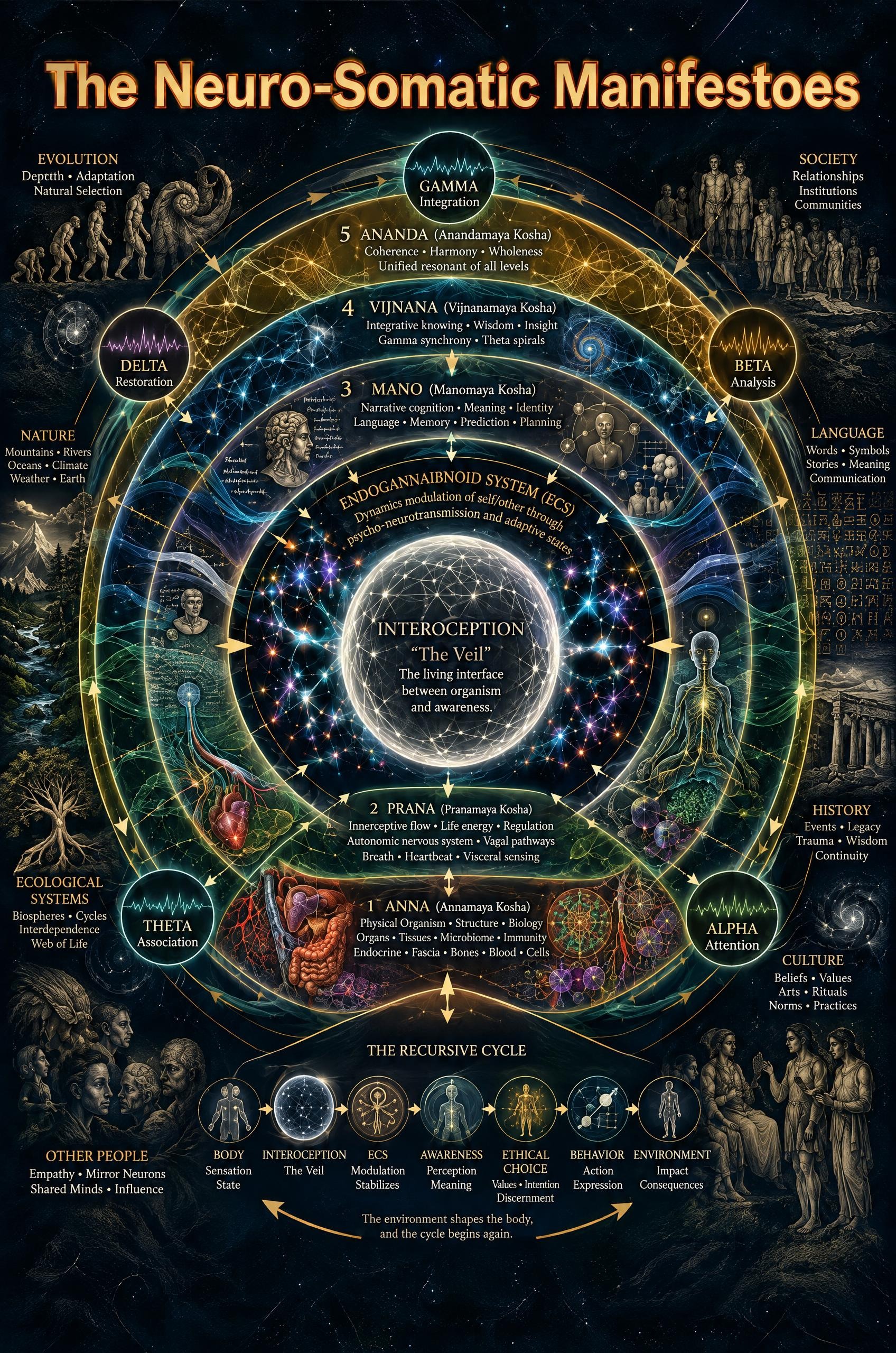
The Neuro-Somatic Manifestoes

The Neuro-Somatic Manifestoes

Brainwaves, election law, and the body's demand for civic survival

  • Educational & Academic
  • Science & Technology

Your nervous system already knows the ballot is broken. The Neuro-Somatic Manifestoes maps five brainwave states—Delta, Theta, Alpha, Beta, Gamma—onto New York's closed primaries, two-party lock-in, and the ecological unraveling we keep out of awareness. Interoception is not metaphor here: it is how a body registers stress while statute and party machinery keep citizens in a corporate duopoly. Closed primaries program Us-versus-Them into emotional memory. Alpha comfort trains people to filter collapse and corruption. Beta election cycles spike cortisol and trap reform in panic. The book does not stop at diagnosis. It argues for Gamma: unified civic agency where biology, law, and environmental balance stop being separate files. Greg Robie writes as a citizen who refuses exhaustion as policy. These pieces contrast passive acquiescence with an assertive biological demand for change—full democratic and somatic agency, not another cycle of tribal noise. For readers of political science, neuroscience, and environmental studies who want the state's election code treated as a living system, not a civics poster.

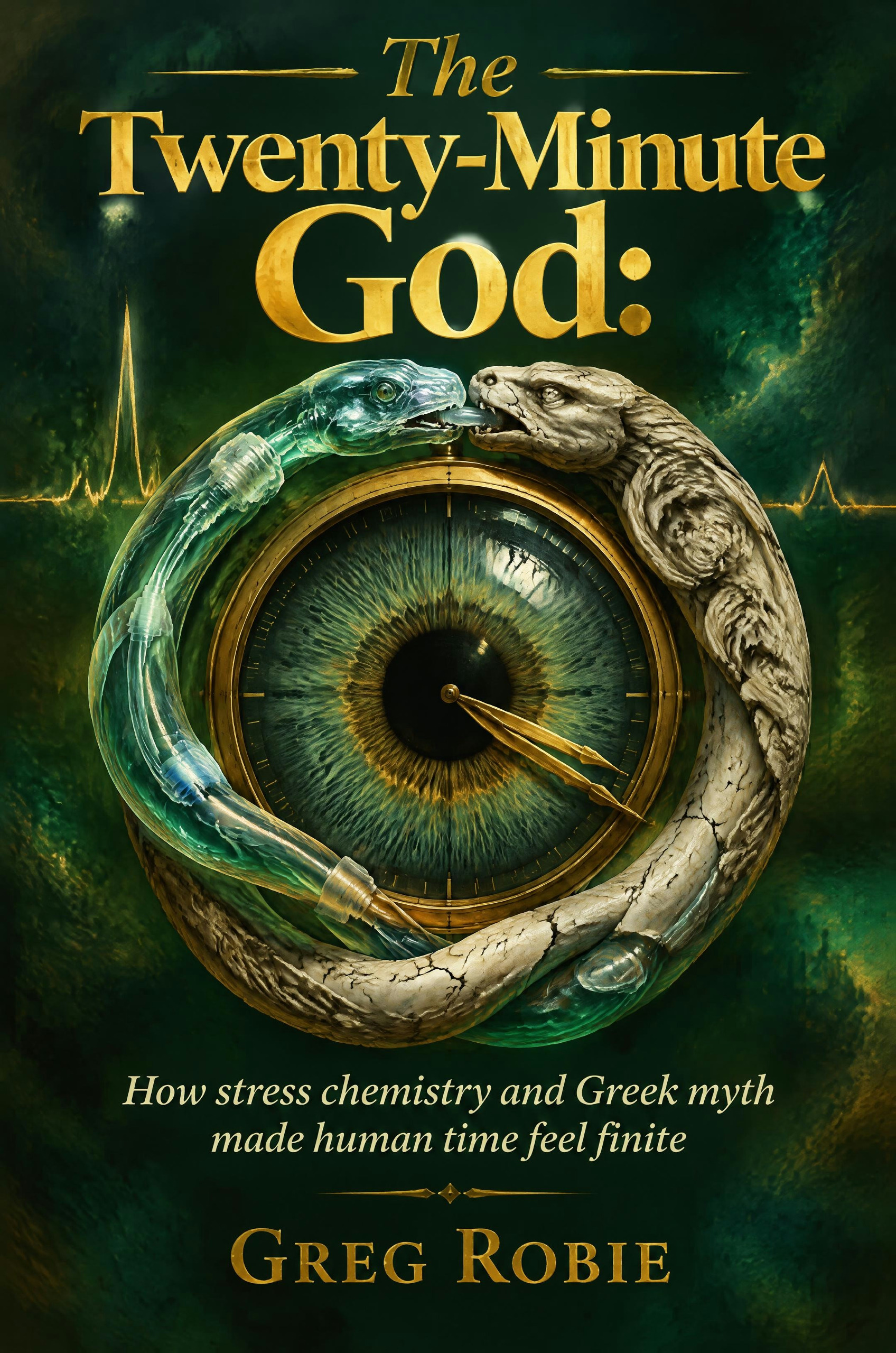
The Twenty-Minute God: Ananke, Chronus, and the Neurochemistry of Mythic Time

The Twenty-Minute God: Ananke, Chronus, and the Neurochemistry of Mythic Time

How stress chemistry and Greek myth made human time feel finite

  • Science & Technology
  • Educational & Academic

Panic does not last forever. It lasts about twenty minutes. This book argues that the Greek pairing of Ananke and Chronus—necessity coiled around time—was never only a story. It was an external map of an internal clock: the half-life of stress peptides, the clearance of acute arousal, and the moment when terror either resolves or becomes chronic. Greg Robie traces how early humans, lacking labs but not language, projected that metabolic window onto cosmic figures. Ananke named what the body could not refuse. Chronus named the interval that would not stop. Together they gave groups a shared grammar for surviving chemical storms without tearing the social fabric. Drawing on neuropeptide kinetics, ritual timing, and the anthropology of speech under threat, The Twenty-Minute God shows why ancient rites so often lasted just long enough for the nervous system to reset—and why modern life, with its endless alerts, never lets that reset finish. Fate, duration, and social order are not abstractions hovering above biology. They are what we invented when our molecules ran out of time.

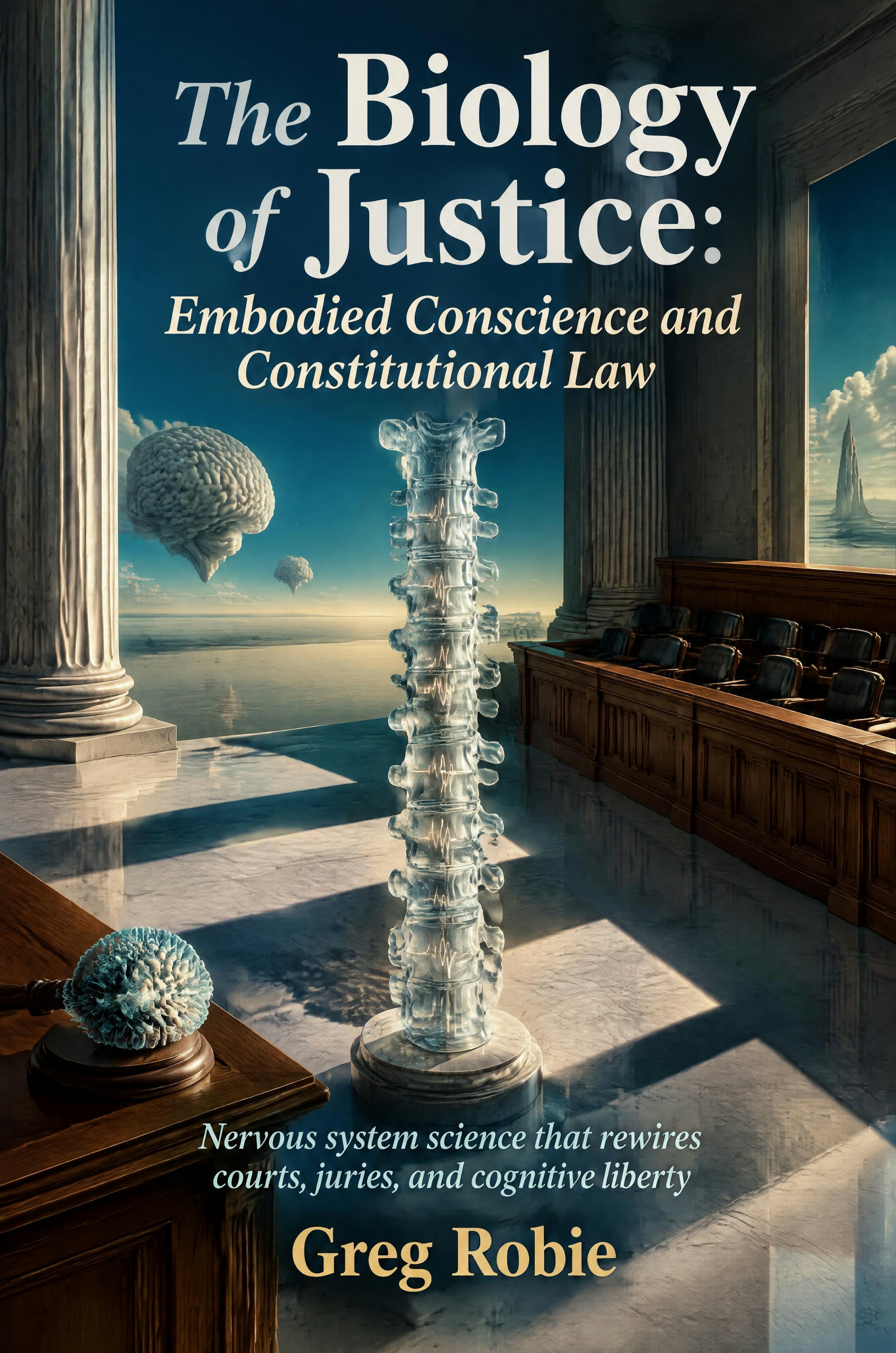
The Biology of Justice: Embodied Conscience and Constitutional Law

The Biology of Justice: Embodied Conscience and Constitutional Law

Nervous system science that rewires courts, juries, and cognitive liberty

  • Nonfiction
  • Law
  • Science

Conscience is not a speech. It is a body under load. The Biology of Justice takes the SPINE framework out of theory and into courtrooms, jury rooms, and the statutes that will govern brain data. Autonomic distress, interoception, and brainwave rhythms become pre-linguistic evidence of moral conviction—benchmarks that expose how intent, credibility, and self-incrimination collapse when law pretends the nervous system is optional. Greg Robie maps Fourth and Fifth Amendment friction points: brain surveillance, compulsory neural decoding, biometrics, and the privacy of thought itself. He offers model jury instructions, evidentiary protocols, and tests of moral sincerity that do not depend on theology or eloquence. Restorative sentencing, juror empathy, judicial affect, and institutional compliance are read through allostatic load and homeostatic regulation. For judges, litigators, bioethicists, and cognitive scientists, this volume is a working architecture: statutory standards that protect cognitive liberty and bodily integrity before neurotechnology writes the rules for us.