

Many authors have excellent fiction story ideas in their minds, but they are unable to turn them into detailed and engaging story concepts. The good news is that you don't always have to wait for inspiration to strike, as you can follow creative ways to develop fresh story concepts.
This blog post is going to discuss those ways in detail. So, let's get started!
04 Creative Ways to Brainstorm Fresh Story Concepts for a Fiction Book
Here are some creative ways that authors can follow to develop fresh story ideas for their fiction book.
Play with What If?
One of the simplest ways to come up with new story concepts is by asking yourself “What if?” questions. This creative technique requires you to consider realistic or unrealistic situations and then imagine unexpected possibilities or scenarios revolving around them.
Below we have mentioned a few “what if?” situations you can consider to get started:
- What if a person (book character) suddenly discovers that their childhood memories were not real?
- What if someone came across a book in the library that predicted events before they happened?

Once you have decided on a “what if?” situation, brainstorm a familiar scenario, character, and setting. Since it's a fiction book, you have full authority to make the situation more mysterious, humorous, dangerous, and emotional.
Moreover, keep thinking about follow-up questions related to the story concept to determine where the main idea could lead.
For instance, if your story concept is about a person moving to a small town, then you can ask a follow-up question: what would happen if they discovered that the people of that town turn into mysterious creatures at night?
This sort of question will create room for more scenarios and plot developments, making your story concept more detailed and engaging.
Draw Inspiration from Everyday Life
As an author, you don't always invent situations or experiences on your own to develop the best story concepts for a fiction book. The reason is that our everyday lives are also full of experiences, adventures, and conflicts.
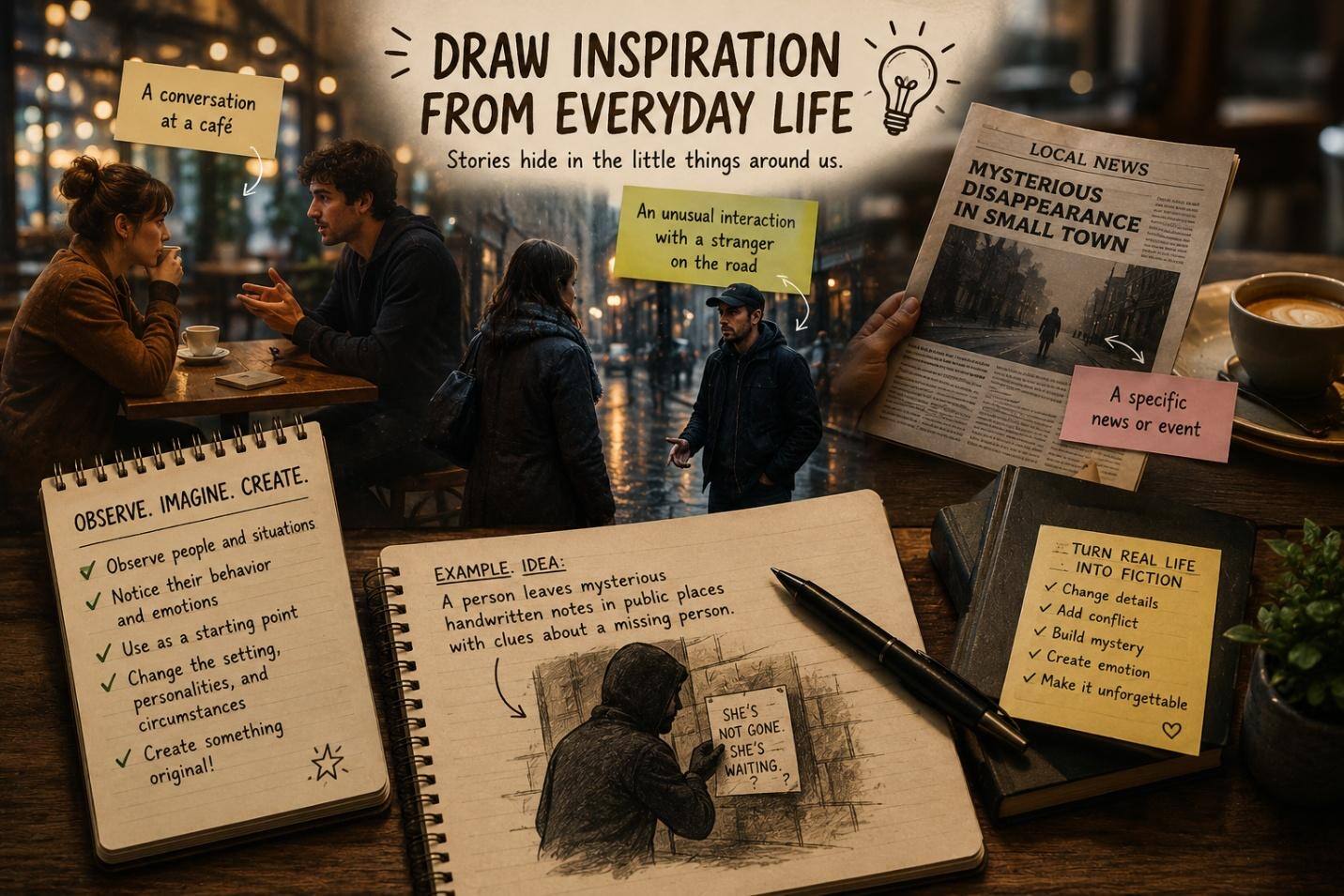
Your day-to-day situations or experiences can also help you develop fresh story concepts. For this, simply pay attention to the people around you and the situations they are in, such as:
- A conversation at a café
- An unusual interaction with a stranger on the road
- A specific news story or event
Besides this, you can also observe how people around you behave in different situations and then use these observations to develop a story concept for a fiction book.
Remember, do not copy real people, situations, or behavior. Instead, use them as a starting point and change setting, personalities, circumstances, and more to come up with something original for the readers.
For instance, if you have observed a person leaving handwritten notes in a public place, then you can think of him as a mysterious character leaving clues about a missing person. So, that's how a simple everyday situation can help you come up with a new story concept.
Combine Elements from Different Genres
Another creative way to brainstorm fresh story concepts for a fiction book is combining elements from different genres. As an author, you shouldn't restrict yourself to the common conventions of one genre; instead, experiment by mixing two or more of the following:
- Themes
- Characters
- Settings
- Conflicts
For example, you can consider combining:
- Romance with thriller
- Science fiction with fantasy
- Crime with historical fiction
Let's say you have decided to write a fiction book about a detective. Instead of going with a traditional detective story, you can consider introducing a science fiction setting where the lead character investigates a crime on a different planet to save “Earth.”
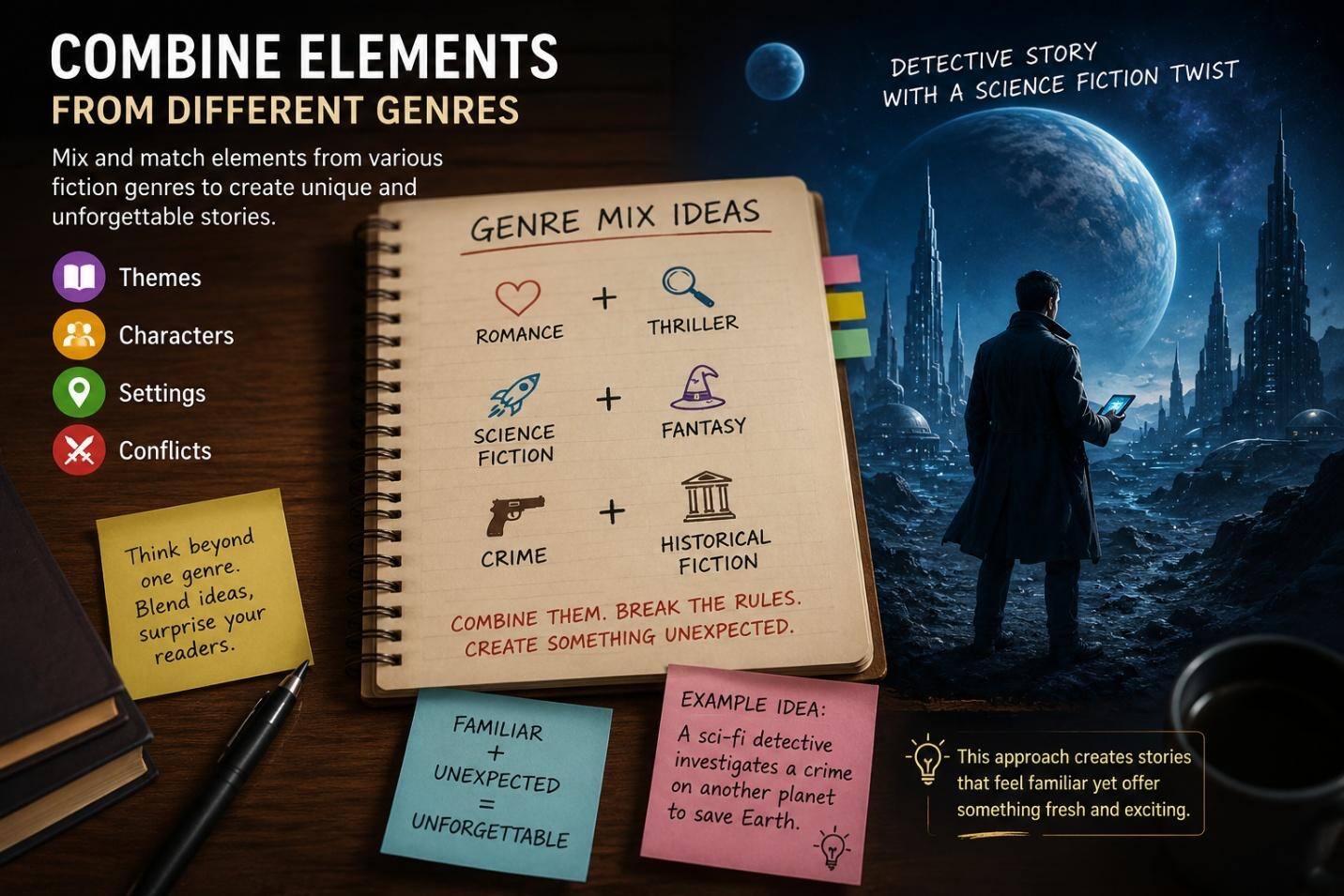
This creative approach will help you come up with a story that not only feels familiar to the readers but also offers something unexpected.
Use AI Story Generators
If you are feeling stuck even after trying the creative techniques discussed above, you can get assistance from AI-powered story generators. These online tools generate unique and engaging stories according to the given prompt.
As an author, you can carefully review AI-generated stories to gather ideas, perspectives, or scenarios that can help develop a fresh concept. Luckily, there are numerous good AI story generators available online.
For demonstration, we are going with iLoveNote AI Story Generator, as it is available for free and supports different story types and can be used to generate fiction ideas.
Our prompt:
“A group of friends takes shelter in an old mansion during a storm only to realize the house is alive and it's been waiting for them.”
Result:
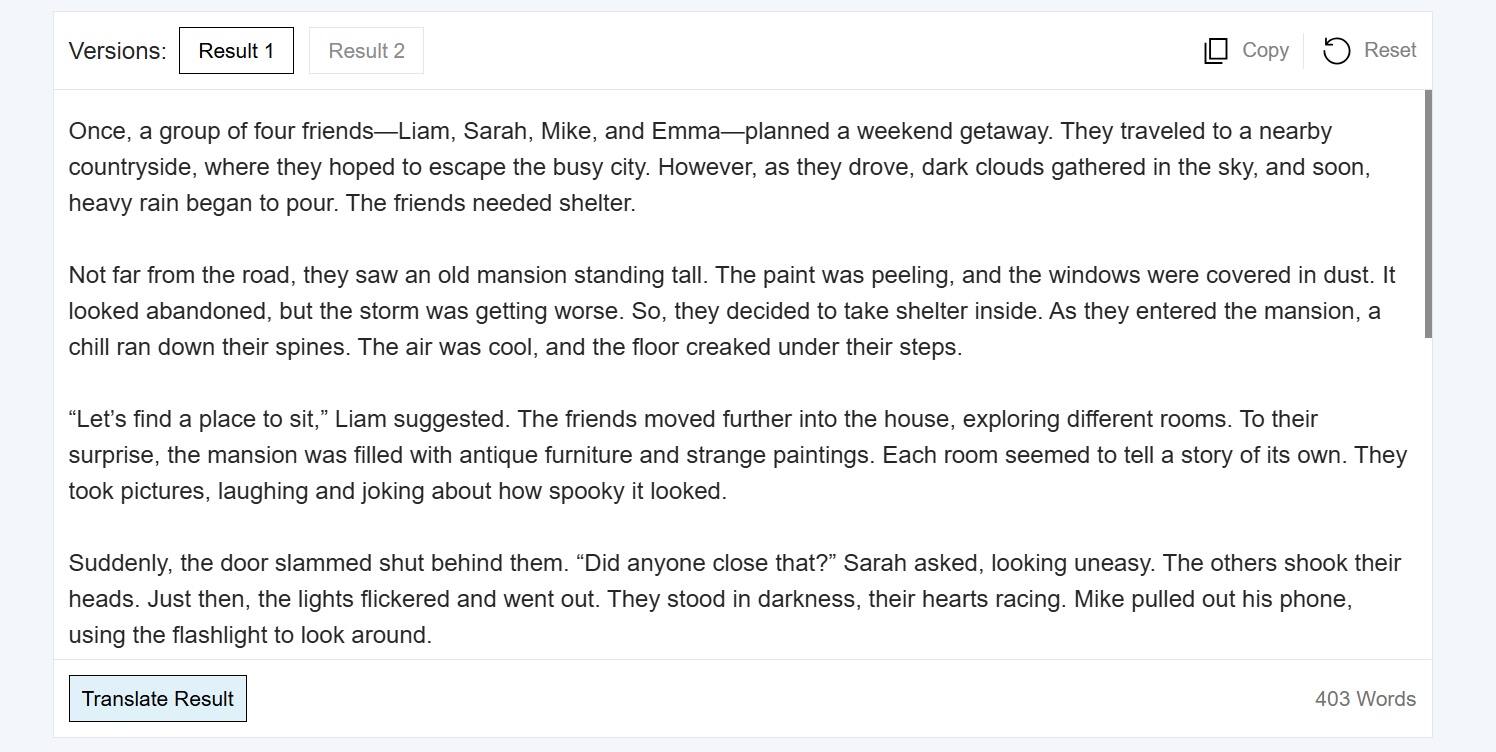
iLoveNote returned two versions of the story for that prompt, each taking the premise in a different direction. Reviewing both can help authors explore different ideas, characters, scenarios and plot directions that may contribute to a fresh story concept.
Bottom Line
For many authors, developing a fresh story concept can be more difficult than writing the story itself. They wait for the perfect idea to strike their minds. However, if you also find yourself in such a situation, then don't just wait.
This is because creative ways such as asking “what if” questions, observing everyday situations, combining multiple genres, and using AI story generators can help you explore fresh perspectives for a fiction story.
About the author
Atif Shahzad is an SEO enthusiast with a strong interest in search engine optimization. He specializes in technical SEO, content strategy, website authority, and search engine rankings. He creates practical, research-driven content to help websites improve their online visibility, strengthen credibility, and grow organic traffic.