

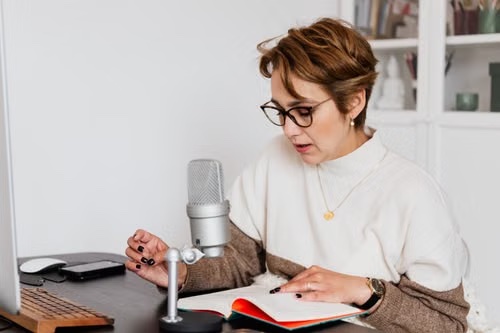
Text-to-speech used to mean a robotic voice reading your book at a flat pace with no idea where a sentence was supposed to breathe. That's no longer true. Neural voice models now handle pacing, emphasis, and emotional tone well enough that several indie audiobooks narrated entirely by AI now sell on major platforms without a single one-star review mentioning the narration. The gap between “AI voice” and “professional narrator” has narrowed faster than most authors have noticed.
That doesn't mean every tool is ready for a 60,000-word manuscript, though. Here's what actually separates a usable audiobook voice generator from one that will get your file rejected, and how to pick between them.
What Actually Matters for a Full-Length Audiobook
A voice that sounds good in a 10-second demo can fall apart across eight hours of narration. Before comparing tools, check for these:
- Long-form stability: No drift in tone, speed, or pronunciation between chapter 1 and chapter 20.
- Pause and emphasis control: The ability to mark where a sentence should land, not just read word-by-word.
- Multiple voices in one project: For narrator vs. dialogue, or separate characters.
- Export specs that match ACX/Audible or Spotify's requirements: Sample rate, bit depth, RMS/peak loudness.
- Pronunciation overrides: For character names, invented fantasy terms, or non-English words your default dictionary won't get right.
- Commercial licensing terms: Some platforms restrict resale of AI-narrated audio; check before you record a full book.
Where a Voice Generator Fits in Your Production Chain
Most authors run one of two workflows:
- 1Fully AI-narrated: Manuscript → voice generator → mastering → upload to a platform that accepts AI narration.
- 2Hybrid: AI narration for early drafts or review copies, human narrator for the final commercial release.
The second workflow is worth considering even if you plan to hire a human narrator eventually. Running your manuscript through a voice generator early lets you hear dialogue and pacing out loud before you've locked the text. It's a cheap way to catch clunky lines that read fine silently but trip a narrator (human or AI) every time.
Questions to Ask Before You Commit to a Tool
- Can I preview the exact voice on a full chapter, not just a sample sentence?
- Does the output meet ACX's -23dB to -18dB RMS and -3dB peak requirements, or will I need separate mastering?
- What happens to pronunciation consistency across a long project - is there a persistent dictionary?
- Is there a per-character or multi-voice option if my book has dialogue-heavy scenes?
- What's the actual cost per finished hour compared to a human narrator on the same platform?
Final Thoughts
An AI voice generator won't replace a human narrator for every genre. Literary fiction and memoir still tend to benefit from a performer who can act, not just read. But for nonfiction, how-to books, and fast-moving series where a $2,000+ narration budget per title isn't realistic, today's tools are good enough to ship a professional-sounding audiobook and get it into more readers' ears.
Test the voice on your actual manuscript, not a demo script, before you commit to narrating the whole book with it. For the cost side of the decision, our breakdown of AI audiobook narration compares human and AI narration per finished hour.
About the author
This is a guest post by Priya Nandan, who writes about audio production and self-publishing workflows for independent authors.