

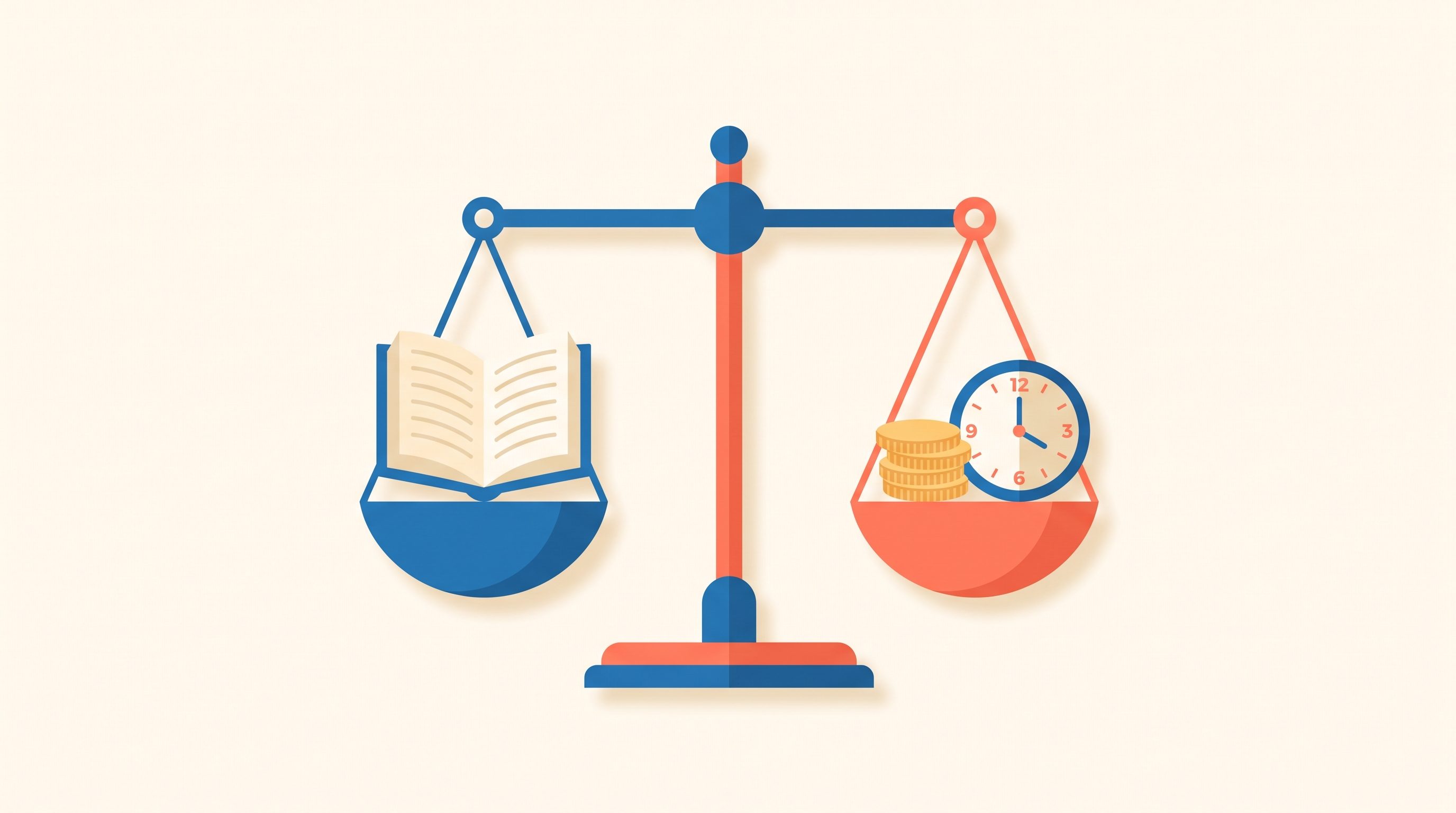
KDP is worth it if you publish good books consistently and treat it as a business, not a lottery ticket. It is not worth it if you expect one book to earn passive income with no marketing. The platform is free and the ceiling is high — but the median outcome is modest, and the difference between the two is almost entirely in your control.
Nobody's KDP result is average. The numbers below are starting points, not predictions.
On this page
Is KDP worth it for your situation?
"Worth it" means something different for a hobbyist than for someone chasing a full-time income. Pick the profile closest to you for a straight answer.
You want a genre backlist
Worth it, and this is who it pays best.
KDP rewards volume and reader loyalty. Romance, thriller, cozy mystery, and LitRPG authors who release a series on a schedule stack royalties book over book — readers who finish book one buy the whole series. This is the profile most likely to reach a real income, but it demands a publishing cadence, not one perfect book.
Who KDP actually pays
Strip away the survivorship-biased screenshots and a clear pattern remains: KDP pays authors who solve for discoverability, not just for writing. The money follows a few repeatable traits.
Genre-fit writers
Authors who write squarely inside a commercial genre with hungry readers — not literary experiments — meet demand that already exists.
Consistent publishers
The algorithm and reader habits both favor a backlist. Three books outsell one by more than triple, because each new release lifts the older ones.
Metadata-savvy authors
The authors who treat their seven keyword slots and three categories as seriously as their prose get found. Most don't, which is exactly the opening.
Authors who invest in the package
A cover that competes and a description that sells convert browsers into buyers. The book that looks professional gets the click even at the same price.
What authors really earn
Here is the part course-sellers skip. Author-income surveys from indie organizations consistently paint the same shape, and it's a long tail, not a bell curve.
Self-published authors earn under a few hundred dollars a year from a single title — usually because it's one book with a weak cover and no marketing.
Reach four figures a year per book by nailing genre-fit, covers, and keywords, and by publishing more than once.
Earn a full-time income — nearly all of them run a series, publish regularly, and reinvest in ads. Almost none did it with one book.
The takeaway isn't "most people fail." It's that the median author and the top-tier author did fundamentally different things. The gap is method, not luck.
On the mechanics: ebooks priced $2.99–$9.99 earn a 70% royalty, print pays 60% of list minus printing, and Kindle Unlimited pays fractions of a cent per page read. Before you set a price, run the numbers through our free royalty calculator so you know your actual take-home per sale, not just the list price.
The real time investment
"Worth it" is a ratio — return over effort. So the honest question is how much time a KDP book really takes. Traditionally, a lot. That's the variable AI changes most.
The traditional path
Writing a first draft by hand runs months of evenings for most people; then editing, formatting to KDP's spec, cover design, and metadata add weeks. Many would-be authors stall here — the book that never ships earns nothing, which is the real reason KDP "didn't work" for them.
The compressed path
This is where the effort side of the ratio drops. AIWriteBook turns an idea into a chapter-by-chapter outline and a full draft in a fraction of the time, generates a cover, and exports a KDP-ready file — so the months-long stall between "I have an idea" and "it's live" collapses to days. You still edit and shape it into your voice, but you actually finish.
Success rates, honestly
The uncomfortable truth: most KDP books sell in single digits per month, and a large share sell almost nothing. But that statistic is distorted by the enormous number of books published with no cover budget, no genre fit, and no keywords. Among books that clear that low bar — professional cover, correct category, real description — the odds improve dramatically. You are not competing against every book on Amazon; you're competing against the ones in your subcategory that took it seriously, and most didn't.
Kindle Unlimited: worth it or not
Enrolling in KDP Select puts your ebook in Kindle Unlimited and pays you per page read — but it demands 90-day Amazon exclusivity. Whether that trade is worth it splits by genre.
When KU is worth it
- You write binge-friendly genres — romance, thriller, fantasy — where subscribers read fast and page reads add up
- You're building a series and want new readers to try book one at zero risk
- You value the visibility bump and countdown-deal promos over selling on other stores
When it isn't
- You write nonfiction or reference readers skim rather than read cover to cover
- You have an audience on Apple Books, Kobo, or Google Play you'd lose to exclusivity
- You'd rather own wide distribution than bet on one store's subscription pool
We break the exclusivity trade down in depth in our guide to the KDP Select pros and cons.
When KDP is the wrong choice
Honesty cuts both ways. There are real situations where the answer is no — or at least not yet.
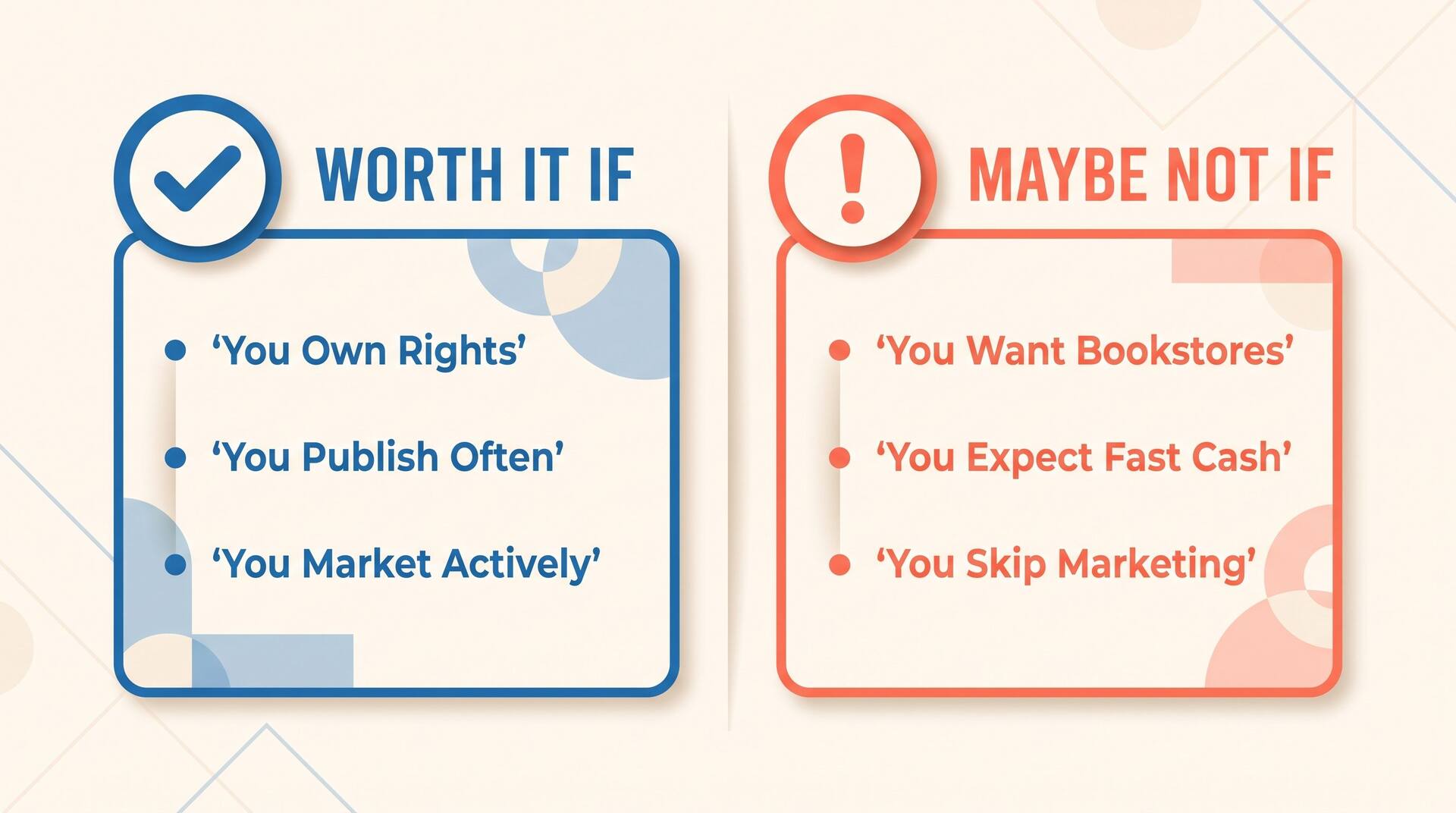
You haven't finished the book
KDP is a distribution channel, not a writing coach. If the manuscript doesn't exist, the platform can't help — the bottleneck is upstream.
You need bookstore and library shelves
KDP print has thin bookstore distribution. If your goal is physical stores and libraries, a wider print channel matters more than the Amazon default.
You expect zero marketing to work
Amazon won't promote your book for you. If you're unwilling to touch keywords, a cover, or a description, even a good book stays invisible.
You're chasing a quick flip
The get-rich-quick, mass-produced-book playbook is exactly what Amazon's rising quality bar and content rules now punish. It's a fast way to lose an account.
Your decision checklist
Tick the statements that are true for you. The more you can honestly check, the more worth it KDP is going to be.
Mostly unchecked? KDP may frustrate you right now. Fix the gaps — usually finishing the book and taking the package seriously — before you judge the platform.
The biggest reason KDP "isn't worth it" is an unfinished draft
Most people who decide KDP failed them never actually published. Start a draft free, get an outline and chapters fast, and export a KDP-ready file — then decide.
Frequently asked questions
The bottom line
Is Amazon KDP worth it? For most people asking the question, the honest answer is: it's worth exactly what you put into it. The platform removed every gatekeeper and handed authors the tools that publishers used to control — but it also handed them the responsibilities, which is the same bargain modern entrepreneurship makes in every other industry it has touched. The authors who treat it like a craft and a business win; the ones who treat it like a lottery lose, then blame the platform.
If you're on the fence, the smartest move isn't more research — it's finishing and shipping one genuinely good book, taken seriously from cover to keywords, and reading your own sales dashboard. That single real data point will tell you more than any income screenshot online.