

On this page
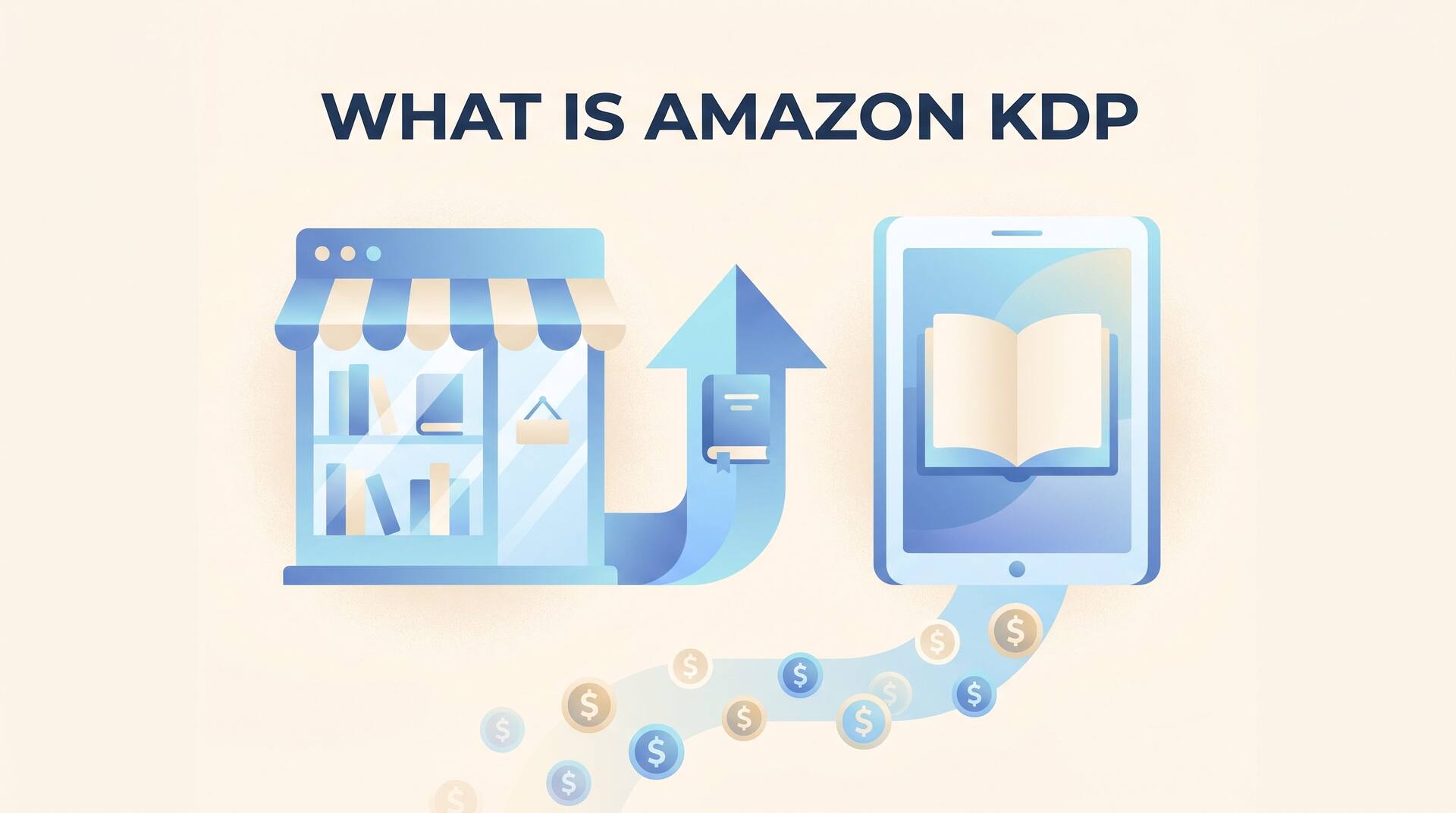
KDP stands for Kindle Direct Publishing. It is Amazon's free self-publishing service that lets anyone upload a manuscript and a cover, set a price, and sell it as a Kindle ebook, a print-on-demand paperback, or a hardcover — usually live on Amazon within 72 hours.
"KDP" and "Kindle Direct Publishing" are the same thing. The name says Kindle, but it covers print books too.
What does Amazon KDP actually do?
Think of KDP as three jobs rolled into one account. It hosts your file and listing, it prints or delivers a copy every time someone buys, and it pays you a royalty each month. You never touch inventory, a printing press, or a shipping label. Below is what you can sell through it.
Three formats, one upload
Tap a format to see how it works, what you earn, and who it fits.
Kindle ebook
35% or 70% royalty
A digital file readers buy and read on a Kindle device or the free Kindle app. No printing, no shipping, instant delivery worldwide. This is where most indie authors make the bulk of their money.
Best for: fiction series, genre readers, and anyone testing a book before committing to print.
How publishing on KDP works, step by step
The whole flow happens in your free KDP dashboard. Here is the path from finished manuscript to live listing.
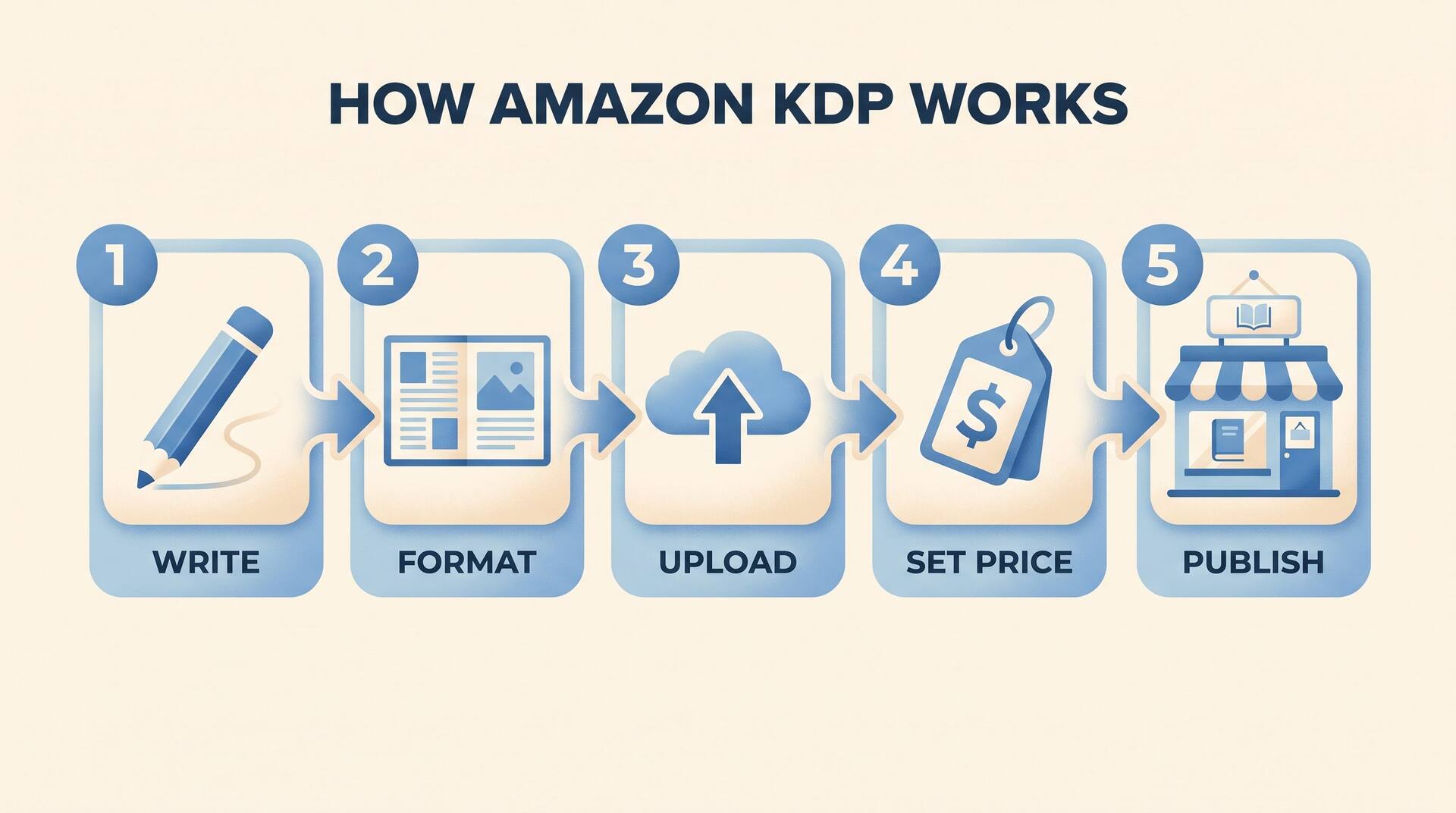
Create a free KDP account
Sign in with your Amazon account, add tax and bank details so you can get paid, and you're in. There is no application and no approval to publish.
Upload your manuscript and cover
Add a formatted manuscript file and a cover image. KDP's online previewer shows exactly how each page will look to a reader before you commit.
Set metadata, categories, and keywords
Your title, description, up to three browse categories, and seven keyword slots decide who discovers the book. This is the discoverability layer most beginners rush.
Choose your price and royalty plan
Pick a list price, your royalty rate, and whether to enroll in KDP Select for Kindle Unlimited reach. You can change price any time.
Hit publish and go live
Amazon reviews the file — usually within 72 hours — then your book appears in the store with its own product page and is buyable in every Amazon marketplace you selected.
What KDP costs (and what's genuinely free)
The headline is true: publishing on KDP is free. The catch is that a good book has costs around the platform, not inside it. Here's the honest breakdown.
Free on KDP itself
- Creating an account and publishing a title
- A free KDP-assigned ISBN for print books
- Listing in every Amazon marketplace you choose
- Unlimited edits and price changes after launch
What you may pay for around it
- Per-copy printing cost (deducted from print royalties, not paid upfront)
- Editing and proofreading — optional but the difference between amateur and professional
- A cover that doesn't look homemade
- Optional Amazon Ads if you want paid visibility
How KDP royalties really work
This is the part new authors most often get wrong. The percentage you earn depends on format, price, and one delivery quirk for ebooks.
Kindle ebook royalties
You earn 70% if your list price is between $2.99 and $9.99 — but Amazon subtracts a small per-megabyte delivery fee from that 70%. Price below $2.99 or above $9.99 and you drop to 35% with no delivery fee. For most authors, pricing inside the 70% band wins.
Print royalties
Paperback and hardcover pay 60% of your list price minus the printing cost. Because printing scales with page count, a 400-page book costs more to print than a 150-page one, which is why long books need higher cover prices to stay profitable.
A $4.99 ebook at 70% returns roughly $3.40 after a typical delivery fee. Sell 1,000 copies and that's about $3,400 — from a digital file Amazon delivers for you, no stock, no shipping.
Who Amazon KDP is right for
KDP is not for everyone, and pretending it is wastes people's time. It fits you if any of these describe your situation.
First-time authors
You have a finished manuscript and want it for sale without querying agents for two years.
Series and genre writers
Romance, thriller, fantasy, and cozy mystery authors who publish often and build a backlist thrive on KDP's volume model.
Nonfiction and expertise authors
Coaches, consultants, and specialists who use a book as a credibility and lead-generation asset.
Authors who want control
You keep your rights, set your price, change your cover, and see your sales dashboard daily — none of which traditional publishing offers.
Honest pros and cons
What KDP does well
- Zero upfront cost and no gatekeepers
- Access to the largest book-buying audience on earth
- Print-on-demand means no inventory risk
- You keep your rights and most of the money
Where it falls short
- Discoverability is on you — Amazon won't market your book
- Royalty rules and delivery fees are easy to misread
- KDP Select asks for 90-day ebook exclusivity
- Quality bar is rising, so a sloppy book disappears fast
Mistakes that sink first books
Treating the cover as an afterthought
Browsers judge in under a second. A cover that looks like a template tells readers the inside is templated too.
Ignoring keywords and categories
Seven keyword slots and three categories are your only built-in discovery levers. Leaving them generic buries a good book.
Pricing outside the 70% band by accident
A $1.99 ebook earns 35%, not 70%. Many authors lose half their royalty without realizing why.
Publishing without a real edit
The first one-star review about typos is permanent. A pass from an editor or a thorough self-edit pays for itself.
Where AIWriteBook fits into KDP
KDP handles selling. It does not help you write, format, or prepare the book in the first place — that's the part that stalls most first-time authors. AIWriteBook covers the upstream work: it turns an idea into a chapter-by-chapter outline, drafts the manuscript with Gemini or Grok, generates a cover, and exports a clean file you upload straight to KDP. Our free KDP keyword research and royalty calculator tools handle the discoverability and pricing math KDP leaves to you.
Write the book, then publish it on KDP
Start a draft free, get an outline and chapters in minutes, and export a file that's ready to upload.
Frequently asked questions
The bottom line on Amazon KDP
Amazon KDP removed the gatekeepers from publishing: anyone with a finished manuscript can reach the world's biggest bookstore for free and keep most of the revenue. The trade-off is that everything publishers used to do — editing, cover, discoverability, pricing — now lands on you.
Understand the royalty bands, take the cover and keywords seriously, and start with a genuinely good book, and KDP becomes one of the most generous deals in publishing.
Explore the full Amazon KDP guide for everything from keyword research to launch strategy.