

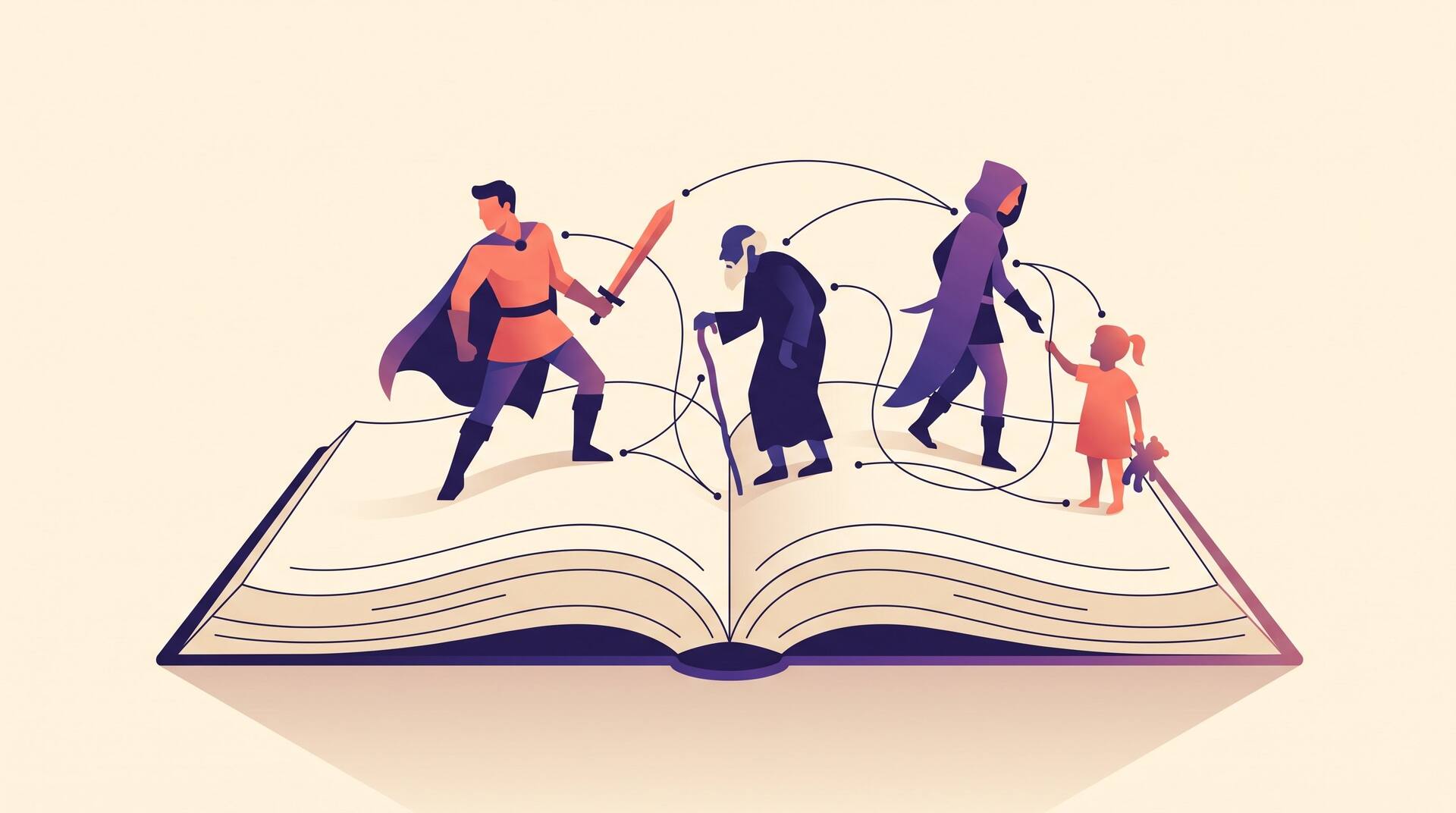
Think of the last book that stayed with you long after you finished reading. Chances are, it was a character who lingered in your mind, not a plot twist. Elizabeth Bennet, Atticus Finch, Katniss Everdeen, Sherlock Holmes — these characters transcend their stories because their creators understood something fundamental: a great character feels like a real person with a life beyond the page. This guide breaks down exactly how to achieve that effect in your own writing.
The Character-Driven Truth
Readers forgive a weak plot if the characters are compelling. They rarely forgive weak characters even when the plot is brilliant. Character development is not optional — it is the single most important skill a fiction writer can master.
Why Characters Matter More Than Plot
A survey of bestselling novels across all genres reveals a consistent pattern: the books that become cultural phenomena are character-driven. Here is why characters carry more weight than events.
Emotional Investment
Readers experience your story through characters. When they care about a character, every plot event carries emotional weight. A car chase is boring. A car chase with a mother trying to reach her child before the kidnapper — that is unputdownable. The plot provides the situation; the character provides the stakes.
Memory and Word-of-Mouth
When readers recommend books, they talk about characters. 'You have to read this — the main character is so...' No one recommends a book by recapping the plot point by point. Characters are your marketing engine.
Series Potential
The most successful book series are built on characters readers want to spend more time with. Jack Reacher, Harry Potter, Stephanie Plum — readers return for the character, not the mystery or the adventure. If you plan to write more than one book, strong characters are your greatest asset.
Theme Delivery
Characters embody your themes. A story about redemption needs a character worth redeeming. A story about courage needs a character who must find it. Your characters are the vehicle through which readers experience and internalize the meaning of your story.
Backstory Development: The Iceberg Principle
Ernest Hemingway compared good writing to an iceberg: the reader sees only the tip, but the story's power comes from the massive foundation beneath the surface. Character backstory works the same way. You should know ten times more about your character than you ever reveal on the page.
What the Reader Sees
What You Know (But Never Directly Tell)
The hidden backstory does not get dumped into exposition. It seeps through — in the way your character flinches at a certain word, avoids a certain topic, or overreacts to a minor slight. The reader feels the depth without being told about it directly.
Software hits the same wall in a different costume. If you lean on AI to hold that hidden history across a long manuscript, the engineering write-ups on llm long term memory explain why a model needs a deliberate store rather than a longer prompt to keep a character straight.
Character Archetype Explorer
Archetypes are not stereotypes. They are foundational patterns that resonate across cultures and centuries. Use them as starting points, then add complexity and contradiction to make them yours.
The Reluctant Hero
Ordinary people thrust into extraordinary circumstances who must find courage they did not know they had. Their relatability is their greatest strength — readers see themselves in this character.
The Reluctant Hero
Relatability, growth potential, audience identification, underdog appeal
The Reluctant Hero
Can seem passive if not given agency early, risk of being overshadowed by more dynamic characters
Frodo Baggins, Katniss Everdeen, Harry Potter, Bilbo Baggins
Personality Traits: Going Beyond Stereotypes
The difference between a flat character and a round one is contradiction. Real people are bundles of contradictions — brave but afraid of commitment, generous but terrible at accepting help, intelligent but emotionally oblivious. Here is a framework for building layered personalities.
The Trait Contradiction Grid
For each character, choose one trait from the left column and pair it with a contradicting trait from the right. The tension between these traits creates depth.
The contradiction is where your story lives. A character who is confident in every situation has no room to grow. A character who is confident professionally but falls apart in personal relationships — that is someone with a story to tell.
Character Arcs: The Transformation Journey
A character arc is the internal transformation your character undergoes from the beginning to the end of the story. It is the emotional spine of your narrative. Without it, you have a sequence of events. With it, you have a story that resonates.
The False Belief
Your character begins the story believing something fundamentally untrue about themselves or the world. This lie feels like truth to them because it was forged in painful experience. Example: 'I am not worthy of love' or 'Trusting people always leads to betrayal.'
The Familiar World
The character has built a life that accommodates their false belief. Everything is arranged to avoid confronting the lie. This is their status quo — functional but limited. The reader sees what the character cannot: this life is smaller than it should be.
The Catalyst
Something forces the character out of their comfort zone and into situations where the lie will be tested. This disruption should be organic to the story — not random bad luck, but a challenge that specifically targets the character's false belief.
Fighting Change
The character tries to solve new problems using old patterns. They cling to their false belief even as evidence mounts against it. This stage should take up significant page time — real change is hard and people resist it fiercely.
The Breaking Point
The character faces a moment where the old way of being completely fails them. They must either evolve or lose everything that matters. This is the emotional climax of the character arc, and it should cost the character something real.
The New Belief
The character embraces a new understanding of themselves and the world. This is not a sudden epiphany — it is the culmination of every challenge, failure, and small victory throughout the story. The final actions of the story prove the transformation is real.
Dialogue as Character Revelation
Every line of dialogue should do at least two things: advance the conversation and reveal character. The way a person speaks tells the reader who they are more powerfully than any description.
Vocabulary Reveals Background
A marine biologist uses different metaphors than a Wall Street trader. A teenager speaks differently than a retiree. Word choice, sentence length, and formality level should all reflect who your character is. A character who says 'That is unacceptable' is fundamentally different from one who says 'No way, that is garbage.'
What They Avoid Saying
The most revealing dialogue is often what characters refuse to say. A character who changes the subject when asked about their father tells the reader more than three paragraphs of backstory. Silence, deflection, and subject changes are powerful characterization tools.
Dialogue Under Pressure
How your character speaks when stressed reveals their core personality. Some people get very quiet. Others talk too much. Some become cutting and precise. Others ramble and deflect. The mask comes off under pressure, and that is when the reader sees the real person.
Consistent Speech Patterns
Each character should have verbal habits — phrases they overuse, ways they start sentences, patterns in how they ask questions. These patterns become fingerprints that help readers identify who is speaking even without dialogue tags.
Relationship Dynamics and Chemistry
Characters do not exist in isolation. The way they relate to others — friends, enemies, family, strangers — reveals dimensions that internal monologue alone cannot reach.
The Mirror Character
Place a character in your story who reflects what your protagonist could become if they do not change. This mirror character makes the stakes of the character arc concrete and visible. In Breaking Bad, Hank is who Walter could have remained. In Pride and Prejudice, Charlotte Lucas shows what Elizabeth's future could look like without self-respect.
The Catalyst Character
Every protagonist needs someone who forces them to confront their false belief. This is not always the love interest or the antagonist — it is whoever consistently challenges the protagonist's comfortable worldview and refuses to let them hide.
Conflict Reveals Character
Two characters who agree about everything produce no drama and no revelation. The most interesting relationships contain fundamental disagreements about values, methods, or worldview. How characters handle disagreement reveals who they truly are.
Power Dynamics Shift
Static relationships flatten a story. The most compelling character dynamics involve shifting power balances — a student surpassing a teacher, a subordinate gaining leverage, a dependent becoming self-sufficient. These shifts mirror and reinforce the character arc.
Build Characters That Live and Breathe
AIWriteBook helps you develop complex characters with detailed profiles, relationship maps, and arc planning — all powered by AI that understands narrative craft.
AI Character Development Tools
AI can accelerate the character development process while keeping your creative vision at the center:
- Generate detailed character profiles with backstory, personality traits, and contradictions
- Develop character voice samples to find distinct speech patterns for each character
- Map character arcs with emotional beats tied to plot events
- Create relationship dynamic maps showing how characters affect each other
- Draft dialogue exchanges to test chemistry between characters before writing scenes
AI helps you build the scaffolding, but the soul of a character comes from you. Use AI to generate possibilities and test combinations, then choose the elements that resonate with the story only you can tell.
Common Character Mistakes and Fixes
The Perfect Protagonist
Characters who are beautiful, brilliant, kind, athletic, and universally loved give the reader no one to root for. Perfection is boring because it eliminates tension. If your character can handle every situation effortlessly, there is no story.
Give your character a meaningful flaw that directly interferes with their goals. Not a cute flaw like clumsiness — a real flaw like cowardice, jealousy, or a destructive coping mechanism.
Backstory Dumping
Opening your novel with three pages of character history kills pacing and robs the reader of discovery. Backstory told all at once is exposition. Backstory revealed gradually is mystery.
Reveal backstory only when the present story demands it. A character does not need to explain why they fear water until they are standing at the edge of a river they must cross.
Inconsistent Behavior
A character who is established as cautious but suddenly acts recklessly without motivation breaks the reader's trust. Every action must be believable given who the character is — or the story must show why they are acting against type.
Before writing an out-of-character moment, establish the pressure or catalyst that pushes them beyond their normal patterns. The reader needs to see the reason, even if the character does not.
Identical Supporting Cast
When the best friend, the mentor, and the love interest all speak the same way and serve the same narrative function, your story feels populated by one character wearing different hats.
Give every named character a unique combination of speech pattern, worldview, and relationship to the protagonist. If two characters serve the same function, combine them into one.
Motivation Without Depth
A villain who is evil because they are evil, or a hero who saves people because it is the right thing, lacks the complexity that makes characters feel real. Surface-level motivations produce surface-level stories.
Ask 'why' five times. Why does the villain want power? Because they were powerless as a child. Why were they powerless? Because their family lost everything. Keep digging until you find the human need beneath the surface goal.
Character Creation Checklist
Characters Are the Story
Every great story is ultimately about a person changing. The plot is just the mechanism that forces the change. When you invest deeply in character development — building rich backstories, layered personalities, meaningful arcs, and distinct voices — you are not just creating people on a page. You are creating the emotional engine that powers everything else in your story.
Start with one character. Know them deeply. Give them a wound, a lie they believe, a contradiction that makes them human. Then put them in a situation that demands they grow. That is the foundation of every memorable story ever told.