


The model in one picture
Swain split fiction into two kinds of units. A scene is action: a character tries to get something and fails, or gets it at a cost. A sequel is reaction: the character absorbs what happened, weighs the options, and decides what to try next. That decision becomes the goal of the next scene, and the cycle repeats until the climax.
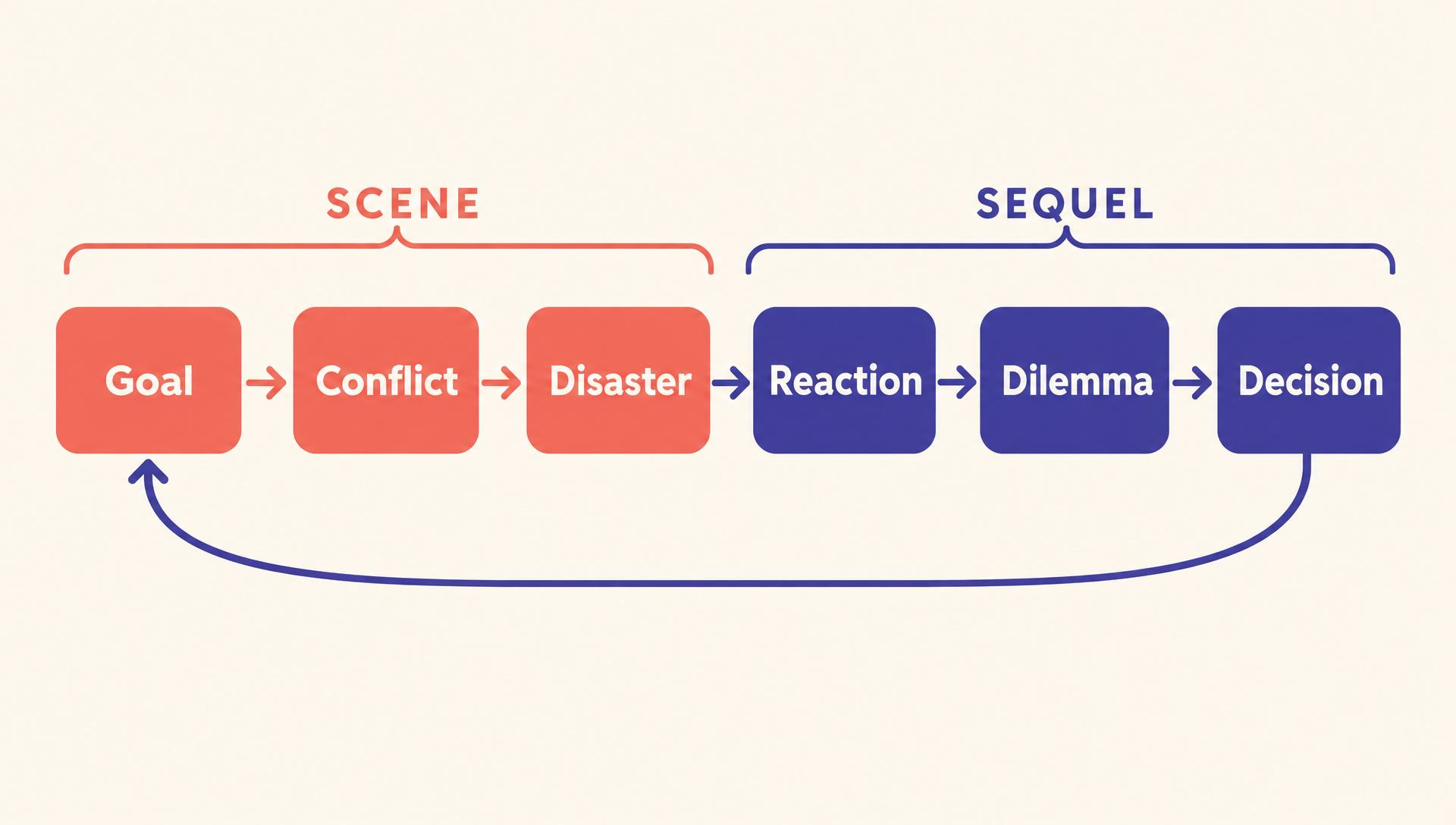
The words scene and sequel are Swain's terms, not the everyday ones. A single chapter can contain three scenes and two sequels, or one scene that runs for twenty pages. What matters is the alternation, not the chapter breaks.
The scene: goal, conflict, disaster
1. Goal
What the point-of-view character wants in the next few pages. Concrete and immediate: get the file, get the apology, get out of the building. Not "find happiness".
2. Conflict
The opposition, which must be active. Someone or something pushes back. Without it, the scene is a summary of a character getting what they want.
3. Disaster
The scene ends badly. Swain's options: no, the character fails; yes, but the character succeeds at a new cost; or no, and furthermore things got worse. "Yes" with no complication ends the tension.
The sequel: reaction, dilemma, decision
1. Reaction
The emotional hit, felt before it is thought about. Shock, anger, grief. This is where readers bond with the character.
2. Dilemma
The character reviews the situation and sees only bad options. If one option is obviously right, there is no dilemma, only a delay.
3. Decision
The character picks one. The decision becomes the goal of the next scene, which is why a sequel pulls the story forward instead of stalling it.
A worked example, beat by beat
Here is one scene and one sequel from a heist thriller. Step through the six beats to see how each one hands off to the next.
Goal
Nadia needs the vault's access log off the guard's tablet before the 2 a.m. shift change.
How much sequel each genre wants
There is no correct ratio, but genres lean in predictable directions. Use this as a starting point, then follow your comparable titles.
| Genre | Leans toward | What that looks like |
|---|---|---|
| Thriller and action | Scenes | Sequels shrink to a paragraph or a line between scenes. The decision often arrives mid-run. |
| Romance | Balanced | Sequels carry the emotional arc. Readers want the reaction after every encounter between the leads. |
| Literary fiction | Sequels | Long reflection is the point. The risk is decisions that never arrive. |
| Mystery | Balanced | Sequels are where the detective reasons about the clues. Skipping them makes the solution feel unearned. |
| Epic fantasy | Varies by thread | Different POV threads can run at different ratios, which keeps a long book from feeling uniform. |
Diagnosing a sagging chapter
When a chapter reads slow, run these questions on each unit before you rewrite anything:
- 01Can you name the POV character's goal in one sentence? If not, the scene has no spine.
- 02Does anything actively oppose that goal? If the obstacle is only bad luck, add a person.
- 03Does the scene end worse, or with a cost? A clean win stalls momentum.
- 04After a disaster, does the character react before the next event? If not, readers stop caring.
- 05Does every sequel end in a decision? A sequel without a decision is the classic saggy middle.
- 06Is the sequel longer than the scene it follows? Cut it until it is not, unless the genre wants reflection.
Pacing problems that survive this checklist usually live at the level of the whole act. Our guide to pacing in fiction covers that wider view, and the action scenes guide shows how to keep the scene half of the cycle tight.
Compressing sequels for modern pacing
Swain wrote for pulp magazines, and a full sequel on the page can feel slow to readers today. You do not have to drop it, only compress it. A sequel can be a single paragraph: one line of reaction, one line weighing two options, one line of decision. It can even fold into the next scene, with the character reacting while already moving.
What you cannot do is skip the decision. A character who stumbles from one event to the next without choosing is passive, and passive protagonists are the most common reason readers put a book down.
Jack M. Bickham, Swain's student, developed the model further in Scene and Structure (1993), which is the best next read if you want to go deeper.
Building the cycle into your outline
Scene and sequel works best at the outline stage, before prose hides the rhythm. In AIWriteBook's outline builder every chapter has an events field. Write it as the cycle: the goal, what opposes it, how it ends badly, then the reaction and the decision. The chapter is drafted from those events, so the rhythm you plan is the rhythm you get, and you can edit or regenerate any chapter's outline before a word of prose exists.
If you have a goal but not a scene, the free scene builder sketches the setting, the conflict and the beats for you to rework.
Questions writers ask
Who created scene and sequel structure?
Dwight V. Swain, in Techniques of the Selling Writer (1965). Jack M. Bickham expanded it in Scene and Structure (1993).
Is a sequel the same as a chapter?
No. Scene and sequel are units of story, not of formatting. A chapter can hold several of each, or part of one.
Does every scene need a sequel?
No. Several scenes can run back to back during a climax, with the sequel delayed until the action stops. But the decision has to come eventually.
Does scene and sequel work for literary fiction?
Yes, with a different balance. Literary novels often run long sequels. The model helps make sure those reflections still end in a choice.
Scene, then sequel: something happens, then it matters. Get that rhythm right and most pacing problems solve themselves. For the rest of the drafting process, from premise to final chapter, see our how to write a book guide.