

Psychologist Jerome Singer identified writer's block in the 1970s as a measurable condition tied to anxiety, perfectionism, and fear of judgment. Brain imaging studies since then have confirmed what writers have always felt: creative blocks activate the same neural pathways as physical pain. Your suffering is real. But so are the solutions. In this guide, we explore 10 specific AI-powered approaches that attack writer's block from different angles, because the block that stops you mid-chapter requires a different tool than the one that prevents you from starting at all.
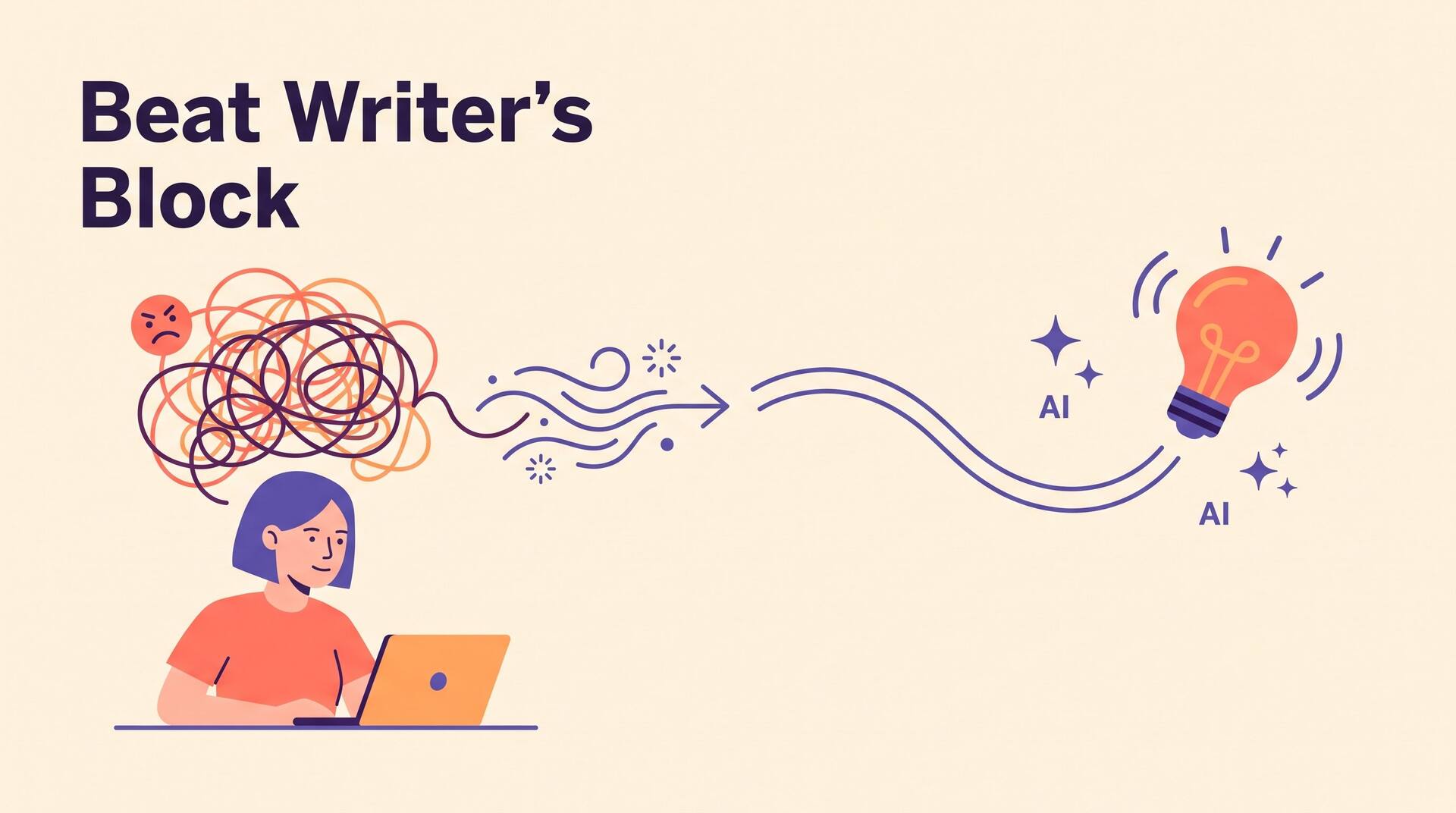
The Psychology Behind Writer's Block
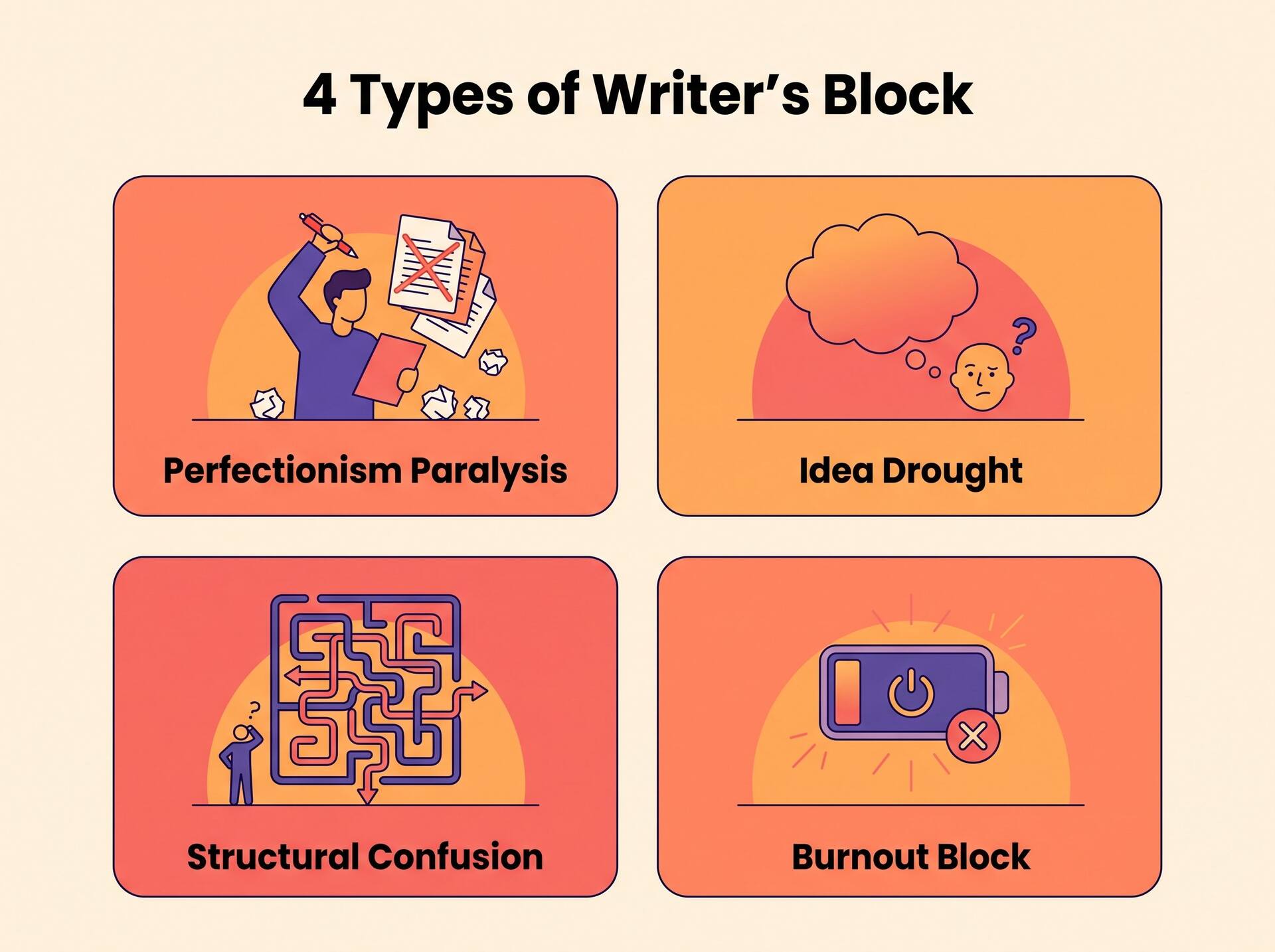
Understanding why you're stuck is the first step to getting unstuck. Writer's block typically falls into one of four distinct patterns, each requiring a different approach.
One route around a blank page is to stop typing altogether and talk the scene out instead. The best AI voice dictation tools now transcribe accurately enough that a walk around the block can produce a rough thousand words you edit later.
Perfectionism Paralysis
You can't write because nothing feels good enough. Every sentence gets deleted before you finish it. You spend hours crafting a single paragraph. The inner critic speaks louder than the creative voice.
You have plenty of ideas but can't execute them to your standard
AI draft generation removes the pressure of the first draft. When AI produces the initial version, your role shifts from creator to editor, which bypasses the perfectionism trigger.
Idea Drought
The well has run dry. You stare at a blank page with nothing to say. Previous ideas feel stale. You've lost connection with what excited you about your project in the first place.
You want to write but genuinely don't know what to write about
AI brainstorming and prompt generators can flood you with starting points. You don't need AI to write for you, just to crack the door open so ideas flow again.
Structural Confusion
You know what you want to say but not how to organize it. The plot has tangled itself. Characters have wandered into dead ends. You've written yourself into a corner and can't find the exit.
You have content but can't figure out what comes next
AI outline and plot tools can map possible paths forward from wherever you're stuck. They analyze your existing content and suggest structural solutions you might not see because you're too close to the work.
Burnout Block
You've been writing so intensely that the creative muscles are exhausted. Words feel mechanical. The joy has drained from the process. You dread sitting down to write, which was once your favorite activity.
You can write but everything feels flat and forced
AI can handle the mechanical parts of writing, such as research, scene transitions, and dialogue variants, while you focus only on the creative decisions that still bring you joy.
10 AI Tools to Break Through
Let AI Help You Get Unstuck
AIWriteBook combines all 10 of these tools in one platform. Generate outlines, develop characters, start chapters, and overcome any block with AI-powered writing assistance.
Daily Writing Habits That Prevent Blocks
AI tools fix the immediate problem, but consistent habits prevent blocks from forming in the first place. These practices build creative resilience.
Write at the Same Time Daily
Your brain is trainable. Write at the same time each day and your subconscious starts preparing before you sit down. Within two weeks, most writers report that ideas begin surfacing 15-30 minutes before their scheduled writing time. The block has less power when writing is routine rather than event.
Stop Mid-Sentence
Hemingway's famous technique: always stop writing when you know what comes next. Never empty the tank completely. Tomorrow, you'll sit down to a half-finished sentence and the momentum will carry you forward. It sounds counterintuitive, but it eliminates the most common block trigger: the blank page at the start of a session.
Separate Writing and Editing
Write with the door closed, edit with the door open. When you're drafting, turn off the inner critic completely. Don't fix typos. Don't rewrite sentences. Just move forward. Schedule editing as a separate activity on a different day. Mixing the two processes is the number one cause of perfectionism paralysis.
Keep an Idea Capture System
Writer's block often arrives because you didn't capture the idea when it was fresh. Keep a notes app, voice recorder, or physical notebook within reach at all times. When an idea strikes in the shower or while driving, capture it immediately. A full idea bank makes 'I don't know what to write' nearly impossible.
Set Word Count Goals, Not Quality Goals
A goal of '500 words per day' is achievable and measurable. A goal of 'write a great scene' is subjective and anxiety-producing. Bad words count. They can be revised. Blank pages cannot. Protect your momentum above all else.
Your Unblocking Protocol
When writer's block hits, work through this checklist. Check off each step as you complete it.
The Block Is Temporary. Your Story Isn't.
Writer's block feels permanent when you're in it. Every blocked writer has thought 'maybe I'm not really a writer.' But the block is a signal, not a sentence. It means you care about the work. It means your standards are high. It means the creative process is functioning exactly as designed, with friction as part of the system.
AI tools don't replace your creativity. They create on-ramps back to it. Use them to generate the first draft you can improve, the outline that shows the way forward, the character detail that unlocks a stuck scene. The words are in you. Sometimes you just need a different door to let them out.