

Town Name Generator: Settings & Eras
Pick a setting, an era and a size, and get 20 town, city or village names from one naming tradition, each with its meaning, pronunciation and a story hook.
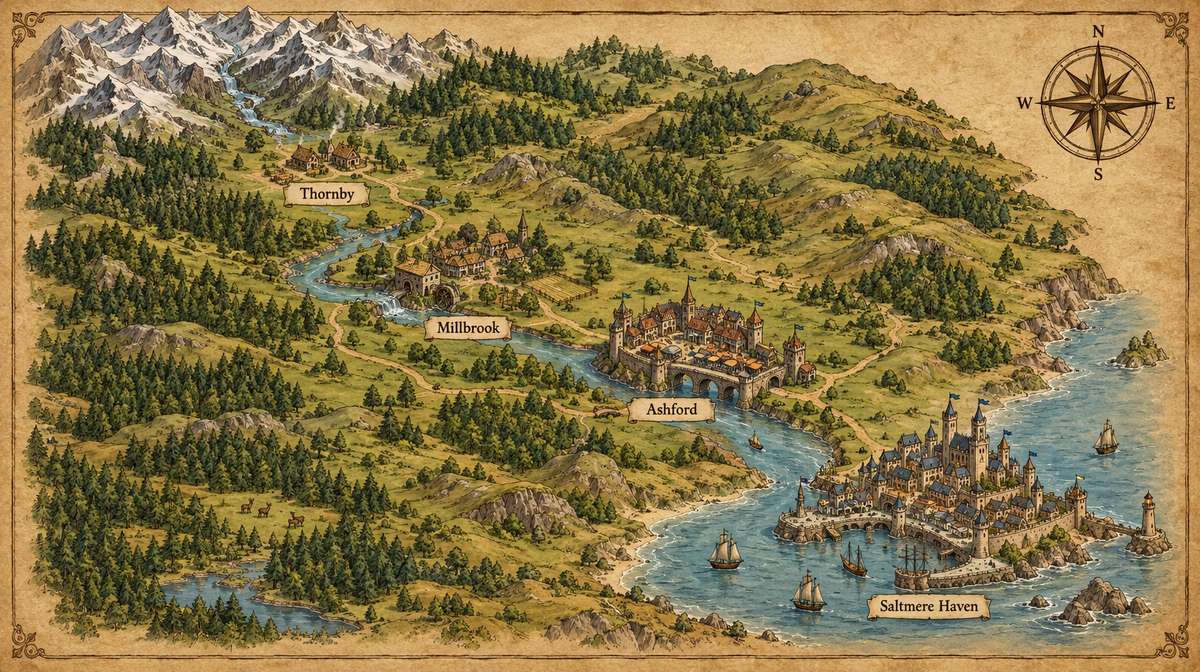
How real towns get their names
Almost every place name on a real map was built from a few plain parts. Use the same parts and your invented towns will sound lived in.
The land itself
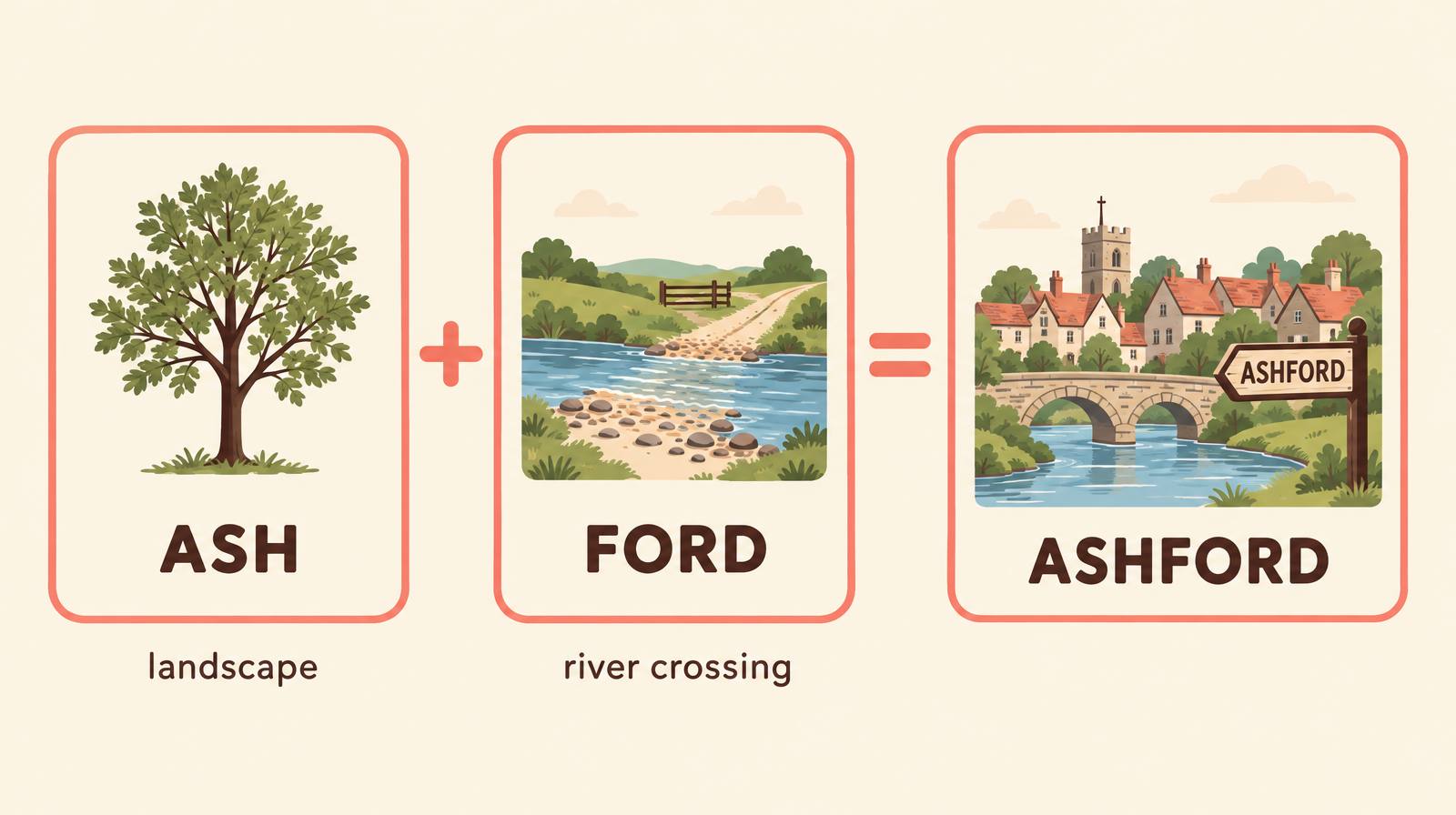
Most old names describe the ground. English -ford, -bridge, -combe and -ley, Welsh aber (river mouth) and cwm (valley), German -berg and -bach. A town called Ashford sits where people crossed a river by the ash trees.
A founder or a family
Names like Birmingham (the home of Beorma's people) or Williamsburg remember who settled first. In fantasy this works well for towns founded by a hero, a lord or a clan your reader will meet later.
What people did there
Salt, mills, markets and mines leave marks on maps: Saltash, Market Harborough, Chipping (old English for market). A mining town in your book can carry its ore in its name, or the name of a mine that ran dry.
Faith and old stories
Churches, shrines and saints name thousands of places: Welsh llan, Cornish St Ives, Spanish San and Santa. Swap them for your own gods and your religion shows up on the map before it shows up in the plot.
Layers of conquest
Real names stack languages. Celtic, then Roman, then Saxon, then Norman. A conquered region in your world can keep old names that the new rulers pronounce badly, which is a quiet way to show history.
Each result comes with a short etymology so you can see which parts were used. The naming rules under the list sum up the pattern, so you can coin the next name yourself when your hero rides into a town the list did not cover.
Naming tips for each setting
The setting changes what a believable name sounds like. Here is what the generator aims for in the main modes.
Fantasy town names
Base each region on one real language family and change it a little. Two or three syllables read best. Avoid apostrophes in every name and avoid names that are just English words glued together, like Darkwood or Stormkeep, unless that is how the locals talk.
Sci-fi city names
Future places are named by people with jobs. Colonies get founder names, corporate names or the name of an Earth city the settlers left. Stations get working nouns like Yard, Spindle or Deep, and crews shorten all of them on comms.
Historical village names
Stick to the language and the period. A Tudor village sounds nothing like a Roman fort or an Edo post town. The generator builds names from real roots of that time without copying a real town, so you can set a fictional village on a real map.
Modern and small-town names
Modern towns mix old names with new ones: Riverside, Pleasant Hill, Lake-something, plus a railway or a mall that renamed the place. For a small-town romance or a mystery, a slightly odd name is easier for readers to remember.

How the town name generator works
You set the world. The tool builds a list of names that belong together, then explains each one.
Choose a setting and era
Fantasy, sci-fi, historical, modern, post-apocalyptic, western or steampunk, plus an era from ancient to far future. If your world needs a full map first, build it with the world builder.
Set size, landscape and feel
Pick a size from hamlet to metropolis, a landscape, and a language feel like Norse or Japanese. Leave size empty and you get a mix from tiny hamlets to a capital.
Get 20 names with meanings
Each name has a pronunciation, a meaning, a one-line description and a story hook. Copy the ones you like, download the list, or start a book with your favorite town in it.
Who uses a town name generator
Anyone who needs a place to feel real before the reader gets there.
Fantasy and sci-fi novelists
Fill a map with towns that sound like one culture, then name the people who live there with the character name generator in the same style.

Game masters and RPG players
Need a village for tonight's session? Each name comes with a hook you can turn into a quest, a rumor or a reason the players should not stay the night.

Writers of small-town fiction
Cozy mysteries and small-town romance live or die on the town. Pick the modern setting and a region, and get names that sound like a real place on the county road.

Frequently asked questions
Yes. You can generate names without an account. Each run gives 20 names, and you can run it again as often as the daily free limit allows.
Yes. Choose the size: hamlet, village, town, city or metropolis. A hamlet gets a short local name, a capital gets an older and grander one. Leave the size empty to get a mix of all five.
Use one language feel per region and reuse the same roots and endings. The generator returns the naming rules it used, so you can keep the pattern going. For more on building regions that hold together, read our worldbuilding tips.
No. The generator avoids the names of well-known real cities. For historical and modern settings it builds names from real roots of that language and period, so they sound real without copying a town. Search a name before you publish if you want to be sure.
Yes, the names are yours to use in novels, games and campaigns. Place names cannot be owned, so you can publish a book set in any town on your list. When you are ready, see how to write a fantasy novel from map to manuscript.
Related tools & guides
Keep going with more free tools and in-depth guides
Character Name Generator
Name the people who live in your towns, with meanings.
World Builder
Build the history, magic and politics behind your map.
How to Write a Fantasy Novel
From the first map to a finished manuscript.
Worldbuilding Tips
Make a setting readers believe in.
Genre Fiction Hub
Guides and tools for fantasy, sci-fi, mystery and romance.
Setting as Character
Turn a town into a force in your story.
Ready to write your full book?
Transform your ideas into complete books with AI-powered writing, cover design, and publishing tools.