

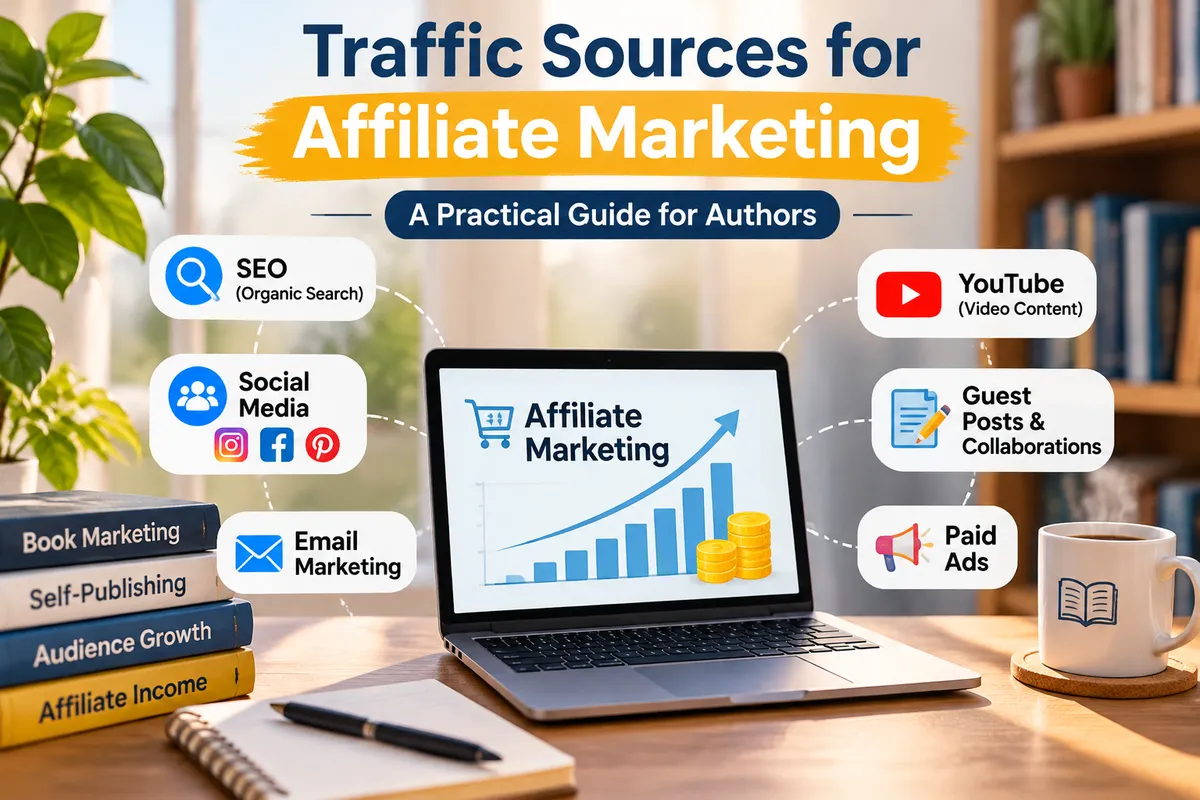
For independent authors, bloggers, and digital publishers, building an audience creates opportunities beyond direct book sales. Writers can also recommend useful products, educational resources, and software through affiliate partnerships.
However, earning commissions requires more than placing affiliate links in blog posts. Authors need to attract the right visitors, understand their interests, and recommend products that genuinely complement their content.
Choosing effective traffic sources is an important part of making that strategy work.
Why Affiliate Marketing Makes Sense for Authors
Authors spend considerable time researching topics, solving readers' problems, and sharing useful information. These activities naturally support affiliate marketing when recommendations are relevant.
For example, a nonfiction author writing about productivity might recommend planning software, educational courses, or organizational tools.
A travel writer could introduce readers to travel equipment, booking resources, or photography accessories.
Similarly, authors who publish books about entrepreneurship may recommend business software or training materials that support their readers' goals.
The most important consideration is relevance.
A recommendation should fit the topic, provide genuine value, and make sense within the reader's journey.
Build an Author Website Before Promoting Affiliate Products
Social media can help writers attract attention, but an author website provides a central location for their content.
A well-organized website can include book descriptions, author information, helpful articles, reading resources, and an email newsletter.
It also gives writers greater control over how they present recommendations.
Useful website sections include:
- Author bio: Introduce your background, writing interests, and published work.
- Books page: Showcase available titles and purchasing options.
- Blog: Publish useful articles related to your writing niche.
- Resources page: Share tools, courses, and other helpful recommendations.
- Newsletter signup: Give interested readers a way to receive updates.
- Contact page: Make professional inquiries and collaborations easier.
These sections create a foundation for attracting visitors through multiple channels.
Use Search Engine Optimization to Reach Interested Readers
Search engines can connect authors with people looking for information related to their books.
Instead of focusing only on an author's name or book title, content should address specific questions readers are already asking.
For example, someone writing about personal finance might publish articles discussing budgeting methods, saving strategies, or common financial planning mistakes.
An author covering creative writing could publish guides about character development, story structure, or manuscript editing.
Effective content often includes:
- Detailed tutorials addressing a specific problem
- Book and software comparisons
- Beginner-friendly educational guides
- Resource recommendations
- Frequently asked questions
- Practical examples and step-by-step instructions
Helpful articles can attract readers who are interested in the subject but have not yet discovered the author.
Choose Traffic Sources for Affiliate Marketing Based on Your Audience
Not every promotional channel works equally well for every writer.
An author publishing illustrated children's books may benefit from visual platforms, while someone writing about business strategies might find a professional audience through LinkedIn or educational newsletters.
Understanding different traffic sources for affiliate marketing can help authors compare organic search, social media, email marketing, video content, and paid advertising before deciding where to invest their time.
The right approach depends on several factors:
- Audience interests: Where do your ideal readers spend time online?
- Content format: Are your ideas better explained through writing, video, or visuals?
- Available resources: Can you consistently maintain the channel?
- Reader intent: Are visitors researching a topic or ready to make a purchase?
- Long-term value: Will published content remain useful beyond its initial release?
Rather than trying every platform simultaneously, authors can begin with two or three channels and expand after identifying what works.
Use YouTube to Explain Topics in Greater Detail
Video content provides another opportunity for authors to reach interested audiences.
A nonfiction author could explain concepts from their book, demonstrate techniques, or answer common questions.
Writers can also create videos discussing their research process, publishing experiences, and recommended tools.
Useful video formats include:
- Book-related educational tutorials
- Software or product demonstrations
- Interviews with subject-matter experts
- Writing and publishing tips
- Book comparisons and reviews
Videos can direct interested viewers toward a relevant article or resource page where additional information is available.
Clear explanations and authentic experiences are more valuable than constantly encouraging viewers to purchase something.
Explore Guest Posting and Relevant Collaborations
Guest posting allows authors to reach readers through established websites and publications.
For example, a writer specializing in personal development might contribute an educational article to a productivity website.
A travel author might share destination insights with a travel publication.
A successful guest post should offer useful information that fits the host publication's audience.
It can also introduce readers to the author's work through an appropriate biography or contextual reference.
Collaborations may include podcast interviews, expert roundups, newsletters, or joint educational projects.
The goal is to build credibility and reach genuinely interested readers rather than distribute promotional links indiscriminately.
Test Paid Advertising Carefully
Paid advertising may help authors reach audiences faster, but it introduces financial risk.
Platforms such as Google, Facebook, Instagram, and YouTube offer different advertising opportunities.
Before investing, authors should understand their audience, the economics of their affiliate offers, and the policies governing promotional campaigns.
A sensible starting approach includes:
- Select one clearly defined audience.
- Choose a relevant offer or educational resource.
- Build a useful landing page.
- Establish a small test budget.
- Track clicks, costs, and actual conversions.
- Review results before increasing spending.
Authors should also follow the advertising platform's policies and the affiliate program's promotional requirements.
Paid traffic is not automatically profitable, and clicks alone do not indicate success.
Make Affiliate Recommendations Transparent
Trust is especially important for writers because their credibility influences how readers interpret recommendations.
Authors should clearly disclose affiliate relationships when they may earn commissions through purchases.
They should also avoid promoting products they have not evaluated sufficiently or making unsupported claims about results.
Good affiliate content explains:
- What the recommended product does
- Who may benefit from using it
- Its main advantages and limitations
- Any important pricing considerations
- Whether suitable alternatives exist
- The nature of the author's affiliate relationship
Readers appreciate recommendations that help them make informed decisions rather than pressure them into purchasing.
Measure Which Channels Attract Valuable Readers
Traffic numbers provide useful information, but they do not tell the entire story.
An article that receives thousands of unrelated visits may produce fewer meaningful results than a smaller resource that attracts readers with a clear interest in its topic.
Authors should monitor:
- Organic search traffic
- Newsletter subscriptions
- Returning website visitors
- Affiliate link clicks
- Conversion rates
- Revenue relative to promotional costs
- Engagement with educational content
These measurements help identify channels that are worth maintaining.
They also reveal whether the content attracts the intended audience.
Final Thoughts
Affiliate marketing can provide authors with an additional opportunity to earn income from their knowledge and content.
However, a sustainable strategy begins with understanding readers rather than promoting products.
Search-optimized articles, email newsletters, educational videos, relevant communities, and carefully selected collaborations can all support audience growth.
By choosing suitable channels, creating genuinely helpful content, and maintaining transparent recommendations, authors can build a promotional strategy that complements their books and strengthens reader relationships over time.
Use Social Media to Build Relationships, Not Just Clicks
Social media is often treated as a promotional channel, but its greatest value for authors may be the relationships it helps create.
Readers are more likely to become interested in someone's books or recommendations when they recognize the author's expertise and personality.
Different platforms support different types of content.
Instagram and Pinterest can work well for visual book content, infographics, and reading inspiration.
LinkedIn may be useful for business authors, professional educators, and nonfiction writers.
Facebook groups and other communities can provide opportunities for relevant discussions, provided members follow community rules.
Instead of posting affiliate links repeatedly, authors should focus on answering questions and contributing useful information.