

Why a reader magnet beats more ads
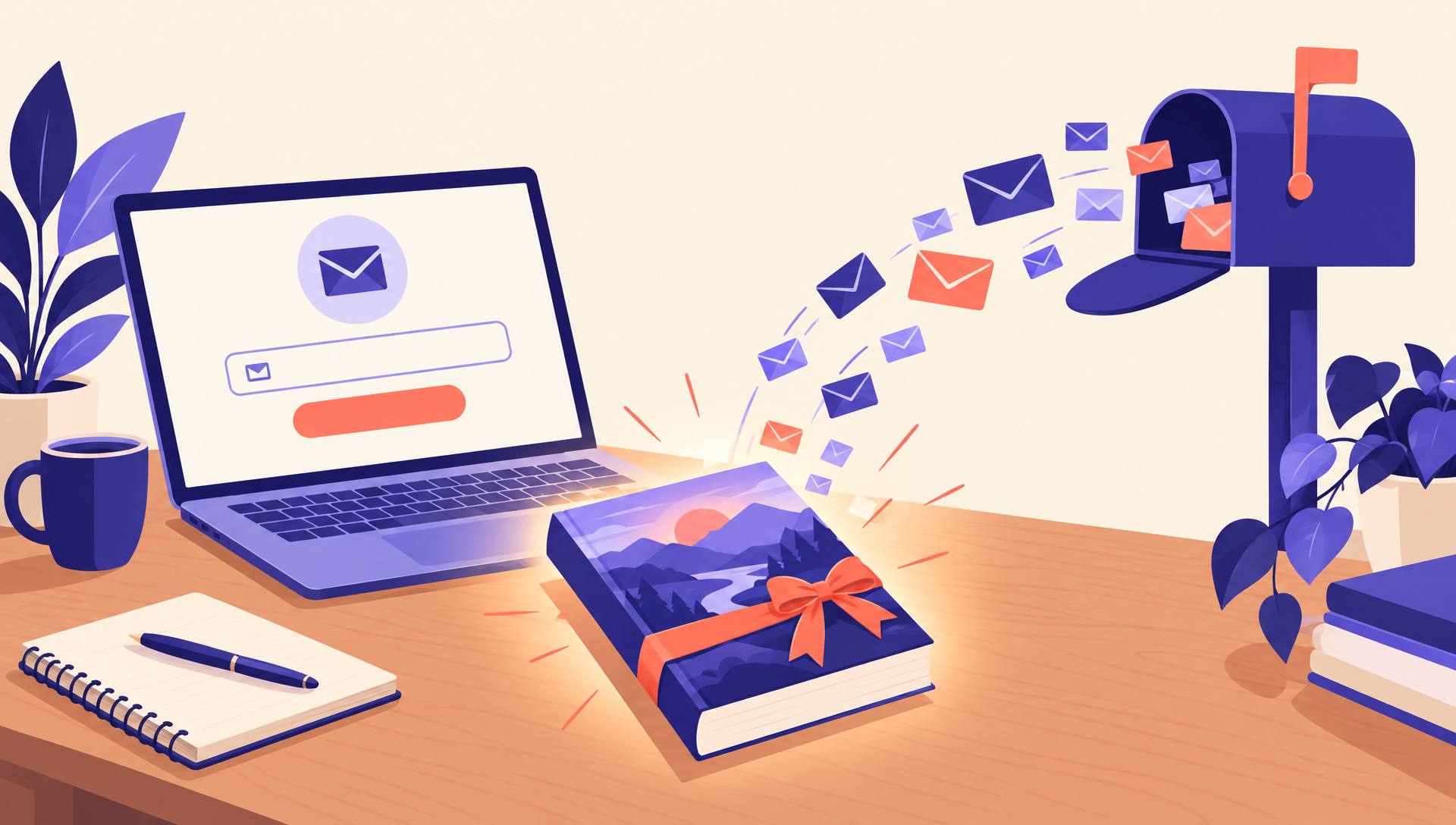
A reader magnet is a free piece of content you give away in exchange for an email address. In author marketing it usually means a short story, novella, bonus chapter or workbook that a reader can only get by joining your newsletter.
The reason it matters is structural. Amazon owns the customer relationship: you see sales, never names. Every launch without a list means paying again to reach readers who already liked your last book. A list of a few hundred engaged readers who open your emails can push a new release onto category bestseller charts in its first days, and that early velocity is what the store's algorithm notices.
A good magnet also filters. Someone who downloads a 15,000-word prequel to your series has told you they like your voice. That is a far better subscriber than someone who entered a giveaway for a free e-reader and will unsubscribe on the first email.
12 reader magnet ideas, filtered by book type
Not every idea suits every catalog. Pick the filter that matches what you write and the list narrows to the magnets that make sense for you.
Prequel novella
Effort: HighA 15,000 to 30,000 word story set before book one. The strongest magnet for a series, because the reader who finishes it already knows your world and buys book one next.
Side-character short story
Effort: MediumThe secondary character readers email you about gets their own 5,000-word story. Cheap to write, and it rewards the readers who loved the book enough to sign up.
Bonus epilogue
Effort: LowA scene set a year after the ending, linked from the last page. Romance readers in particular sign up for this in large numbers, because the click comes at peak emotion.
Deleted scenes with commentary
Effort: LowCut material plus a paragraph on why it was cut. Low effort if you kept your drafts, and it appeals to readers who like seeing how a book was built.
The same scene from the other POV
Effort: MediumRewrite a pivotal scene from the love interest's or villain's point of view. Fans of dual-POV books ask for exactly this.
Book one, free
Effort: LowIf book one is not enrolled in KDP Select, give the whole thing away to subscribers. Highest sign-up rate, but only pays off if books two and three exist.
Starter library bundle
Effort: MediumTwo or three short works bundled together. Works once you have several novellas or a backlist of shorter titles.
Illustrated world guide
Effort: MediumA map, a glossary of factions and a timeline. Fantasy and sci-fi readers love these, and you probably have the material in your notes already.
Checklist or cheat sheet
Effort: LowA one-page distillation of the book's method. The classic nonfiction magnet, quick to make and easy to use.
Companion workbook
Effort: HighExercises and worksheets that go with each chapter. It earns sign-ups from readers who are actively applying the book, the most valuable kind.
Templates and swipe files
Effort: LowThe spreadsheets, scripts or email templates you mention in the book, ready to copy. Readers who want to apply the method right away will trade an email for them.
Email mini-course
Effort: MediumFive daily lessons delivered by email. The magnet is the welcome sequence itself, which trains new subscribers to open your messages from the first day.
The four-step funnel
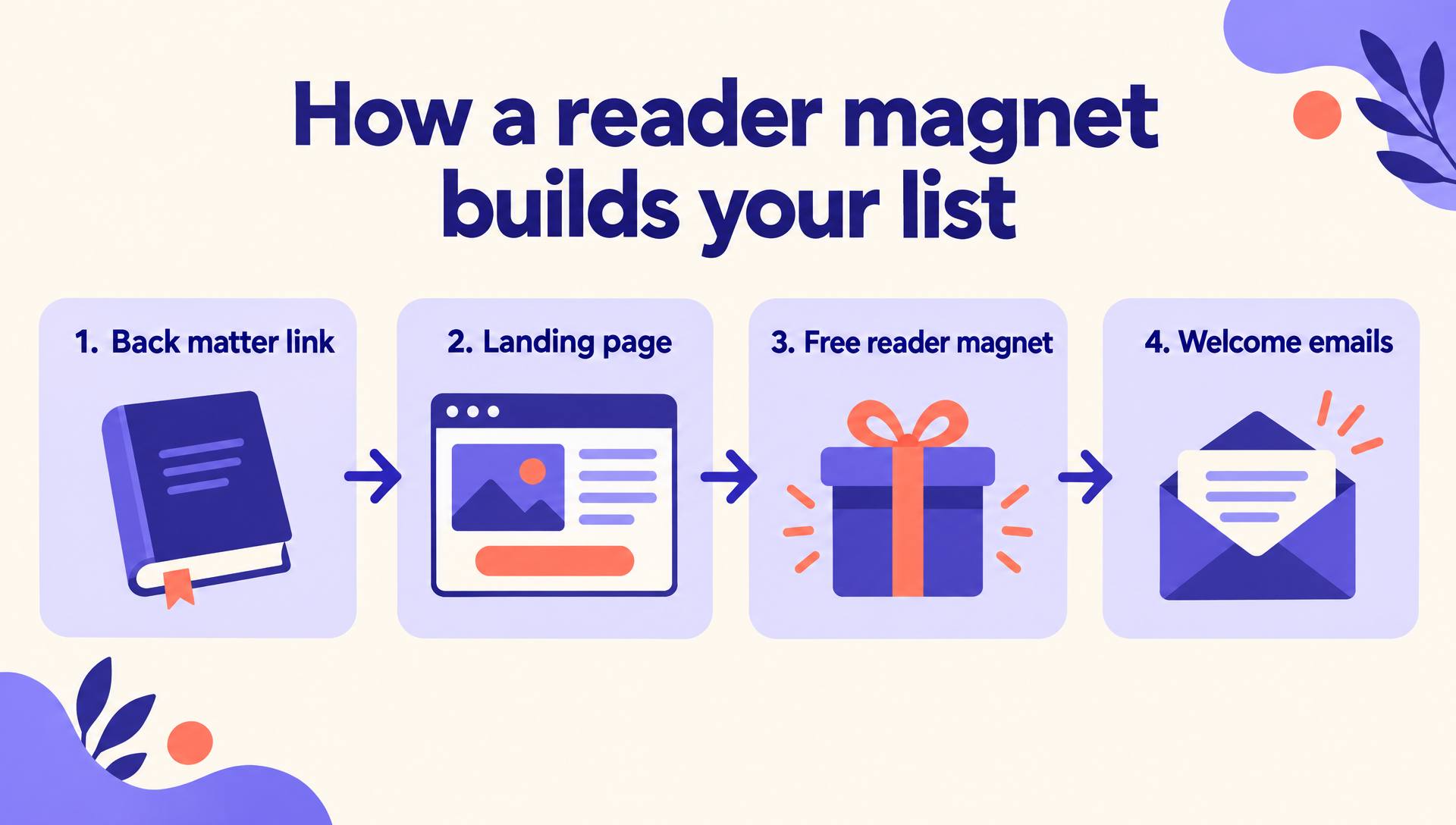
Every working reader magnet setup has the same four parts. If one is missing, sign-ups leak.
- 1
Back matter link
A short, specific offer on the page right after THE END, with one link. Not a list of five social profiles.
- 2
Landing page
One page, one cover image, one sentence about what they get, one email field. Anything else lowers sign-ups.
- 3
Free reader magnet delivery
Deliver the file instantly. Services like BookFunnel or StoryOrigin handle the formats and the help desk for readers who cannot load an EPUB.
- 4
Welcome emails
Three to five automated emails over two weeks that introduce you and point to your books. This is where subscribers become buyers.
Where the link goes in an Amazon book
Most authors put the offer in the front matter, and most readers skip it. The page that converts is the one right after the last line of the story, when the reader has just finished and wants more. Put a one-paragraph offer there, with the magnet named specifically: "Get the story of how Mara lost her first ship, free" beats "Join my newsletter".
Amazon allows links to your own website or sign-up page in the back matter of a Kindle ebook. Use a short domain you control, so you can change where it points later without republishing. In paperbacks, print the short URL and a QR code.
A second strong spot is a page you own that readers find before they buy. An author page on AIWriteBook gives each book a shareable page with your bio, cover, blurb and buy links, and it can gate a free chapter preview behind an email sign-up. Readers who enter an email go onto a list you own and can export, so the page doubles as a landing page for a magnet.
If you are still assembling the end-of-book pages, our back matter generator drafts the also-by list, author note and sign-up call to action in one pass, and the guide to book launch strategy shows where the list fits into release week.
The KDP Select 10% trap
KDP Select requires exclusivity for the digital edition of each enrolled book. You can share a portion of the book elsewhere, including as a free sample, but no more than 10% of it. That rules out the most common magnet idea, giving away book one, for anyone whose series is in Kindle Unlimited.
The safe magnets for KU authors are original works that are not enrolled anywhere: a prequel, a side story, a bonus epilogue, a world guide. Keep the magnet as its own work, not a slice of an enrolled book. The Kindle Unlimited strategy guide covers the rest of what exclusivity allows.
Quick rule
If the text appears in a book enrolled in KDP Select, give away no more than 10% of that book. If it is new material written only for subscribers, give away as much as you like.
The welcome sequence that keeps them
The magnet gets the email. The first five emails decide whether the reader ever opens another one. A sequence that works for most genre authors:
| Day 0 | Deliver the magnet. One sentence on who you are. Nothing to sell. |
|---|---|
| Day 2 | Ask whether they got the file, and ask one question they can reply to: who is their favorite character in the genre? |
| Day 5 | The story behind the story. Where the idea came from, with a photo or a map if you have one. |
| Day 8 | Point to book one with the first line of the blurb and one link. |
| Day 14 | Tell them what to expect: how often you write, and what subscribers get first. |
If a blank compose window stalls you, the free author email sequence generator drafts a welcome series from your book's details, and you edit it into your own voice.
Mistakes that waste the magnet
- A magnet in a different genre
- A free cozy mystery collects cozy mystery readers. If your books are grimdark fantasy, those subscribers will never buy. The magnet must be a sample of the exact experience you sell.
- A vague offer
- "Sign up for updates" converts poorly. Name the thing, its length and why it matters: a 20,000-word prequel about the villain.
- No emails until the next launch
- A list that hears from you once a year forgets who you are. Write at least monthly, even when there is nothing new to sell.
- Treating the magnet as a throwaway
- Readers judge your paid books by your free one. A rushed, unedited story teaches them your writing is not worth paying for.
Writing the magnet without stalling the main book
The hardest part of a reader magnet is finding the weeks to write it. If your series already lives in AIWriteBook, book series support carries your characters, their current state and the plot so far into a new book, so a prequel or side story starts from the same story bible instead of a blank page. You still decide what happens; the outline and chapter drafts stay consistent with the canon you already wrote.
For nonfiction, the magnet is often already in your manuscript. Pull the method into a checklist, then turn the book's exercises into a workbook.
Frequently asked questions
A reader magnet is free content, usually a short story, novella, bonus chapter or workbook, that an author gives away in exchange for an email address, to build a mailing list they own.
Most prequel novellas run 15,000 to 30,000 words, and short stories 5,000 to 10,000. Length matters less than whether it shows the exact experience your paid books deliver.
Not in full. KDP Select limits the portion of an enrolled ebook you can share elsewhere to 10%. Write original content for the magnet instead.
Yes. A link to your own sign-up page in the back matter is allowed and is the highest-converting spot for it.
Use an email service for the sign-up and a delivery service such as BookFunnel or StoryOrigin for the file, so readers can open it on any device.
Start with one magnet
You do not need twelve. Pick the one idea from the filter above that matches your catalog, put the offer on the page after THE END, and write five welcome emails. For the rest of the marketing plan around it, see our book marketing guide.