

What an archetype actually is
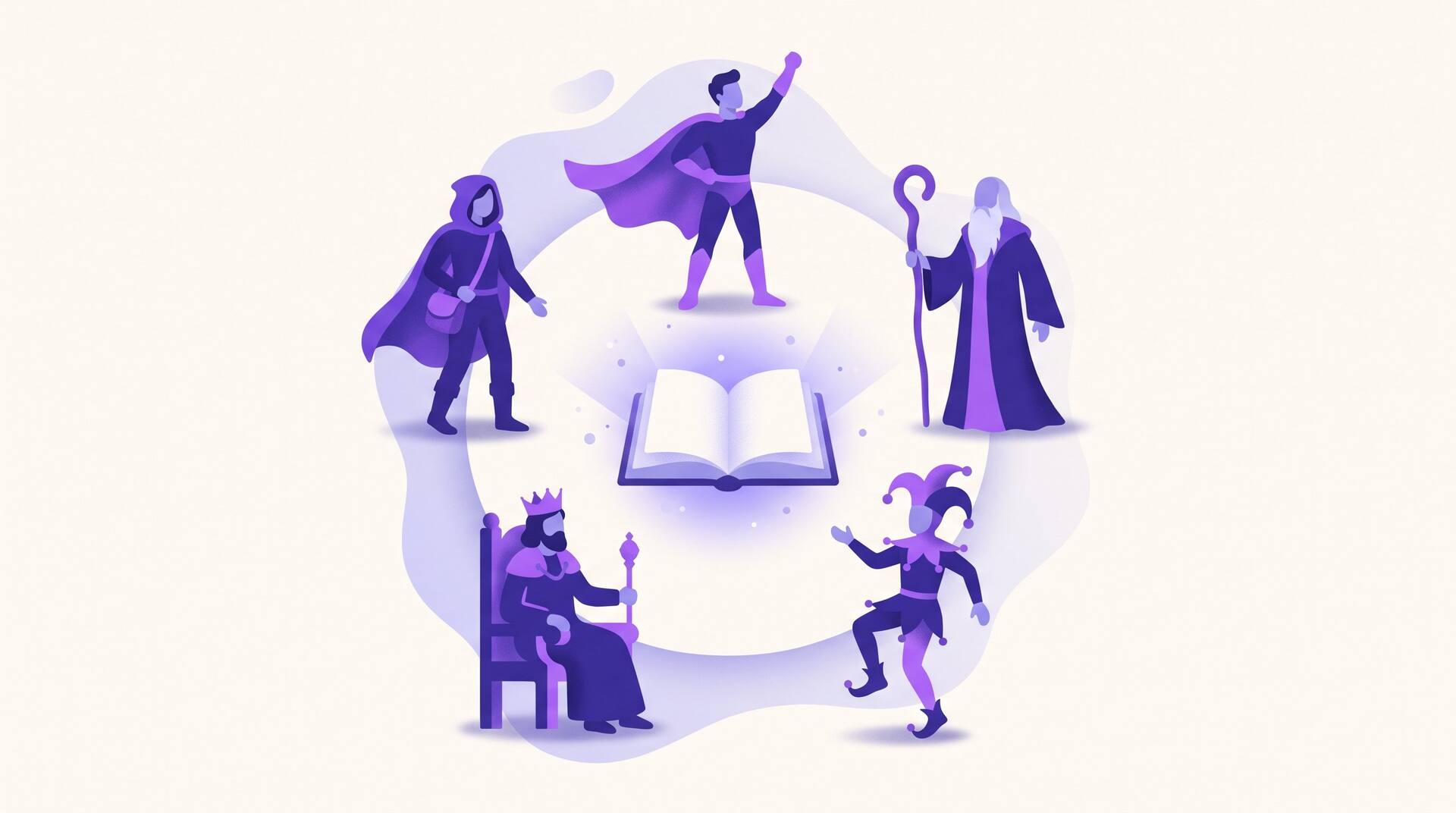
An archetype is a universal character pattern that recurs across cultures and centuries because it maps onto something fundamental in human experience. The term comes from psychologist Carl Jung, who argued that these patterns live in a shared "collective unconscious" — which is why a hero's journey told in ancient Greece still lands with a reader today.
An archetype is not a cliché, and it is not a stereotype. A cliché is a tired execution; a stereotype is a flattening assumption. An archetype is a deep structure — a set of core drives, fears, and behaviors — that you dress in specific, surprising detail. The archetype is the skeleton. The character is the living person you build on top of it.
Archetypes are also different from tropes. A trope is a recurring situation or device (the meet-cute, the chosen one); an archetype is a recurring kind of person. You can run any archetype through any trope.
Three things to keep straight
- Archetype is the deep pattern; the character is the specific person on top of it
- A clear archetype gives the reader instant orientation and emotional shorthand
- Archetypes become clichés only when you stop at the pattern instead of building past it
The 12 Jungian archetypes
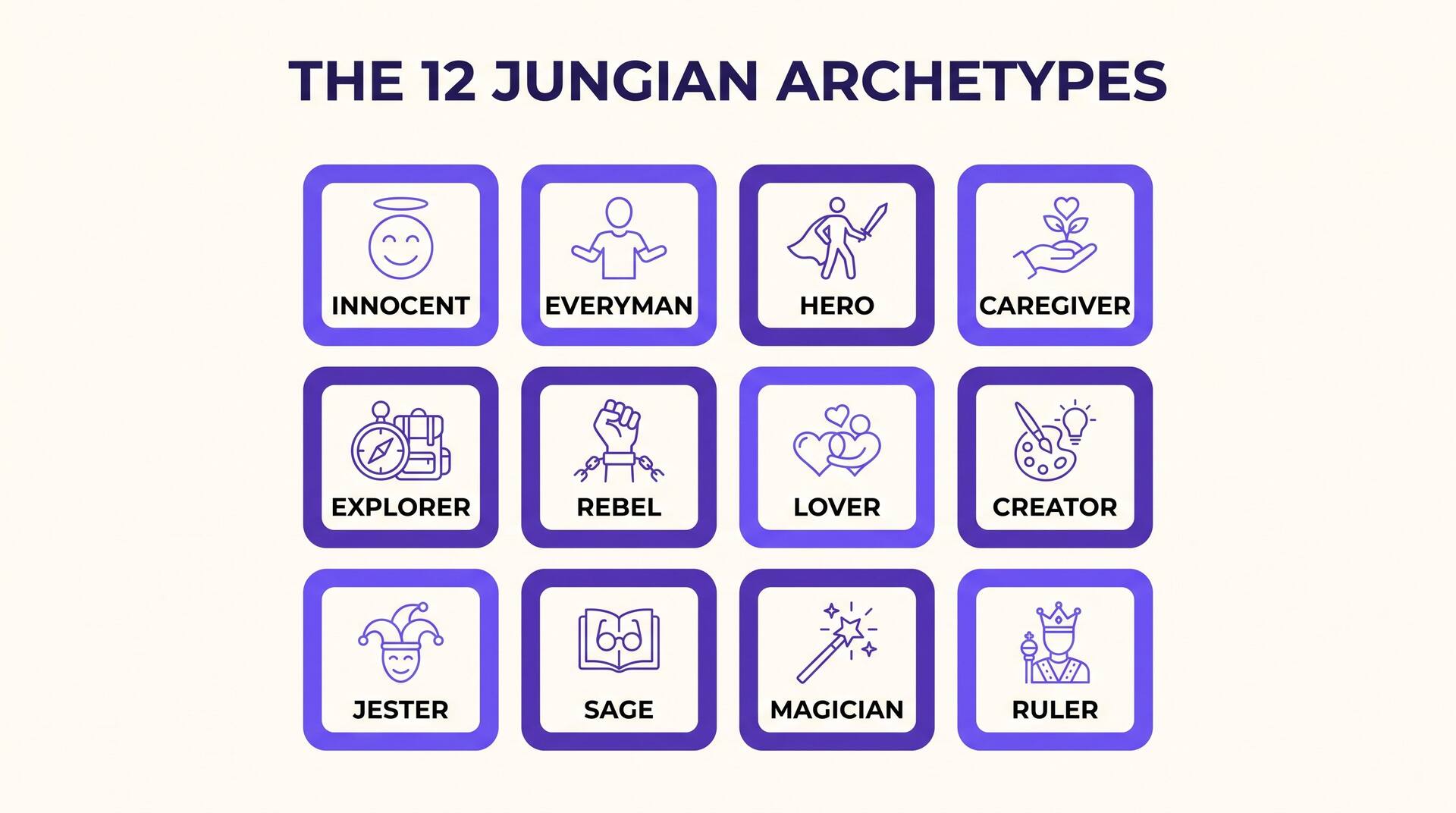
Jung's framework is usually organized into twelve archetypes, each defined by a core desire and a core fear. Click any archetype to see what drives it, what threatens it, and who embodies it.
The Hero
Core desire
To prove their worth through courage and difficult action.
Core fear
Weakness, cowardice, being found incapable when it counts.
Examples
Wonder Woman, Aragorn, Mulan. The one who steps up when others step back.
The Hero's trap is invulnerability. Give them a wound, a doubt, or a cost — heroism only moves us when it is hard and uncertain.
Combining archetypes for depth
Real, memorable characters are rarely a single pure archetype. They are usually one dominant archetype shaded by a second — and often pulled toward a third under pressure. That tension is where depth comes from.
Pick a dominant and a shadow
Choose the archetype that drives your character most of the time, then a second that surfaces under stress. A Hero with a hidden Rebel breaks rules to win; a Sage with a buried Lover risks everything they know for one person.
Let archetypes shift across the arc
A character can start as an Innocent and become a Hero, or start as a Rebel and grow into a Ruler. The change in dominant archetype is, quite literally, the character arc.
Use clashing archetypes for inner conflict
Pair two archetypes whose desires pull in opposite directions. An Explorer who is also a Caregiver wants both freedom and to protect the people they love — and that contradiction generates plot on its own.
Subverting archetypes
Once a reader recognizes an archetype, you can play against it. Subversion is not about ignoring the pattern — it works precisely because the reader expects the pattern and you bend it.
Flip the expected outcome
Set up the Hero who fails, the Mentor who betrays, the Innocent who turns out to be the most dangerous person in the room. The setup earns the surprise.
Cast against type
Give the Ruler's authority to a child, the Sage's wisdom to a fool, the Caregiver's tenderness to a hardened criminal. The mismatch creates instant interest. Legal thrillers lean on this constantly: the criminal defense attorney who looks ruthless in court turns out to be running on a Caregiver's protective instinct.
Reveal the archetype was a mask
A character performs one archetype publicly while a different one drives them privately. The Jester hiding grief; the Rebel who secretly craves the order they fight.
Honor the archetype, deepen the cost
Sometimes the strongest move is not to subvert but to take the archetype completely seriously — and show what it truly costs. A Hero who saves everyone and is hollowed out by it.
Building a balanced cast
Archetypes are most powerful at the cast level. A well-balanced ensemble gives readers contrast, friction, and a role to root for. Here is how to use them when assembling your characters. Once the roster is set, our character name generator helps you give each archetype a name that fits its role.
Anchor your protagonist
Identify your lead's dominant archetype and the one they will grow into. Everything else in the cast can be designed to pressure that transformation.
Build contrast around them
Surround the protagonist with archetypes that challenge their worldview. Give an Innocent lead a Rebel ally and a Ruler antagonist, and conflict generates itself.
Make the antagonist a mirror
The strongest villains often share the protagonist's archetype, taken to a darker conclusion — the same desire pursued without limits. Hero versus Hero, Ruler versus Ruler.
Avoid archetype collisions
Two characters with the same dominant archetype and the same role tend to blur together. If you have two Sages, differentiate them sharply or merge them.
Cast for the gaps the reader feels
If your story feels emotionally flat, check which archetypes are missing. No Caregiver and the stakes feel cold; no Jester and the tone feels airless. Cast to fill the felt gap.
Common archetype mistakes
Stopping at the archetype
Treating the archetype as the finished character. The pattern is a starting point, not a personality.
Add specific contradictions, history, and quirks. A Sage who is terrible with money. A Hero who is afraid of dogs. Specificity is what turns a type into a person.
Forcing every character into a slot
Assigning all twelve archetypes to your cast like a checklist, whether the story needs them or not.
Use archetypes to diagnose and deepen the characters your story already needs — not to populate it by formula.
Confusing archetype with morality
Assuming Hero means good and Rebel or Outlaw means bad. Archetypes are morally neutral patterns.
Any archetype can be a hero or a villain. The Ruler can be a wise king or a tyrant; what matters is how they pursue their desire.
Letting the archetype never change
A character who is the exact same archetype on the last page as the first has not grown.
Plan how pressure shifts your character's dominant archetype across the story. That shift is the arc.
Using AI to develop archetypes
AI is a strong partner for the analytical side of archetype work — diagnosing what you have, and generating options for what you are missing. Our free character creator builds full, archetype-rich profiles you can drop straight into your cast.
- Diagnose an existing character: paste their description and ask which dominant and shadow archetypes they are running.
- Generate three different archetype combinations for the same role and compare which creates the richest conflict.
- Map your full cast against the twelve archetypes to find duplicates, gaps, and missing contrast.
- Design an antagonist as a dark mirror of your protagonist's archetype, with the same desire and no limits.
- Stress-test a subversion — does the setup plant enough expectation for the reversal to land?
AI is excellent for diagnosis and structure. The contradictions and specific details that make the character human are still yours.
Character archetypes: frequently asked questions
The twelve Jungian archetypes are the Innocent, the Everyman, the Hero, the Caregiver, the Explorer, the Rebel (Outlaw), the Lover, the Creator, the Jester, the Sage, the Magician, and the Ruler. Each is defined by a core desire and a core fear.
Putting archetypes to work
Archetypes are a diagnostic tool and a generative one. When a character feels flat, name their archetype and you will usually see what is missing — a contradiction, a shadow, or the arc of a dynamic character who changes across the story. When you are building from scratch, the twelve patterns give you a fast way to design contrast across a whole cast.
The goal is never to write "a Hero" or "a Sage." It is to start from a pattern readers already understand in their bones, then build a specific, surprising person on top of it — and let pressure move them from one archetype toward another. For the full process of turning characters into a finished manuscript, see our complete how to write a book guide.