

Short answer
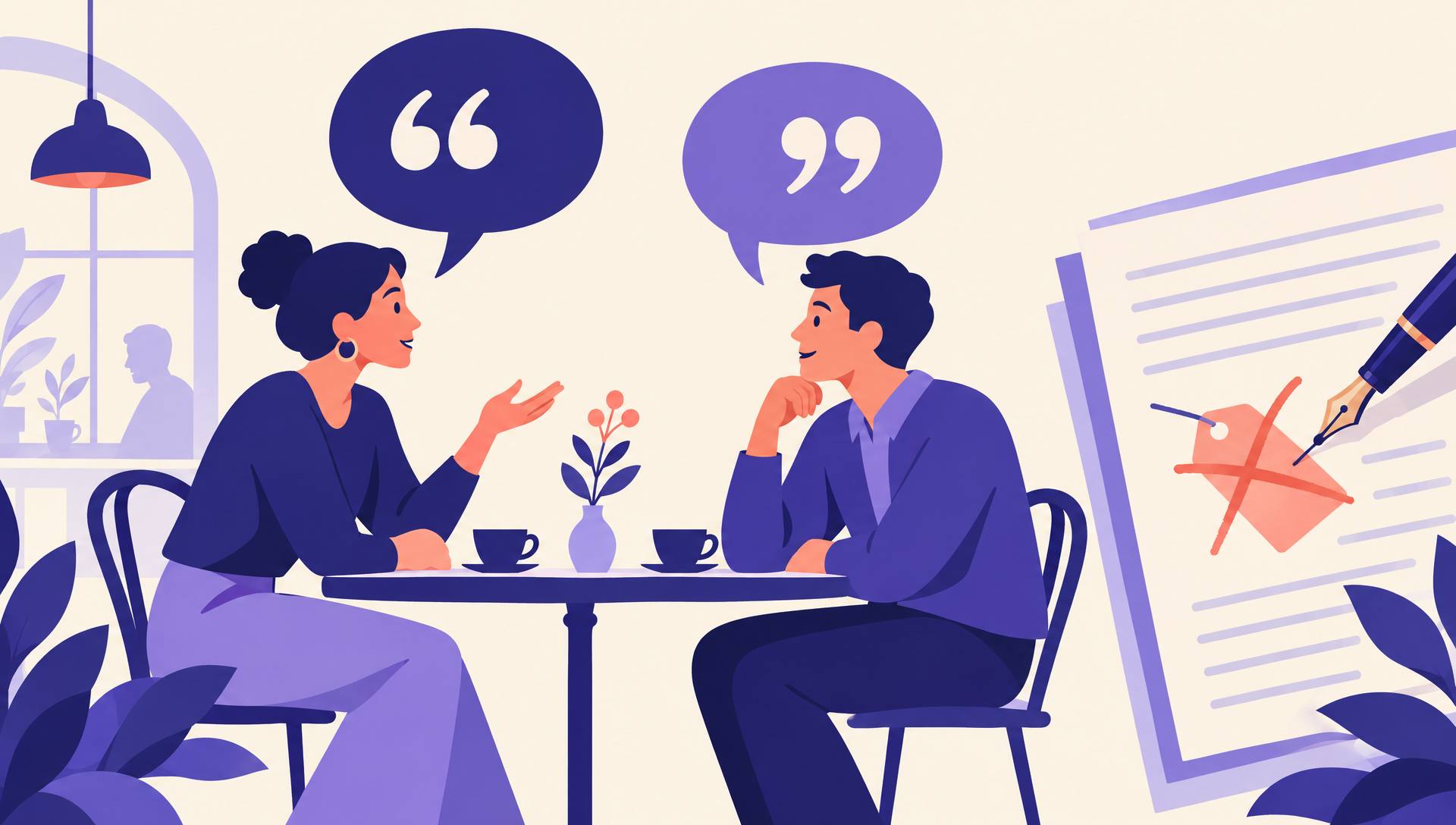
Use said (and asked for questions) for most tags, because readers skim past them. Use another verb only when it adds information said cannot: volume (whispered, shouted), sequence (added, continued) or a sound the line really makes. For everything else, replace the tag with an action beat or drop it once the speakers are clear.
The tag ladder
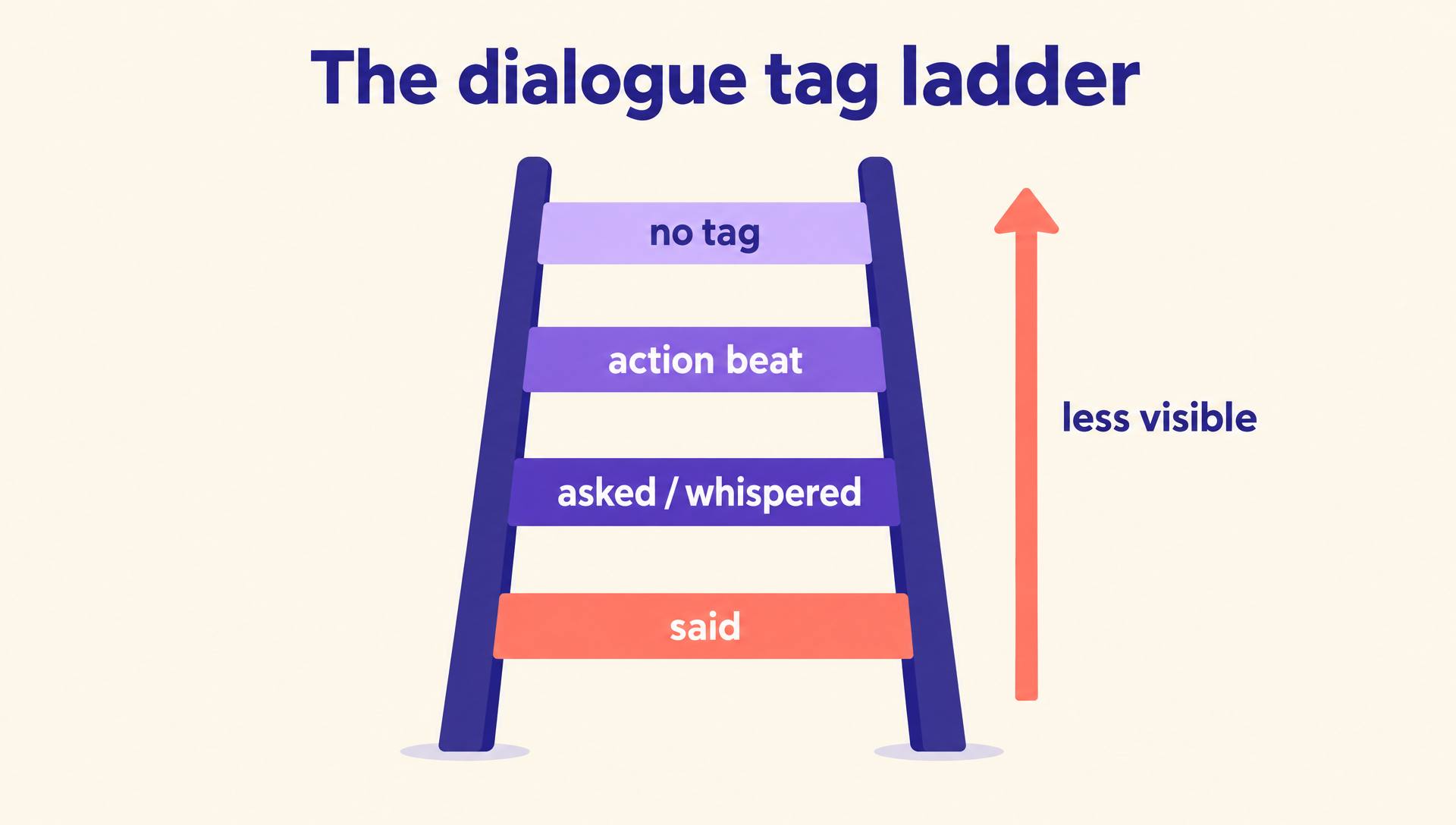
Think of attribution as four rungs. At the bottom is said, a word readers process almost like punctuation. One rung up are the specific verbs: asked, whispered, shouted. They carry information, so readers notice them a little more. Above that is the action beat, a sentence of movement that shows who is talking without any speech verb. At the top is no tag at all, which works once two speakers have established a rhythm.
Good dialogue moves between rungs. A run of ten lines might use said twice, one beat, and seven untagged lines. What it never does is use ten different verbs in a row.
Never use a verb other than "said" to carry dialogue.
Leonard overstates it on purpose. Even he used asked. The useful point is that the tag verb should never be doing the emotional work the line itself should do.
Alternatives to said, by job
Here are the dialogue tag alternatives worth keeping, grouped by the single piece of information each adds. If a verb is not adding its column's information, go back to said.
| Job | Words that do it | Use it when |
|---|---|---|
| Marks a question | asked, wondered | The line ends in a question mark. Asked is as invisible as said. |
| Changes volume | whispered, murmured, shouted, called, yelled | The volume matters to the scene, like someone overhearing, or distance between speakers. |
| Shows sequence | added, continued, repeated, interrupted | A speaker keeps going after a pause or cuts in on someone. |
| Shows a reply | replied, answered | Rarely. Most replies are obvious from order alone. |
| Describes a real sound | stammered, sobbed, mumbled | The line is physically delivered that way and the reader needs to hear it. |
Before and after: four rewrites
Switch each example between the overwritten version and the rewrite. Notice that every fix removes words.
The thesaurus run
"You're late," she snapped. "Traffic," he retorted. "Again?" she queried. "Again," he conceded.
The impossible tag
"Get out of my house," he smiled.
Tag plus adverb
"I don't care," she said angrily.
A tag that earns its place
"They're in the next room," she said quietly.
Punctuating tags and beats
Tags and beats are punctuated differently, and mixing them up is one of the fastest tells of an unedited manuscript.
A tag is part of the dialogue sentence, so the line ends with a comma inside the quotes and the tag stays lowercase:
"We should go," she said.
A beat is its own sentence, so the line ends with a period and the beat starts with a capital:
"We should go." She reached for her coat.
If the verb is not a way of speaking, it is a beat, not a tag. Laughed, nodded, sighed and grinned are beats.
The said-bookisms to cut
A said-bookism is a fancy speech verb used only to avoid said. Watch for these in revision:
- Verbs you cannot speak with: smiled, laughed, grinned, shrugged, nodded.
- Hissed on a line with no s sounds in it.
- Emotion verbs that duplicate the line: "I hate you!" she raged.
- Formal verbs nobody uses aloud: opined, queried, exclaimed, interjected.
- The same unusual verb twice in a chapter. Readers notice the second growled.
For more on voice, subtext and rhythm beyond tags, our guide to writing dialogue that sounds real goes deeper, and show, don't tell explains why beats beat adverbs.
Fixing tags across a whole manuscript
Tag cleanup is tedious because it is everywhere. In AIWriteBook's editor you can ask the chapter AI chat to "replace said-bookisms with said or an action beat, and remove adverbs from dialogue tags". It proposes each change as a diff, and you accept or reject them one by one, so a whispered that earns its place stays.
For a full pass, the book editor runs line edits chapter by chapter and labels each change objective or subjective, so you can accept the clear fixes in bulk and judge the style calls yourself. If you are stuck on the dialogue itself rather than the tags, the free dialogue generator drafts a starting exchange between two characters for you to rewrite.
Said is not dead. It is invisible, which is the point. Save the alternatives for lines where volume, sequence or sound actually matters, and let beats and silence handle the rest. For the full craft path from first idea to finished draft, see our how to write a book guide.