

- Duology
- A story told across two books, where each book has its own complete plot and the pair shares one larger arc that only resolves at the end of book two.
The second half of that definition is what separates a duology from a book and its sequel. A sequel can be bolted on later. A duology is planned as a pair: the question that drives the whole thing is asked in book one and answered in book two.
Why two books, not one or three
Choose a duology when the story has one big turn that changes what the story is about. Everything before that turn is one book, everything after is the other. If you cannot point to that turn, you probably have one long novel. If you find two turns of equal weight, you may be looking at a trilogy.
One book
The central question can be raised and settled without a reset in between.
Duology
One reversal splits the story into two different situations, each worth a full book.
Trilogy
The story needs a setup, a complication that deepens it, and a resolution, each at book length.
Three shapes a duology can take
Most two-book stories fall into one of three structures. Pick one before outlining, because it decides how book one ends.
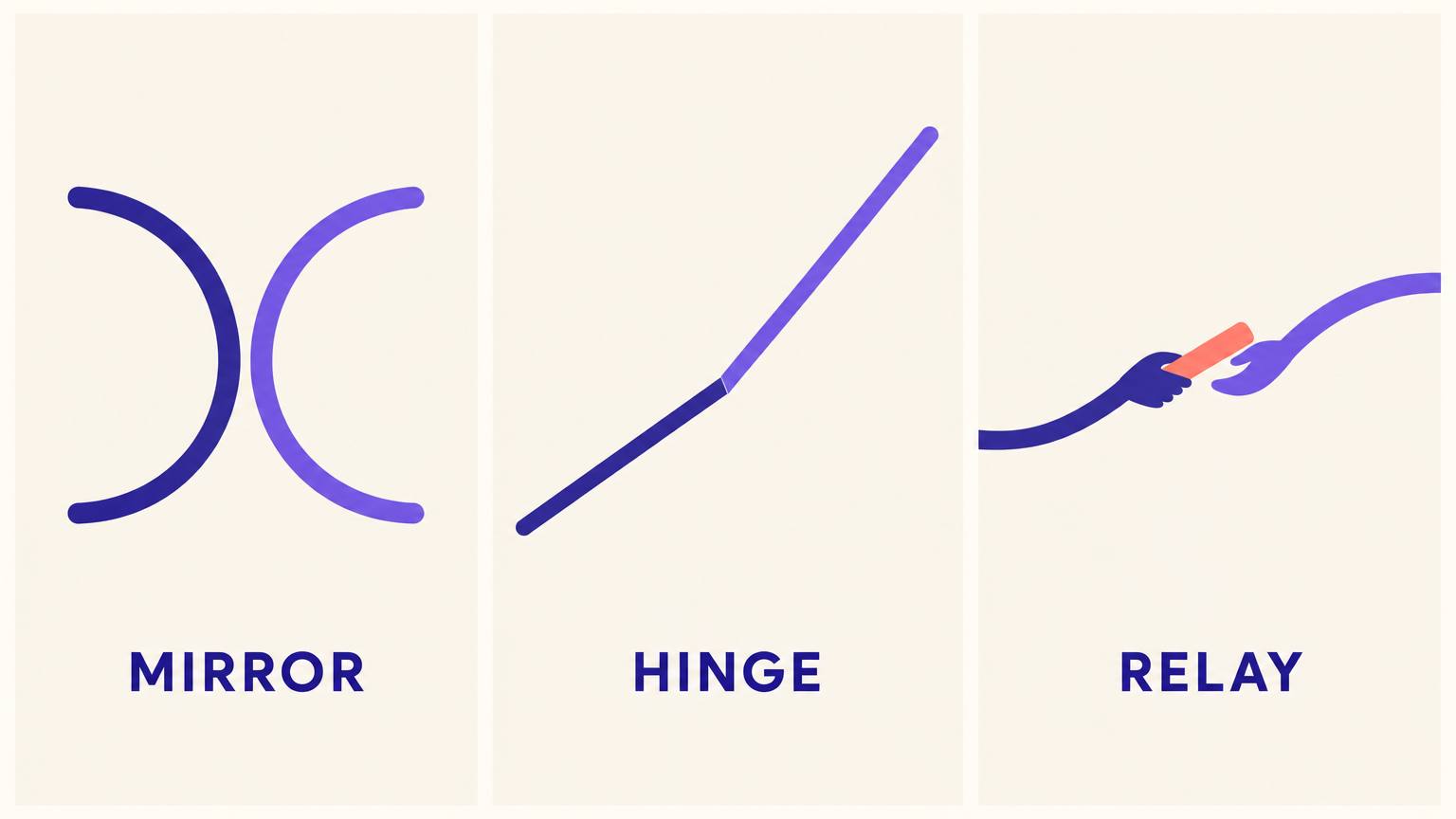
Mirror
Book two turns book one inside out.The second book repeats the first book's situation with the roles reversed: the hunter becomes the hunted, the outsider becomes the ruler, the rescuer needs rescuing. Readers enjoy seeing the same world from the other side, and you get built-in echoes to pay off.
Book one ends with: a win that puts the hero in the opposite position.
Watch for: book two feeling like a rerun. Change the stakes, not just the seats.
Hinge
One story, cut at its midpoint.The full arc is a single plot, and the split falls on the big midpoint reversal, the moment the hero learns the truth or loses what they were fighting for. Laini Taylor's Strange the Dreamer works this way: its last chapters change what the whole story is about, and Muse of Nightmares picks up from there.
Book one ends with: the reversal itself, so the reader closes the book knowing the old plan is dead.
Watch for: a book one that feels like half a novel. Its own subplot still has to close.
Relay
A finished job, then the bill for it.Book one tells a complete story, and book two is driven by its consequences. Leigh Bardugo's Six of Crows finishes its heist, then the crew is cheated and one of them is taken, which hands Crooked Kingdom its goal. Each book can be pitched on its own.
Book one ends with: the main plot resolved and one consequence landing in the last pages.
Watch for: a book two that feels optional. The consequence has to cost the characters something they cannot ignore.
A worked example: The Salt Bridge
Here is a hinge duology planned from scratch, so you can see how the parts fit. The premise: a toll-keeper's daughter in a harbor city discovers that the bridge everyone crosses is held up by a bargain with the sea.
| Beat | Book one: The Toll | Book two: The Tide |
|---|---|---|
| Opening situation | Mara collects tolls and dreams of leaving the city. | Mara owns the bridge's secret and is the only one who can renew the bargain. |
| Book goal | Find out why her father vanished on the bridge. | Break the bargain without drowning the city. |
| Antagonist | The harbor council, hiding the bargain. | The sea itself, and the council members who would rather pay it. |
| Book climax | She finds her father alive under the bridge, as part of the price. | She takes his place for one tide, long enough to rewrite the terms. |
| Closed in this book | The mystery of the disappearance; her rivalry with the council clerk. | The bargain, the city's fate, Mara's choice to stay or go. |
| Left open | The bargain is due again in a year, and only her blood can pay it. | Nothing major. One small door left ajar is fine. |
Notice the shape: book one answers a question (where is her father?) and the answer creates a bigger one (what will she do about the bargain?). That handoff is what makes a reader buy book two the same day.
Check your book one ending
Tick each line that is true of your draft. If any stay unticked, the ending needs work before you move on.
How to plan a duology in six steps
- 1
Write the one-sentence spine
One sentence for the whole pair: who wants what, and what stands in the way. If you cannot write it, you have two stories, not one.
- 2
Find the turn
Name the single event that splits the story. In a hinge it is the midpoint; in a relay it is the consequence; in a mirror it is the role swap.
- 3
Give each book its own question
Book one asks a smaller question it can answer. Book two asks the big one. Write both down above your outline.
- 4
Outline both books before drafting
Seeds planted in book one cannot be added after it is published. A chapter outline for each book lets you place foreshadowing where book two needs it.
- 5
Keep a shared bible
Names, ages, scars, rules of magic, who knows which secret. A series bible stops book two from contradicting a detail readers will remember.
- 6
Draft book two's first chapter early
Before you revise book one, draft the opening of book two. It shows quickly whether the handoff works or whether book one is ending in the wrong place.
Mistakes that sink duologies
Splitting one novel in half
If book one stops rather than ends, readers feel it, and reviews say so. Every book needs its own climax.
A cliffhanger with nothing behind it
A cliffhanger works when the main plot is closed and one thread is pulled tight. It fails when the whole story is left mid-scene.
Introducing the real villain in book two
Readers accept a new face, but the force behind it should be visible in book one, even if they misread it.
Letting book two sprawl
With no third book to carry the overflow, every new subplot in book two has to close in book two. Cut the ones that cannot.
Forgetting the cast changed
Characters lived through book one. Their voice, wounds and alliances should start book two where they left off.
Writing book two with book one already in hand
The hardest part of the second book is holding the first one in your head: every name, every promise, the exact wording of the prophecy. In AIWriteBook you start book two as part of a book series: add up to five previous books from a .docx file or your library, and the characters, outline and writing style carry over into the new book.
If you are still at the planning stage, the free series planner turns a premise into a book-by-book plan you can adjust to two books.
Copyable duology beat template
Paste this into your notes and fill it in for both books before you outline chapters.
Tap the box to select it, then copy.
SPINE (both books): [who] wants [what], but [obstacle].
SHAPE: mirror / hinge / relay
THE TURN: [event that splits the story]

BOOK ONE
Question: [smaller question]
Opening situation:
Inciting incident:
Midpoint:
Climax:
Answered here:
Left open (the handoff):
Last line points to:

BOOK TWO
Question: [the big one]
Opening situation (after the turn):
New pressure:
Midpoint:
Climax:
Echoes of book one to pay off:
Final image:
Duology FAQ
What is the difference between a duology and a book with a sequel?
A duology is planned as a pair, with one arc that only resolves in book two. A sequel continues a story that was already complete. Readers can usually tell, because a duology's first book plants things it does not pay off.
Should book one of a duology end on a cliffhanger?
It can, as long as book one's main plot is resolved first. End on one open thread that raises a bigger question, not on an unresolved climax.
Is a duology easier to write than a trilogy?
It is shorter, not easier. A trilogy has a middle book to develop the story; a duology has to set up, turn and resolve in two, so the planning matters more.
Should both books be the same length?
They do not have to match, but readers notice a big gap. Aim for books that fit your genre's usual length and let the second run a little longer if the climax needs it.
Can I release both books at once?
Yes. Many self-published authors release book two within weeks of book one, so readers who finish the first can buy the second straight away. It also means book two is finished before book one is locked.
The short version
Find the one turn that splits your story. Pick the shape that fits it, make book one end rather than stop, and plan both books before you draft either. For the wider picture of planning a series, the book series writing guide covers longer arcs, and the how to write a book guide covers everything from idea to finished draft.