


The short answer
If nearly all your readers are in the US or the UK and you write in a genre that Kindle Unlimited readers binge, KDP Select usually earns more, and Kobo is off the table for that ebook while you are enrolled. If your readers are in Canada, Australia, New Zealand, the Netherlands, continental Europe or anywhere Amazon is just one store among several, Kobo Writing Life is the single upload that reaches those shops, and it pays you better per sale at almost every price.
You never have to choose for print. KDP Select only covers the ebook, so your paperback can be on Amazon and everywhere else at the same time.
The numbers that decide it
| Amazon KDP | Kobo Writing Life | |
|---|---|---|
| Ebook 70% band (US store) | $2.99 to $12.99 | $2.99 and up, no ceiling |
| Rate outside that band | 35% | 45% below the floor |
| Delivery fee on 70% sales | $0.15 per MB (US) | None |
| Subscription programme | Kindle Unlimited, paid per page read, Select only | Kobo Plus, paid per minute read, no exclusivity |
| Exclusivity | Optional, 90-day ebook terms that auto-renew | Never required |
| Payment | About 60 days after month end | 45 days after month end, once you pass CAD $50 |
| Formats | Ebook, paperback, hardcover | Ebook and audiobook |
KDP raised its 70% ceiling from $9.99 to $12.99 in July 2026, and books already priced between $10 and $12.99 have to be switched to the 70% option by hand in Rights and Pricing.
Market by market: where each one wins
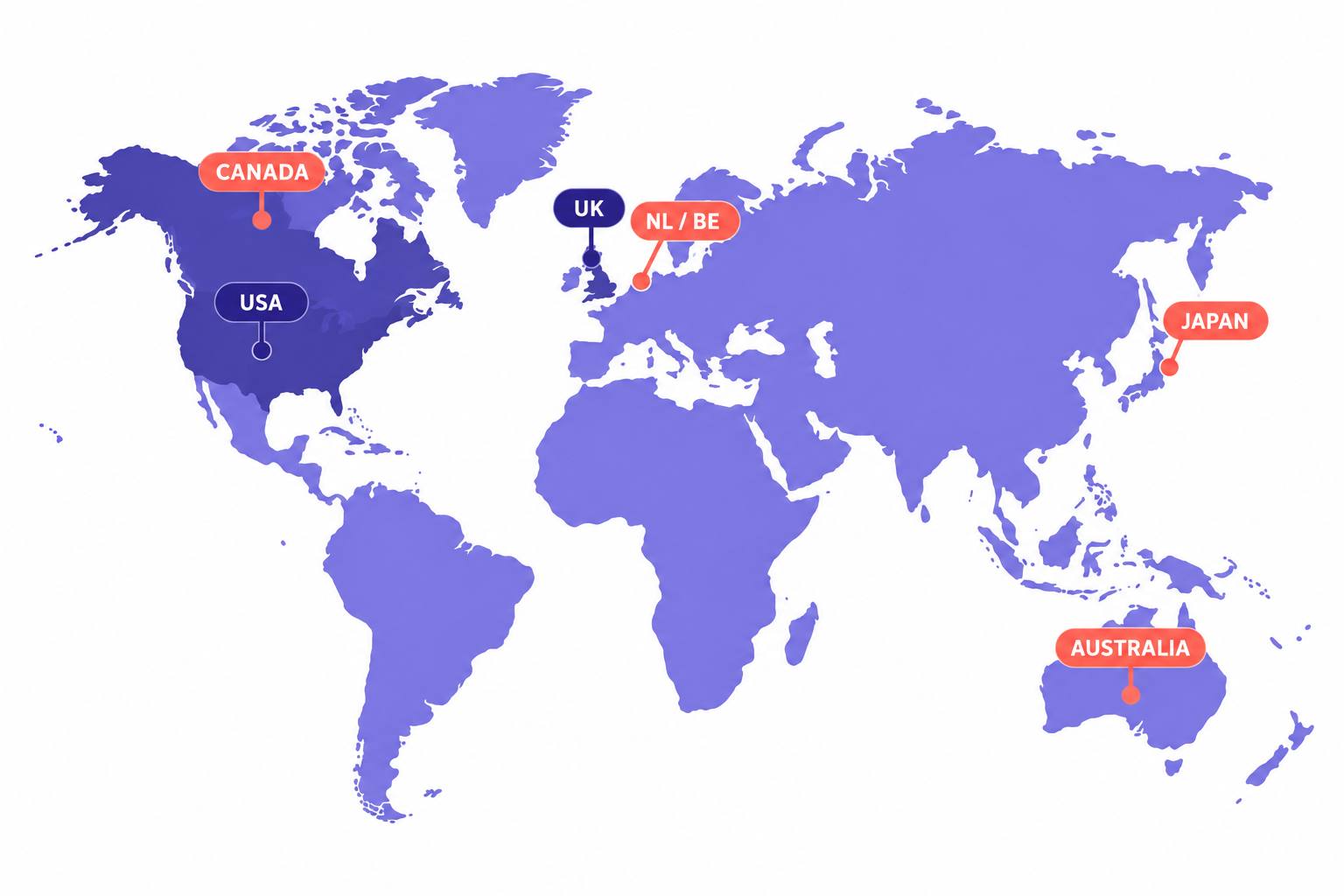
Pick the market where most of your readers are, or where you want them to be. Each card says who holds the ebook shelf there, which subscription exists, and what that means for your choice.
Canada
Leans Kobo- Who holds the shelf
- Kobo started in Toronto and is a genuine rival here. Indigo, its former parent company, sells Kobo devices and ebooks in its Chapters Indigo stores, and Best Buy Canada stocks Kobo e-readers.
- Subscriptions
- Both Kindle Unlimited and Kobo Plus are available.
- Our call
- Kobo matters. If Canadian readers are a real share of your sales, exclusivity costs you a storefront those readers actually use.
Amazon is dominant in e-books in exactly two markets: the U.S. and the U.K.
He is hardly neutral, and the line is worth reading with that in mind. But it matches the partner map above: outside those two countries, Amazon is competing shop by shop.
Royalties at four real prices
Here is what one sale earns in the US store, before tax, for a typical 3 MB novel file. Pick a price to see the maths.
List price
KDP earns
$5.25
35% of $14.99. Above $12.99, KDP drops to 35%.
Kobo earns
$10.49
70% of $14.99. Kobo's 70% band has no ceiling.
Kobo difference per sale
+$5.24
This is where Kobo wins outright: box sets, omnibus editions and long non-fiction priced above $12.99 earn twice as much per copy.
Run your own numbers, including print, in our free royalty calculator, or read how KDP's 35% and 70% options really work.
Kindle Unlimited vs Kobo Plus
The subscription question is usually what decides KDP vs Kobo, because Kindle Unlimited is the only thing KDP offers that Kobo cannot match, and it is the only thing that requires you to leave Kobo.
Kindle Unlimited
- Pays from a monthly KDP Select Global Fund, split by Kindle Edition Normalized Pages (KENP) read. Author-tracked data puts the per-page rate at roughly $0.004 to $0.005 through 2025 and 2026.
- A full read-through of a 350-KENP novel is therefore worth somewhere around $1.40 to $1.75, on top of your normal sales.
- Requires KDP Select, which means the ebook cannot be sold anywhere else, Kobo included.
Kobo Plus
- Pays per minute read. Kobo divides a month's subscription revenue by total minutes read, and authors on Kobo Writing Life receive 60% of that value per minute.
- Reported in blocks of 300 minutes. Kobo's own illustration, using made-up subscriber numbers, has a three-hour read earning about $0.29, so treat it as a smaller cheque per reader than KU.
- No exclusivity. You opt in per book, in all or selected territories, from the Rights and Distribution tab. It runs in 34 countries and territories.
Kobo Plus is extra income for being wide. Kindle Unlimited is a replacement for being wide. That asymmetry is the whole decision.
What KDP Select actually locks
Authors often think Select locks more than it does, or less. The precise rules are these.
Only the ebook
Select covers the digital edition. Your paperback, hardcover and audiobook can be sold anywhere, including through Kobo's audiobook programme.
Everywhere digital, including your own website
While enrolled, the ebook cannot be available in digital form anywhere else. That means no Kobo listing, no Kobo Plus and no direct sales from your site. Amazon allows a sample of up to 10% of the book elsewhere.
90 days at a time, renewing automatically
Each term is 90 days and renews by default. If you plan to go wide, untick automatic renewal in the KDP Select tab as soon as you enrol, not on day 89.
70% in four markets
Select books earn 70% on sales to customers in Brazil, Japan, Mexico and India. Non-Select books earn 35% there, whatever the price.
Promotions
Each term gives you either Kindle Countdown Deals or up to five free-promotion days. Kobo has its own route: the Promotions tab in the Kobo Writing Life dashboard, where you apply for Kobo's merchandising deals.
For the page-read maths and when exclusivity pays, see our full breakdown of KDP Select pros and cons.
Decide in five moves
Work through these in order. Each one can end the decision early.
- 1
Find out where your readers already are
KDP's reports break sales down by marketplace. If more than about a fifth of your ebook sales are outside Amazon.com and Amazon.co.uk, you already have a wide audience that Select would cut off. No sales yet? Use your genre and language as the proxy.
- 2
Ask how much of your genre lives in Kindle Unlimited
Romance, thrillers, fantasy and LitRPG readers read heavily through KU. Literary fiction, memoir, poetry and most non-fiction depend far less on it. The more your category depends on KU, the stronger the case for Select.
- 3
Price against both floors
Use the template below. Any price that clears Kobo's 70% floor in every currency and stays under KDP's ceiling wastes nothing on either store.
- 4
Choose one of three setups
All in on Select for the ebook. Fully wide, with Kobo, Apple Books and others. Or a staged launch: Select for one 90-day term to use KU's launch visibility, then untick renewal and go wide. Print stays wide in all three.
- 5
Set a review date
Put the end of the 90-day term in your calendar. Compare KU page-read income against what the book earned in the countries you gave up. Switching is possible either way; it just takes a term.
Going wide? Our step-by-step Kobo Writing Life walkthrough covers the three-screen upload, Kobo Plus opt-in and every currency floor.
Three authors, three answers
Illustrative profiles, not real people, to show how the same five moves produce different answers.
A romance author releasing a new book every ten weeks
About 90% of sales on Amazon.com, readers who binge whole series in KU, books priced at $4.99.
KDP Select for the ebooks.
KU page reads are the biggest income line, and the markets Kobo would add are a small share of this readership. Paperbacks go wide anyway.
A cosy mystery writer in Ontario
A third of ebook sales on Amazon.ca, readers who shop Chapters Indigo, a newsletter full of Canadian readers.
Wide, with Kobo as the second priority after Amazon.
Canada is Kobo's home market, and Kobo Plus runs there without exclusivity. Select would hide the book from a shop this audience actually uses.
A non-fiction author with a $14.99 practical guide
Sells mostly in the UK and Australia, long book, no series.
Wide.
At $14.99 KDP pays 35% and Kobo pays 70%. KU matters less for a reference book, and Australia is a market where Kobo powers the big local chains.
Pricing template for both stores
Copy this into your launch sheet. The last column is a price that earns 70% on both stores in that currency.
| Currency | KDP 70% floor | KDP 70% ceiling | Kobo 70% floor | A price that clears both |
|---|---|---|---|---|
| USD | $2.99 | $12.99 | $2.99 | $3.99 to $12.99 |
| GBP | £1.77 | £12.99 | £1.99 | £2.99 to £12.99 |
| EUR | €2.69 | €12.99 | €1.99 | €3.49 to €12.99 |
| CAD | C$2.99 | C$12.99 | C$2.99 | C$3.99 to C$12.99 |
| AUD | A$3.99 | A$15.99 | A$2.99 | A$4.99 to A$15.99 |
Kobo has no 70% ceiling, so above KDP's ceiling only Kobo keeps paying 70%. Both stores measure the floor on the price before tax, so in VAT markets leave headroom rather than pricing exactly at the floor.
Mistakes that cost wide authors money
Leaving Select on auto-renew
You meant to go wide after launch, and the term quietly renewed for another 90 days. Untick it on day one.
Pricing a box set at $14.99 on both stores without thinking
Fine on Kobo at 70%. On KDP it drops to 35%. Either price the KDP edition at $12.99 or accept the lower rate knowingly.
Pricing at A$2.99 in Australia
That earns 70% on Kobo and only 35% on Amazon.com.au, whose 70% band starts at A$3.99.
Restricting Kobo territories
Turning off worldwide rights removes the book from Kobo's worldwide store and from partner shops in the territories you drop. Sell worldwide unless a contract says otherwise.
Treating wide as upload and wait
Kobo readers find books through merchandising and series. One standalone uploaded and never promoted will not tell you whether wide works. Give it a series, a first-in-series price and a Promotions tab application.
Opting out of Kobo Plus for no reason
It is non-exclusive and paid on top of sales. Unless you have evidence it hurts your à la carte sales, leave it on.
The AI-assisted shortcut
Going wide is mostly repetitive work: the same book, the same metadata, several dashboards. That is the part worth automating.
One EPUB for both stores
AIWriteBook's book formatter exports a validated EPUB alongside the print PDF and DOCX. KDP and Kobo both take the same EPUB, so you format once.
Metadata you can reuse
The Metadata step generates your blurb, KDP keywords and categories. The blurb doubles as your Kobo synopsis, which is the main sales text on a Kobo product page.
Editions for Kobo's strongest markets
Kobo's biggest advantages are in France, Italy, the Netherlands and Japan, which mostly reward books in the local language. You can translate a whole book into 30+ languages, including chapters, cover and metadata, then publish the new edition wide.
Fewer KDP form errors
If you stay with KDP for print or Select, the KDP Chrome extension checks every field and fills the title setup from your book. You still review each page and press Publish yourself.
Questions authors ask
Can I publish on KDP and Kobo at the same time?
Yes, as long as the ebook is not enrolled in KDP Select. KDP without Select has no exclusivity, so the same ebook can sit on Amazon, Kobo, Apple Books and elsewhere. Print books can always be sold in several places.
Does Kobo pay better royalties than KDP?
Per sale, usually yes. Kobo pays 70% from $2.99 with no delivery fee and no upper limit, and 45% below $2.99. KDP pays 70% between $2.99 and $12.99 minus a delivery fee, and 35% elsewhere. KDP often sells far more copies, though, so total income depends on volume.
Is Kobo Plus exclusive like Kindle Unlimited?
No. Kobo Plus requires no exclusivity. You opt each book in from the Rights and Distribution tab and can keep selling it everywhere else. Kindle Unlimited is only open to books in KDP Select.
Can I leave KDP Select and move my ebook to Kobo?
Yes, at the end of the current 90-day term. Turn off automatic renewal, wait for the term to end, then publish on Kobo. You cannot list the ebook on Kobo while the term is still running.
Does Kobo sell paperbacks?
No. Kobo Writing Life handles ebooks and audiobooks. For print, use KDP, IngramSpark or both.
Where is Kobo strongest?
In Canada, where it was founded, and in countries where it powers local chains: Australia (Angus and Robertson, Booktopia), the Netherlands and Belgium (bol), France, Spain and Portugal (FNAC), Italy (Feltrinelli, Mondadori) and Japan (through Rakuten).
The bottom line
KDP vs Kobo is a geography question with a subscription attached. If your readers are in the US and UK and read through Kindle Unlimited, KDP Select is hard to beat. Everywhere else, Kobo reaches shops Amazon does not, pays more per copy and never asks for exclusivity.
Print is a separate choice. If your next question is where the paperback should go, our KDP vs IngramSpark comparison covers distribution to bookshops and libraries.
For every other part of publishing on Amazon, from keywords to categories to launch, head back to the Amazon KDP guide.