

What is a novella?
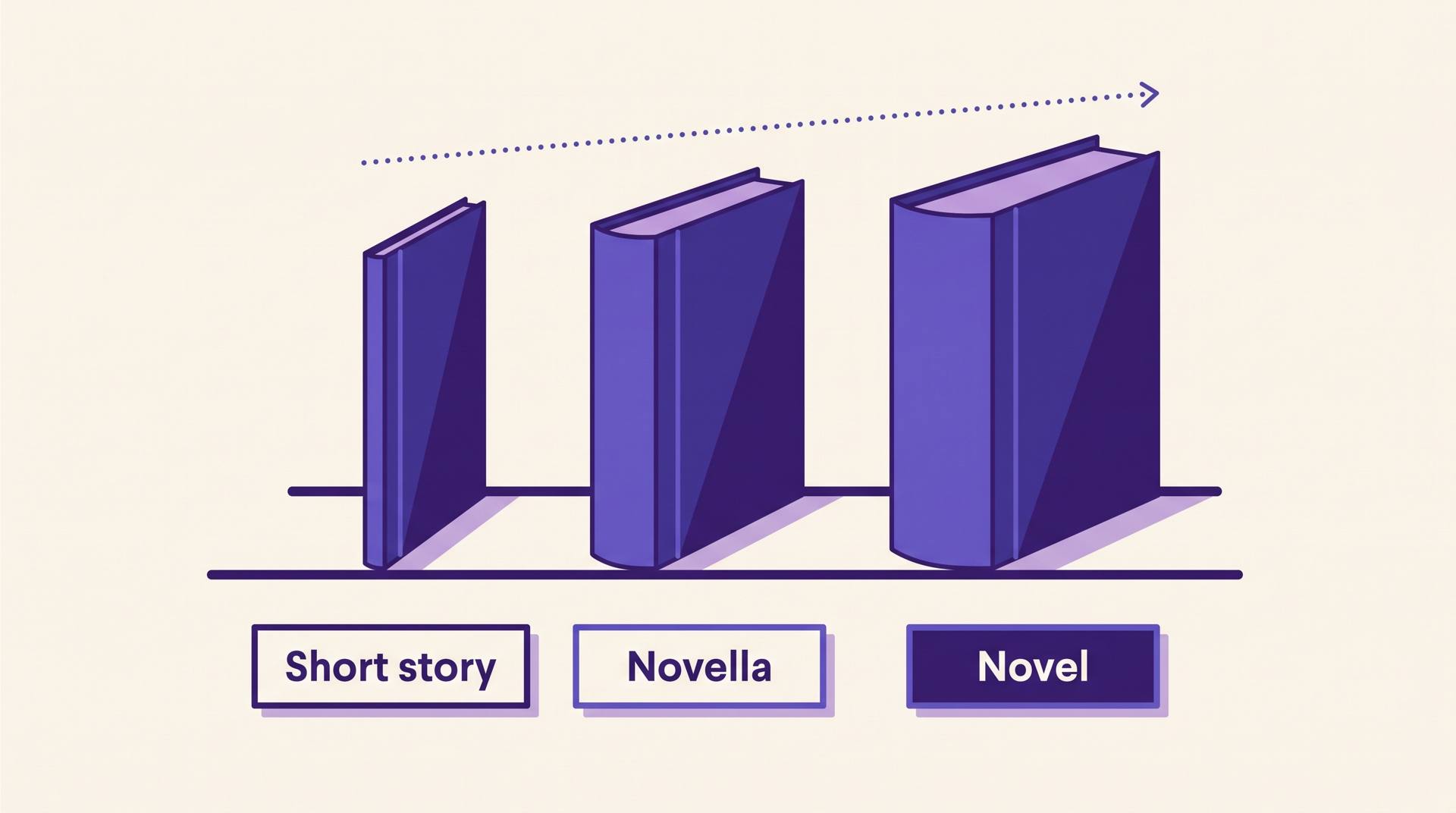
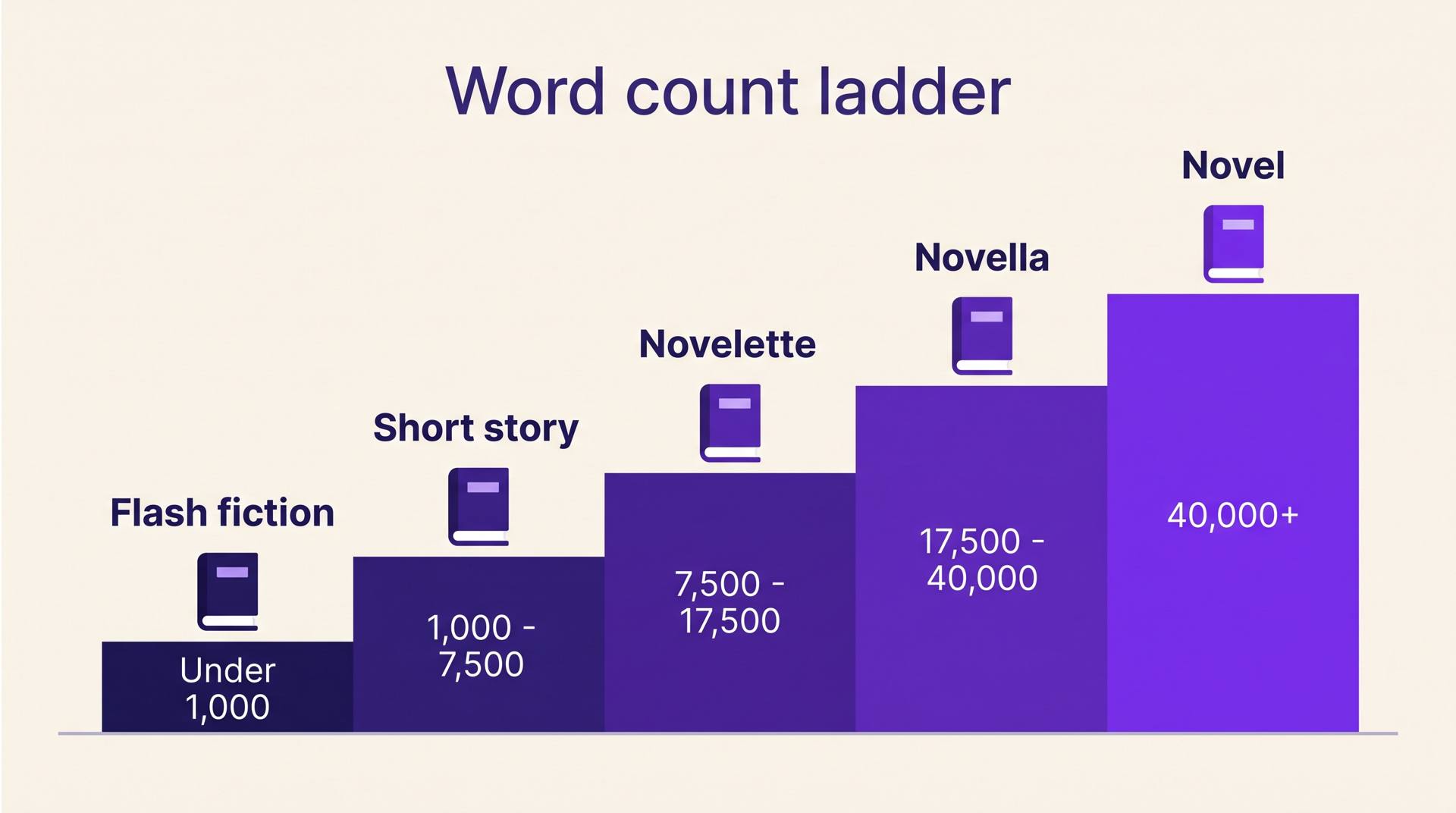
A novella is a work of prose fiction running roughly 17,500 to 40,000 words — long enough to carry a real arc, short enough to read in an evening or two. It sits between the short story and the novel, and the thing that defines it is compression: one central question, one protagonist worth following, and almost nothing that does not feed the ending.
A novel starts at 40,000 words and, in commercial fiction, usually lands somewhere between 70,000 and 90,000 — the range covered in our breakdown of how many words a novel should have. That extra room is not filler space. It is what pays for subplots, a larger cast, time jumps, and the slow reversals that only work when a reader has lived with the characters long enough to be surprised.
Six novellas worth studying
Every one of these could have been padded into a novel. None of them should have been.
Of Mice and Men
John Steinbeck, 1937 · about 30,000 words
Two men, one ranch, a handful of days. Steinbeck wrote it to work on the page and on a stage, so every scene is a scene.
The Metamorphosis
Franz Kafka, 1915 · about 21,000 words
One premise, followed honestly to its end. Stretch it across 80,000 words and the reader adapts to the horror long before Gregor's family does.
Animal Farm
George Orwell, 1945 · about 30,000 words
Allegory works at speed. Orwell subtitled it “A Fairy Story”, and each betrayal has to land before the reader can argue with it.
A Christmas Carol
Charles Dickens, 1843 · about 28,000 words
Four visitations in a single night, written to be read aloud in one sitting. The structure is a countdown, and countdowns lose their grip when they sprawl.
The Old Man and the Sea
Ernest Hemingway, 1952 · about 27,000 words
One man, one fish, one unbroken struggle. No subplot could survive here without diluting the exhaustion the prose is built to transmit.
Breakfast at Tiffany's
Truman Capote, 1958 · about 26,000 words
A character study seen through a narrator's window. We only get the fragments of Holly he happens to witness, and that partial view is the point.
Man is not made for defeat. A man can be destroyed but not defeated.
A novella earns a line like this by spending its whole length getting to it.
Novella vs novel, side by side
Word count is the headline difference. The structural ones are what actually decide whether your draft works.
| Dimension | Novella | Novel |
|---|---|---|
| Word count | 17,500 – 40,000 | 40,000+, most commercial fiction 70,000 – 90,000 |
| Page count at 250–300 words per page | roughly 60 – 160 pages | roughly 135 – 450+ pages |
| Subplots | none, or one that feeds straight into the ending | two to five, usually carrying the theme |
| Cast that drives scenes | two to five named characters | eight or more, plus a supporting bench |
| Time span | hours to a few weeks | months, years, sometimes generations |
| Typical KDP ebook list price | commonly $0.99 – $3.99 | commonly $2.99 – $9.99 |
Page counts depend on trim size, font and leading — the arithmetic behind them is in our piece on how many words fit in a 200-page book.
Those bands are what self-published books of each length are commonly listed at, not a measured average. The hard rule underneath is Amazon's: KDP pays the 70% royalty rate only between $2.99 and $9.99, so a novella at $0.99 earns 35%. Cheap entry, thinner margin — a deliberate trade.
Which is my story?
Six questions. Answer them about the story you actually have, not the one you wish you had — the tally updates as you go.
Can you tell the whole story inside one location, or one short stretch of time?
Is there a second storyline that would change the ending if you deleted it?
Could a reader finish it in one evening and feel the ending was earned?
Do more than five characters have wants that drive scenes of their own?
Does the premise deliver its punch the moment the reader fully understands it?
Are you planning a second book with the same cast and the same world?
Answer all six to see where your story lands.
Set the length before you draft
Once you know the shape, you can set the chapter count and the per-chapter word target up front and write to it instead of discovering the length afterwards.
What changes when you publish a novella
As an ebook, nothing does. KDP sets no minimum length for digital, so a 24,000-word novella lists exactly like a 90,000-word novel, and readers see the estimated page count on the product page. That estimate is the number to watch: a book marketed as a novel that shows 120 pages collects reviews about value, not writing.
Paperback is where the constraint bites. KDP requires a minimum of 24 pages for print, which any novella clears comfortably — a short story collection sometimes does not. The upside is manufacturing cost: a thinner interior prints cheaper, so a novella can hold a lower list price and still return a usable royalty.
The most reliable commercial use of a novella is as a door. A prequel at $0.99, or free through a mailing-list signup, lets a stranger try your voice before committing to a full-length book, and series readers arrive at book one already invested. If that is the plan, decide the chapter count for both books together so the reading rhythm matches.
The two mistakes that ruin the choice
Padding a novella up to novel length
The tell is a subplot that touches nothing. If you can delete chapter nine and the ending is unchanged, the chapter was inserted to reach a word count, and a reader will feel the slack long before they can name it. Agents call this a saggy middle; it is usually a novella wearing a novel's page count.
Cutting a novel down to a novella
The reverse failure is subtler. Writers trim the B-story because it looks least essential to the plot — but the B-story was carrying the theme, and once it is gone the climax lands as unearned. If your subplot is where the book's argument lives, cutting it does not shorten the novel. It breaks it.
Deciding the length before you write it
Most manuscripts end up the wrong length because nobody set a target. In AIWriteBook the number is a field: you set Number of Chapters on the Basics stage, and each chapter card on the Outline stage carries its own Target Words value that the chapter generator writes to.
That makes the arithmetic explicit. Twelve chapters at a 2,200-word target lands around 26,400 words — squarely a novella. Thirty chapters at 2,800 lands near 84,000 — a commercial novel.
Once a draft exists, the editor works across the whole book rather than one chapter at a time, so tightening a bloated novella is an editing pass rather than a rewrite. To place an existing manuscript on the ladder, paste it into the free word counter.
Novella vs novel: quick answers
Between 17,500 and 40,000 words — the range the Science Fiction and Fantasy Writers Association uses for the Nebula Awards, and the boundary most editors and contest rules follow. Below 17,500 you are in novelette territory; at 40,000 and above it counts as a novel.
Pick the shape, then write to it
Novella vs novel is a decision you can make in an afternoon and then stop relitigating. Count the threads. Count the people whose wants generate scenes. If there is one of each, you have a novella, and inflating it will cost you the compression that makes short books memorable.
Still unsure? Write the shorter version. Expanding a tight draft is far easier than rescuing a bloated one, and a finished 28,000-word manuscript teaches you more than an abandoned 80,000-word one. More on shaping and tightening a manuscript in our book editing guide.