

Definition
Plotter
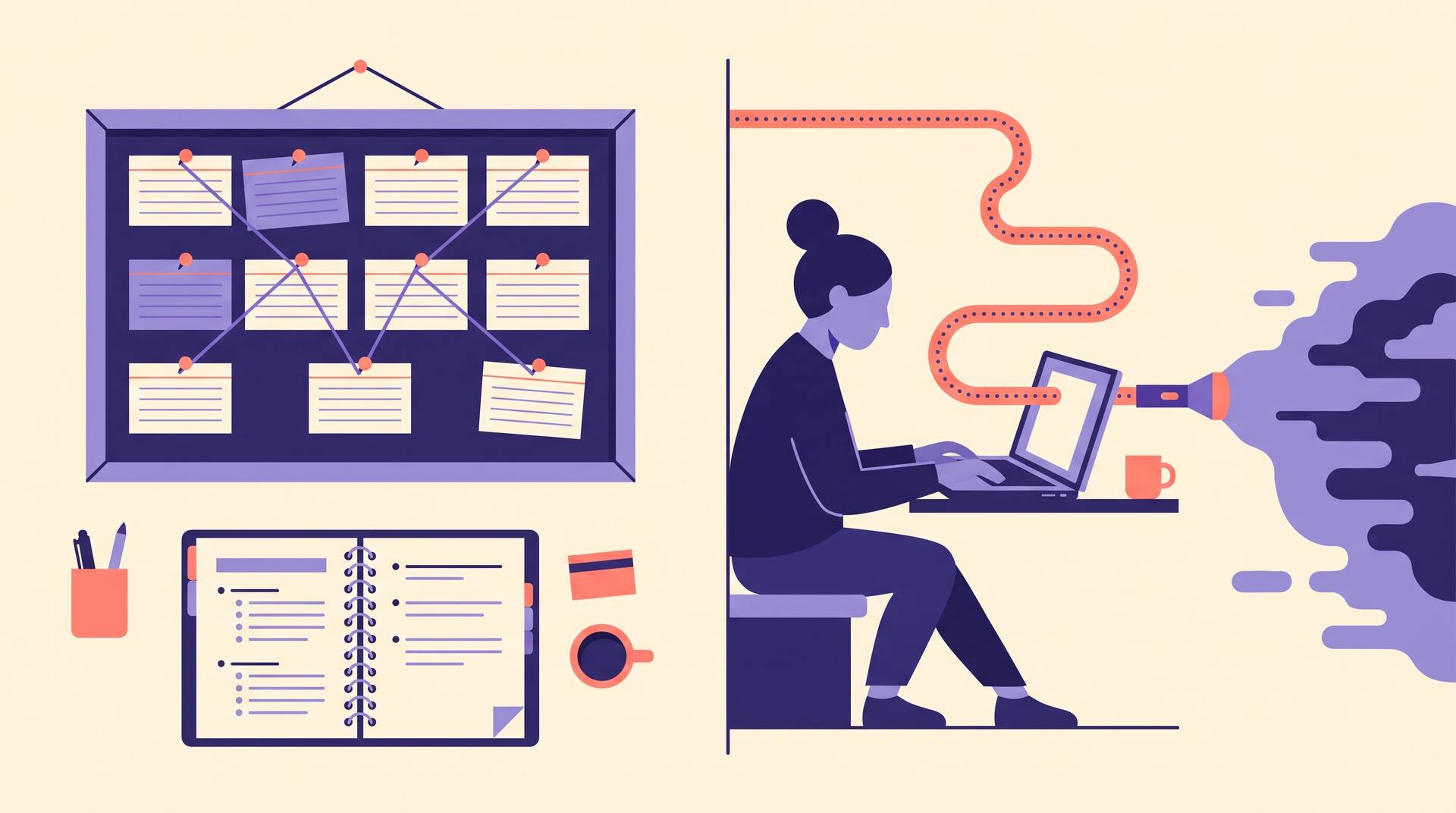
A writer who decides the story's events before drafting. The plan can be a one-page beat sheet or a sixty-page scene list, but the defining trait is that the draft executes a structure that already exists.
Pantser
A writer who drafts "by the seat of their pants," discovering the plot while writing. Also called a discovery writer. The defining trait is that the draft is where the story gets found, and structure is usually fixed in revision.
The phrase comes from aviation slang: flying by the seat of your pants meant flying on feel, without instruments. Writers borrowed it in the 2000s through NaNoWriMo forums, and "plotter vs pantser" became the standard shorthand for the planning debate.
Neither camp skips the work. Plotters do their structural thinking before the draft; pantsers do it after, in revision. The total effort is similar. What changes is when you pay it and which kind of mess you are willing to live with.
The plantser middle ground
The binary is a convenience. In practice planning is a dial, and most working novelists sit somewhere in the middle. The word for them is "plantser": someone who plans a few fixed points and discovers the road between them.
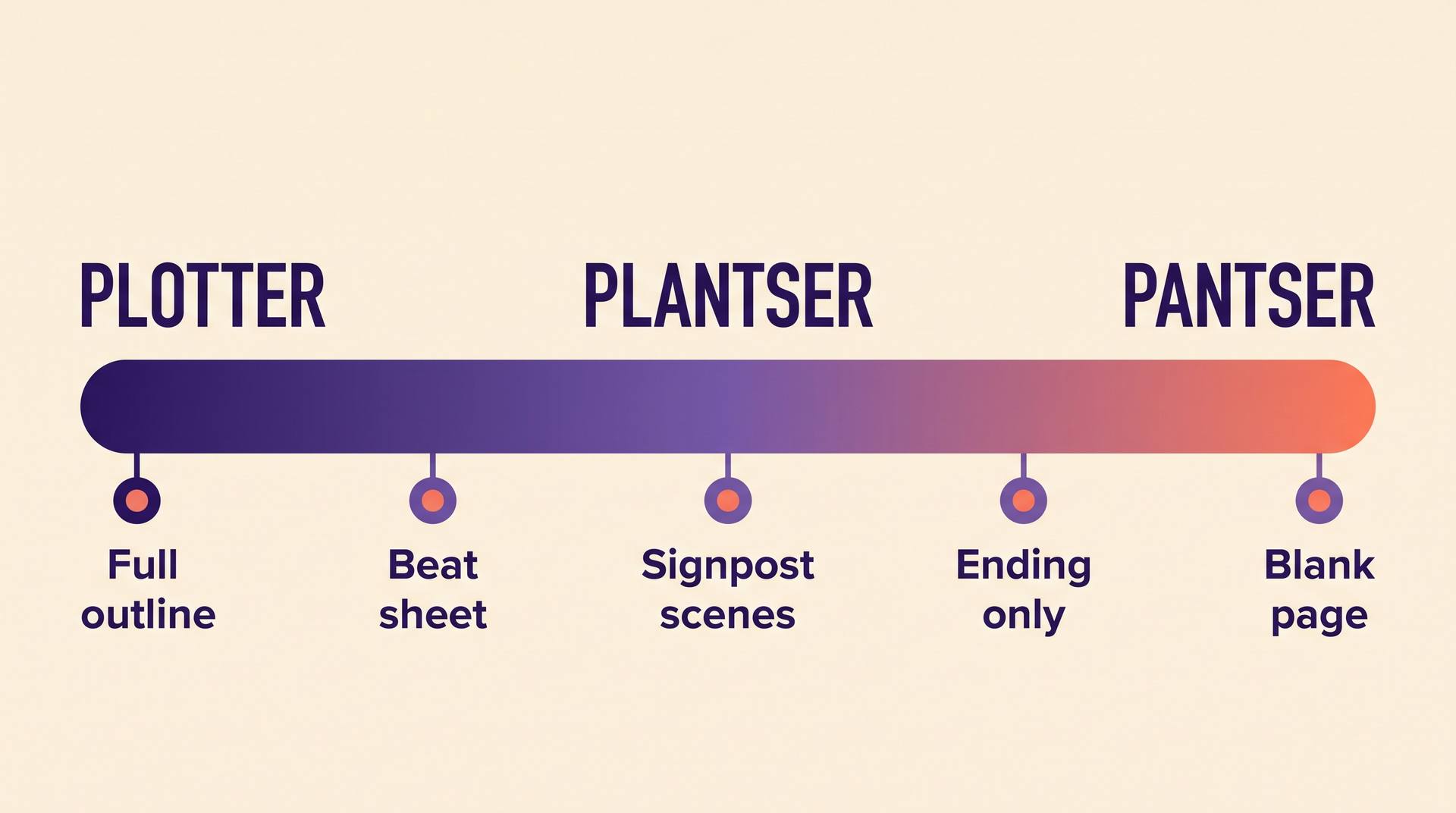
Read the dial from left to right. A full outline lists every scene. A beat sheet lists only the turning points, the kind you find in the three-act structure. Signpost scenes are three to five moments you know you are driving toward. Ending only means you know where it lands and nothing else. Blank page is pure discovery.
Your position can move from book to book. Mysteries and thrillers tend to pull writers leftward, because clues have to be planted before they pay off. Literary and character-driven fiction tends to tolerate a position further right.
Quick quiz: where do you sit?
Five questions, no right answers. Pick the option closest to how you actually behave, not how you wish you did.
1. You get a new story idea. Your first move is to:
2. Knowing the ending before you start makes writing feel:
3. Your most common way of stalling is:
4. Revision, for you, means mostly:
5. Your characters surprising you is:
Famous examples
Published authors have been unusually open about their process, and they cover the whole dial.
Stephen King
PantserIn On Writing he describes starting from a situation and watching what happens, and says he distrusts plot as a tool. His books still have tight structure. It arrives in the second draft.
J.K. Rowling
PlotterHer hand-drawn grid for Order of the Phoenix, with chapters as rows and subplots as columns, is one of the most shared images in writing circles. Seven books of planted clues needed that kind of tracking.
George R.R. Martin
PantserHe calls himself a gardener rather than an architect: he plants seeds and sees what grows. It is where the gentler "architect vs gardener" vocabulary comes from.
John Grisham
PlotterHe has described writing a detailed outline before each legal thriller. The genre depends on reveals landing in the right chapter, which is hard to guarantee by feel.
Lee Child
PantserThe Jack Reacher author has said he starts with no outline and writes to find out what happens, one of the clearest counterexamples to the idea that thrillers require plotting.
Brandon Sanderson
PlantserHe outlines plot and magic systems carefully but discovers his characters in the draft. He teaches this split openly in his university lectures.
The terms in context
The words show up in critique groups, author bios and query letters. Here is how they read when used well.
"I'm a pantser, so my first draft is really a discovery draft. Structural notes are more useful to me on draft two."
Tells beta readers what kind of feedback helps right now.
"I plotted the mystery backwards from the reveal, then pantsed the romance subplot."
Shows the method can switch per storyline.
"Recovering pantser here. After two abandoned middles, I now outline the midpoint and the climax."
The most common real-world path: a pantser who adopts signposts.
Common mistakes
Treating the label as an identity. "I'm a pantser, I can't outline" closes a door you might need. The label describes a habit, not a talent.
Outlining as procrastination. A plan with 40 pages of worldbuilding and zero chapters is not a plan. Plotters need a hard start date for the draft.
Pantsing without revising. Discovery drafts need a structural pass. Skipping it is how you get a book whose climax does not answer its opening.
Refusing to break the outline. If a scene is dead on the page, the outline was wrong. Update the plan instead of forcing the draft to match it.
Copying a famous author's method. King's process works for King after decades of practice. Borrow ideas, then test them against your own finished pages.
When each method fits
Lean toward plotting when
- Clues, twists or reveals must be planted early
- You are writing a series and need continuity
- You have a deadline and cannot afford a rewrite
- You stalled in the middle of your last book
Lean toward pantsing when
- The story is driven by character, not mechanism
- Outlining drains your interest in the book
- You are drafting a short story or novella
- You enjoy revision more than planning
If you are stuck on a blank middle, our guide to beating writer's block has concrete ways out, and the snowflake method is a good halfway house for pantsers who want a light structure.
AI assistance for both camps
AI does not force you into one camp. Used well, it removes each camp's typical failure point.
For plotters
The AIWriteBook outline builder turns a premise into a chapter-by-chapter outline you can reorder and rewrite before any chapter is drafted. If you only want to test a premise, the free outline generator sketches a structure in a minute.
For pantsers
When the road runs out mid-draft, the free plot twist generator and scene builder give you options for what happens next without committing you to a plan. In the app, the chapter AI chat lets you ask for a change to a chapter and accept or reject each edit in a diff view.
Either way the decisions stay yours. The outline is editable, and every AI suggestion is something you choose to keep.
Frequently asked questions
Neither is better. Both produce published novels. The better method is the one that gets you to a finished draft with the least rework, and many writers only learn that by finishing one book each way.
Pick the planning that finishes books
Plotter and pantser are two ends of a dial, not two species. Notice where your last draft stalled, then add or remove just enough planning to fix that one problem.
Once you know how you plan, the rest of the process is laid out step by step in our complete guide to writing a book.