


Static character, defined
A static character does not undergo significant internal change over the course of a story. Their core traits, beliefs and outlook stay the same from beginning to end, even if their circumstances change dramatically.
Static is not the same as flat
This is the mistake most definitions online make. Static and flat answer two different questions. Static versus dynamic asks: does the character change? Flat versus round asks: how much depth does the character have? E. M. Forster coined flat and round in 1927; the static and dynamic labels describe a separate axis.
So a character can be static and round, like Sherlock Holmes: endlessly complex, full of contradictions, and fundamentally the same person in the last story as in the first. A character can also be static and flat, like a comic-relief cousin who exists to say one kind of thing. If you want the depth question in detail, read our guide to flat character examples and its opposite, round characters.
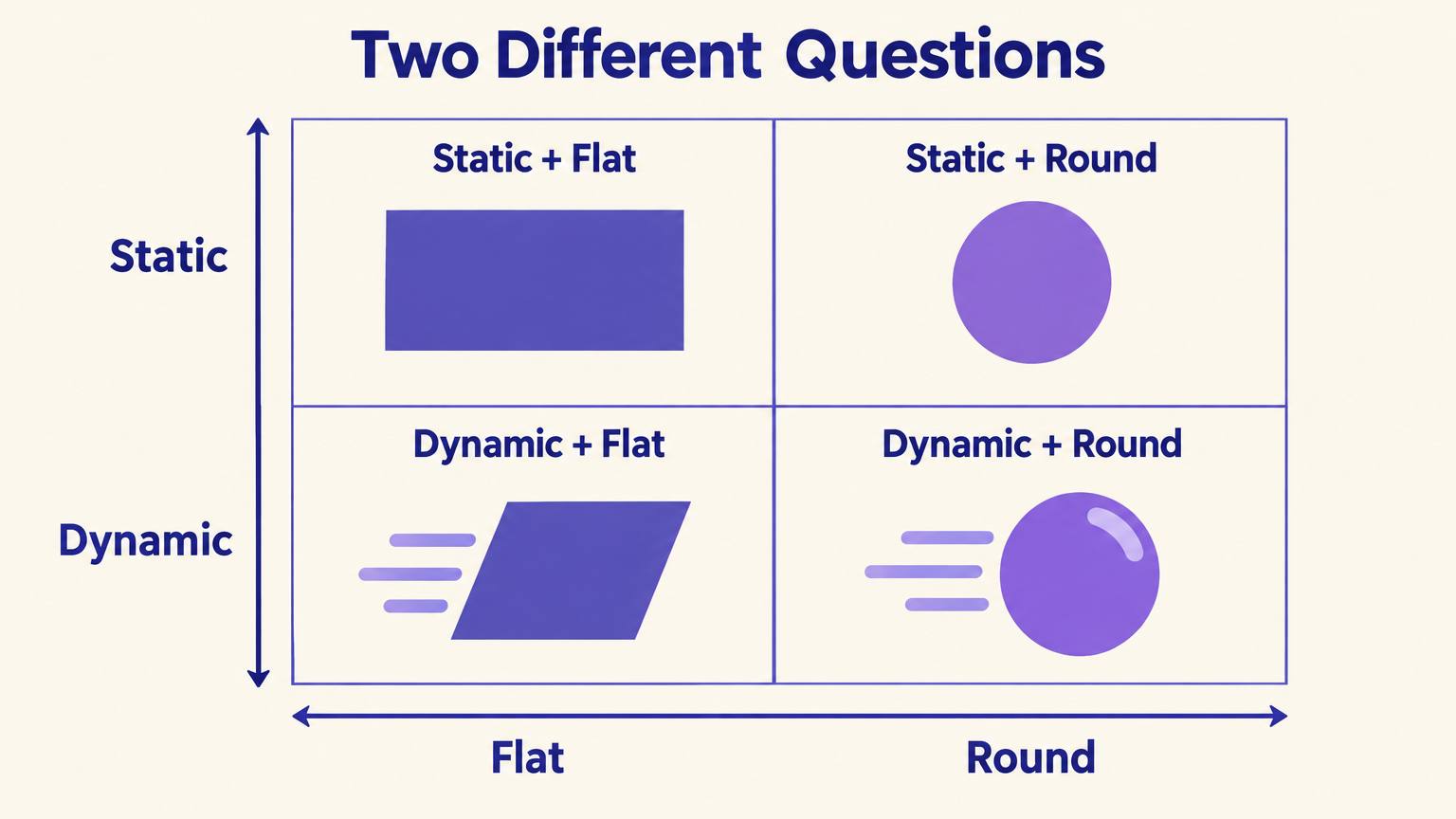
Quick test: Ask whether the character believes something different at the end. If not, they are static. Then ask whether you could predict everything they would say in a new scene. If yes, they are probably also flat.
11 static character examples
Open each one to see why the character stays the same and what their steadiness does for the story.
1Sherlock HolmesArthur Conan Doyle's detective storiesStatic, round
Type: Static, round. Over sixty stories Holmes gains no new values and learns no life lesson. He is brilliant, cold, theatrical and occasionally kind in the same proportions throughout. His fixed nature is the frame each mystery hangs on, and Watson, who marries, grieves and grows, supplies the change.
2Atticus FinchTo Kill a Mockingbird, Harper LeeStatic, round
Type: Static, round. Atticus holds the same moral line from the first chapter to the last, under enormous pressure. The story is about Scout's change, and Atticus is the fixed point she measures it against.
3Hercule PoirotAgatha Christie's novelsStatic, round
Type: Static, round. Vain, precise and humane, Poirot is the same man across decades of cases. Readers come back for him precisely because he will not change.
4Captain AhabMoby-Dick, Herman MelvilleStatic, round
Type: Static, round. Ahab's obsession never wavers, even when Starbuck begs him to turn back. His refusal to change is the tragedy: the whole ship follows a man who cannot move.
5Peter PanPeter and Wendy, J. M. BarrieStatic, flat
Type: Static, flat. The boy who will not grow up is static by definition. Wendy grows and leaves; Peter stays, which is the book's quiet heartbreak.
6MercutioRomeo and Juliet, William ShakespeareStatic, round
Type: Static, round. Witty, cynical and loyal, Mercutio dies as he lived, making jokes. His fixed scepticism about love contrasts with Romeo's headlong change.
7HoratioHamlet, William ShakespeareStatic, flat
Type: Static, flat. Horatio is steady, rational and loyal from start to finish. Shakespeare needs one unshaken witness so the audience can measure how far Hamlet has fallen.
8Mr. CollinsPride and Prejudice, Jane AustenStatic, flat
Type: Static, flat. Pompous and obsequious in every scene, Mr. Collins is a comic constant. His sameness makes Elizabeth's refusal, and Darcy's change, stand out.
9Jay GatsbyThe Great Gatsby, F. Scott FitzgeraldStatic, round
Type: Static, round. Gatsby reinvented himself before the novel began, but within the story his dream of Daisy never changes, even when reality contradicts it. Nick is the one who changes.
10James BondIan Fleming's novelsStatic, round enough
Type: Static, round enough. Series heroes are often static so readers can drop into any book. Bond's competence and moral code stay fixed while the villains and stakes rotate.
11The JokerThe Dark Knight (2008 film)Static, round
Type: Static, round. The Joker arrives with a complete philosophy and leaves with it unchanged. His job is to test whether Batman, Harvey Dent and Gotham will change, and Dent does.
What static characters do in a story
The measuring stick
A protagonist's arc is only visible against something that does not move. Atticus is the yardstick for Scout, Horatio for Hamlet.
The mentor
Mentors are usually static because their value is their settled wisdom. If the mentor changes, it often marks a turning point, such as their death or betrayal.
The foil
A static foil highlights the hero's change by contrast. See how this works in our guide to foil character examples.
The immovable antagonist
A villain who cannot be argued out of their position forces the hero to change instead. Ahab and the Joker both work this way.
The series anchor
Detective and adventure series rely on a static lead so every book stands alone, while side characters carry the long arcs.
Static or dynamic? Quick check
Decide for each character, then reveal the answer.
Ebenezer Scrooge, A Christmas Carol
Sherlock Holmes
Elizabeth Bennet, Pride and Prejudice
Mr. Collins, Pride and Prejudice
When a static character works, and when it does not
Static works when the story's question is about someone else. If the reader's emotional journey belongs to the protagonist, the people around them can, and often should, stay put. It also works when the character's steadiness is itself under pressure: the drama is whether they will break, and they do not.
Static fails when it is accidental. A protagonist who faces a huge crisis and walks away unchanged, without the story noticing, reads as a missed arc rather than a choice. If your main character is static on purpose, make the world push hard on them, and let another character carry the change. Our guide to dynamic character examples shows the other side, and character arc examples breaks down how a change is built.
Common mistakes with static characters
- Confusing static with boring. Holmes and Ahab are static and unforgettable. Give a static character strong opinions, specific habits and something they want.
- Making every side character static. If nobody but the hero changes, the world feels like a stage set. Let at least one secondary character shift.
- Letting a static character drift. Consistency is the point, so a sudden out-of-character choice without cause breaks trust with the reader.
- Using a static mentor only for exposition. A mentor who just explains things is flat as well as static. Give them a cost for their steadiness.
Keeping static characters consistent
The hardest part of a static character in a long book is keeping them identical across 300 pages. Write down the beliefs, voice and habits that must never move before you draft. Our free character creator builds a full profile you can check against, and AIWriteBook's character builder keeps every character's traits, history and relationships attached to the book, so each chapter the AI drafts or edits stays consistent with who the character is, which is exactly what a static character needs.
A static character is a choice about where change lives in your story. Keep them complex if they matter, steady under pressure, and set against someone who does change. For more on building a cast, see our how to write a book guide.