

In this guide
The definitions
Genre fiction
Fiction written to deliver the experience a specific category promises, such as romance, mystery, thriller, fantasy, science fiction or horror. Plot and the reader's emotional payoff come first. It is sometimes called commercial or popular fiction.
Literary fiction
Fiction where character interiority, theme and the prose itself are the main event. It is shelved by quality of writing and ideas rather than by a promised experience, and it tolerates ambiguous or unresolved endings.
Both definitions are about reader expectation, not author talent. A brilliantly written thriller is still a thriller, and a clumsy literary novel is still literary. The useful question is never "is my book literary enough?" but "which promise does my book make on page one?"
Side by side
| Dimension | Genre fiction | Literary fiction |
|---|---|---|
| Primary engine | Plot and stakes | Character and meaning |
| Ending | Resolved, usually satisfying | Can be open or ambiguous |
| Prose | Clear, fast, invisible | Stylized, a pleasure in itself |
| Conventions | Firm and expected | Loose, often subverted |
| Series | Common, often expected | Rare |
| Where readers find it | Category charts, subscriptions, series read-through | Reviews, prizes, book clubs |
It is a spectrum, and the middle has a name
Most novels are not purely one or the other. Publishers use the term upmarket fiction (sometimes book club fiction) for novels with a strong, accessible plot and literary-quality prose and themes. Many of the novels you see recommended by book clubs live here.
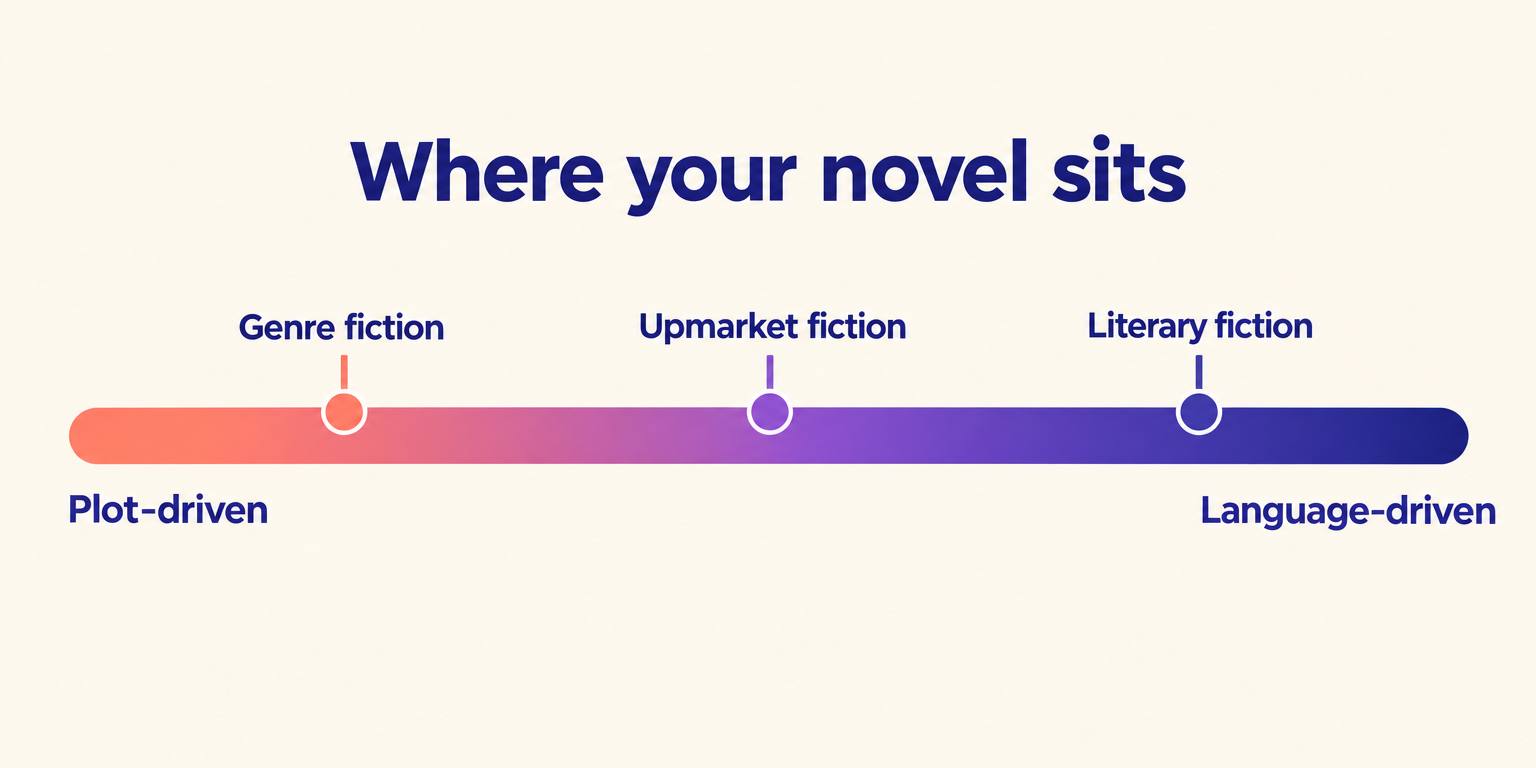
There is also literary genre fiction: books that keep a genre's premise but write it with literary priorities. A literary novel can have clones, zombies or a heist in it. The premise does not decide the category; the priorities do.
Famous examples: same premise, different promise
The clearest way to see the difference is to compare books that share a premise.
Dystopia with young people chosen to die
Genre take
The Hunger Games by Suzanne Collins: a survival plot, a ticking clock, a clear antagonist and a cliffhanger into a series.
Literary take
Never Let Me Go by Kazuo Ishiguro: the horror is revealed slowly and quietly, nobody rebels, and the novel is about memory and acceptance.
Life after the collapse
Genre take
A typical post-apocalyptic thriller: factions, supplies, battles and a mission to reach safety.
Literary take
The Road by Cormac McCarthy: a father and son walk south in spare, unpunctuated prose; the plot is minimal and the meaning is everything.
A woman disappears and her husband is suspected
Genre take
Gone Girl by Gillian Flynn: a twisting crime thriller, but with sharp, voice-driven prose that pushed it toward upmarket.
Literary take
A literary treatment of the same premise would spend its pages on the marriage itself and might never confirm what happened.
Place your novel on the spectrum
Answer six quick questions about your manuscript. There are no wrong answers, only a clearer label.
Why the label changes how you sell
Category is a marketing decision as much as a craft one. Genre readers browse category bestseller lists and binge series, so self-published genre fiction benefits from tight categories, series branding and subscription programs. Our guides to choosing Amazon categories and Kindle Unlimited go deeper on both.
Literary fiction is harder to self-publish profitably because its readers are reached through reviews, prizes and booksellers more than through store algorithms. Many literary writers query agents instead; our literary agent research guide and query letter template cover how, including how to name the category in a query.
Whichever side you land on, describe the book honestly. A literary novel dressed as a thriller gets angry reviews from thriller readers who were promised pace.
Common mistakes
Calling a book literary to sound serious
Agents and readers judge by what the pages do. A plot-driven book labelled literary looks miscategorized, not elevated.
Assuming genre means formulaic
Genre writing demands precise control of pacing, tension and payoff. The conventions are fixed; the craft is not.
Ignoring the prose in genre fiction
Invisible prose is a skill. Clunky sentences slow pace, and pace is what genre readers pay for.
Forgetting plot in literary fiction
Literary readers still need a reason to turn pages. Quiet is fine; static is not.
Writing either kind with AI
AI drafting is often associated with genre fiction, but the tools that matter for literary work are the ones that protect your voice. In AIWriteBook the writing style builder learns from your own pages, so drafts sound like your sentences rather than a generic narrator, and you can pick Literary Fiction as a genre chip when you set up the book.
For genre fiction, the outline builder and chapter drafting keep a fast plot on track, and series support carries characters and world details into the next book. For any draft, the AI chat lets you revise a chapter with a request like "slow this scene down and stay in her head" and accept or reject each change. You can also test a premise with the free book idea generator before committing to either mode.
Draft in your own voice, whatever the genre
Set up your book, teach the AI your style from your own pages, and revise every chapter with changes you approve one by one.
Choose the promise, then keep it
Genre fiction and literary fiction are two ways of making a reader care. Decide which one your book makes first, describe it honestly, and write it with the craft that promise demands. If you are on the genre side, start with the genre conventions your readers expect.
Explore subgenres, tropes and structure in our genre fiction guide.