

The publishing landscape has changed dramatically. Authors who once spent years on a single manuscript now produce quality work in months. The secret isn't shortcuts or compromises—it's strategic AI collaboration, often supported by tools that an AI development company builds around a specific publishing workflow. This guide reveals the exact methods professional authors use to harness AI while preserving creative authenticity.
The AI Writing Mindset
AI is not a replacement for your creativity—it's an amplifier. Think of it as a tireless writing partner who can brainstorm, draft, and refine alongside you. Your vision, voice, and decisions remain central to the process.
Understanding the AI Writing Landscape
Before diving into techniques, it's essential to understand what AI can and cannot do for your writing.
What AI Does Well
- Generates ideas, outlines, and initial drafts quickly
- Helps overcome writer's block with prompts and suggestions
- Maintains consistency in tone and style across chapters
- Assists with research and fact-checking
What Requires Human Input
- Original creative vision and unique perspectives
- Emotional authenticity and lived experiences
- Final editorial judgment and quality control
- Understanding of your specific target audience
Choosing the Right AI Tools
Different AI tools excel at different aspects of book writing, and our roundup of the best AI writing tools for authors breaks down where each one shines. Understanding their strengths helps you build an effective toolkit. If your needs run past what off-the-shelf tools cover, such as a publishing team that wants its own writing platform, working with an AI development company is how you get something scalable and tailored to the way you actually write.
Purpose-Built Book Writers
Tools designed specifically for long-form book writing with features like chapter management, character tracking, and outline generation.
Complete book projects from concept to publication
General AI Assistants
Versatile tools like ChatGPT that can help with various writing tasks but lack specialized book features.
Brainstorming, research, and specific writing challenges
Editing & Refinement Tools
AI tools focused on improving existing text through grammar checking, style suggestions, and readability analysis.
Polishing drafts and ensuring consistency
For most authors, a combination works best: a purpose-built tool for the main writing process, supported by specialized tools for specific needs.
The AI Book Writing Process
A proven step-by-step approach to writing your book with AI assistance.
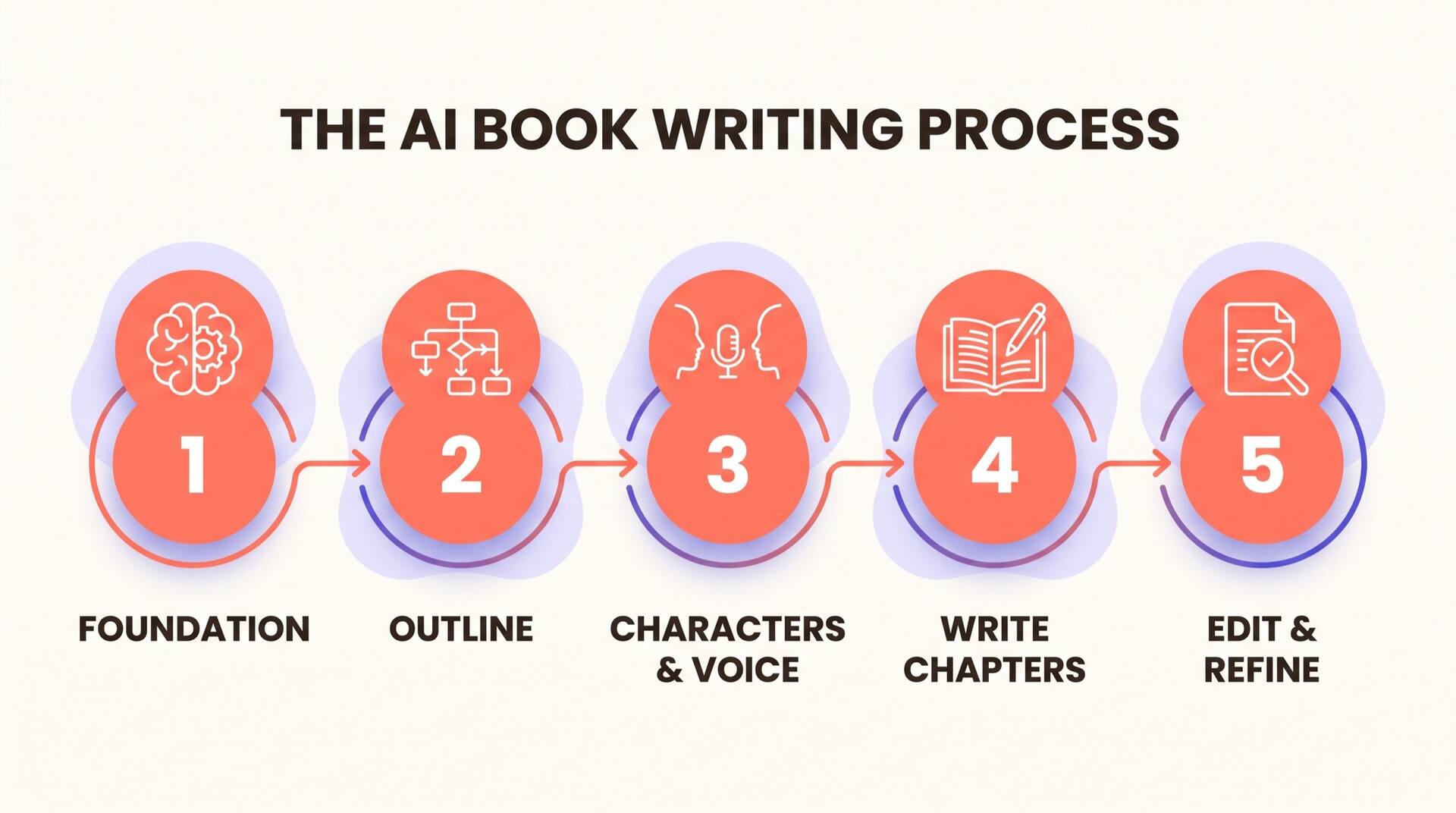
Before involving AI, clarify your book's core elements: genre, target audience, main message, and your unique angle. This foundation guides every AI interaction.
Pro tip: Write a one-paragraph description of your ideal reader. Every AI prompt should serve this reader's needs.
Mastering AI Prompts for Book Writing
The quality of AI output depends entirely on the quality of your prompts. Learn to communicate effectively with AI.
Be Specific About Context
Instead of: "Write a chapter about the protagonist meeting the villain"
Try: "Write Chapter 7 where Sarah, a 35-year-old detective (established as methodical and skeptical), encounters Marcus (the charming tech billionaire hiding criminal ties) at a charity gala. Maintain the noir tone established in previous chapters. The scene should raise Sarah's suspicions without revealing Marcus's full villainy."
Specify Format and Length
Include word count targets, formatting preferences, and structural requirements. "Write a 2,000-word chapter with 3-4 scenes, dialogue-heavy, ending on a cliffhanger."
Iterate and Refine
Don't accept first outputs. Ask for variations: "Rewrite this scene with more tension" or "Make the dialogue feel more natural for a teenager."
Provide Examples
Share passages you've written or admire as style references. "Match the pacing and descriptive style of this excerpt: [your sample]."
Maintaining Your Voice with AI
The biggest concern authors have about AI is losing their unique voice. Here's how to prevent that.
Train the AI on Your Style
Provide samples of your existing writing. The more examples you share, the better AI can mimic your patterns.
Use AI as a Starting Point
Generate rough drafts, then rewrite substantially. AI provides structure and ideas; you provide the soul.
Keep Personal Elements Human
Write emotional scenes, humor, and philosophical reflections yourself. These require lived human experience.
Review with Fresh Eyes
After completing a section, wait 24 hours before reviewing. This helps you catch passages that feel 'off.'
Your voice isn't just word choice—it's perspective, values, and the connections you make. AI can imitate surface style; only you bring depth.
Genre-Specific AI Strategies
Different genres require different AI approaches.
Fiction Writing
- Use AI for plot development and pacing analysis
- Generate dialogue variations to find the right tone
- Create detailed setting descriptions efficiently
- Test plot twists by asking AI to predict reader reactions
Common Mistakes to Avoid
Learn from others' errors to accelerate your success.
Over-Relying on First Drafts
AI first drafts need substantial revision — this is exactly why AI-written novels vary so widely in quality. Treating them as final produces generic, soulless content.
Ignoring Consistency
AI doesn't remember previous context automatically. You must manage continuity between sessions.
Skipping the Learning Curve
Effective AI collaboration requires practice. Start with smaller projects before tackling your magnum opus.
Forgetting Legal Considerations
Understand copyright implications. AI-assisted work is copyrightable, but you must add substantial human creativity.
AI Book Writing by the Numbers
30
Quality Criteria per Review
A full editorial review scores your draft on 30 genre-specific criteria before you publish
5x
More Iterations
AI enables more revision cycles, improving final quality
89%
Would Use Again
Authors who try AI-assisted writing continue using it
Your AI Writing Workflow
A practical daily routine for AI-assisted book writing
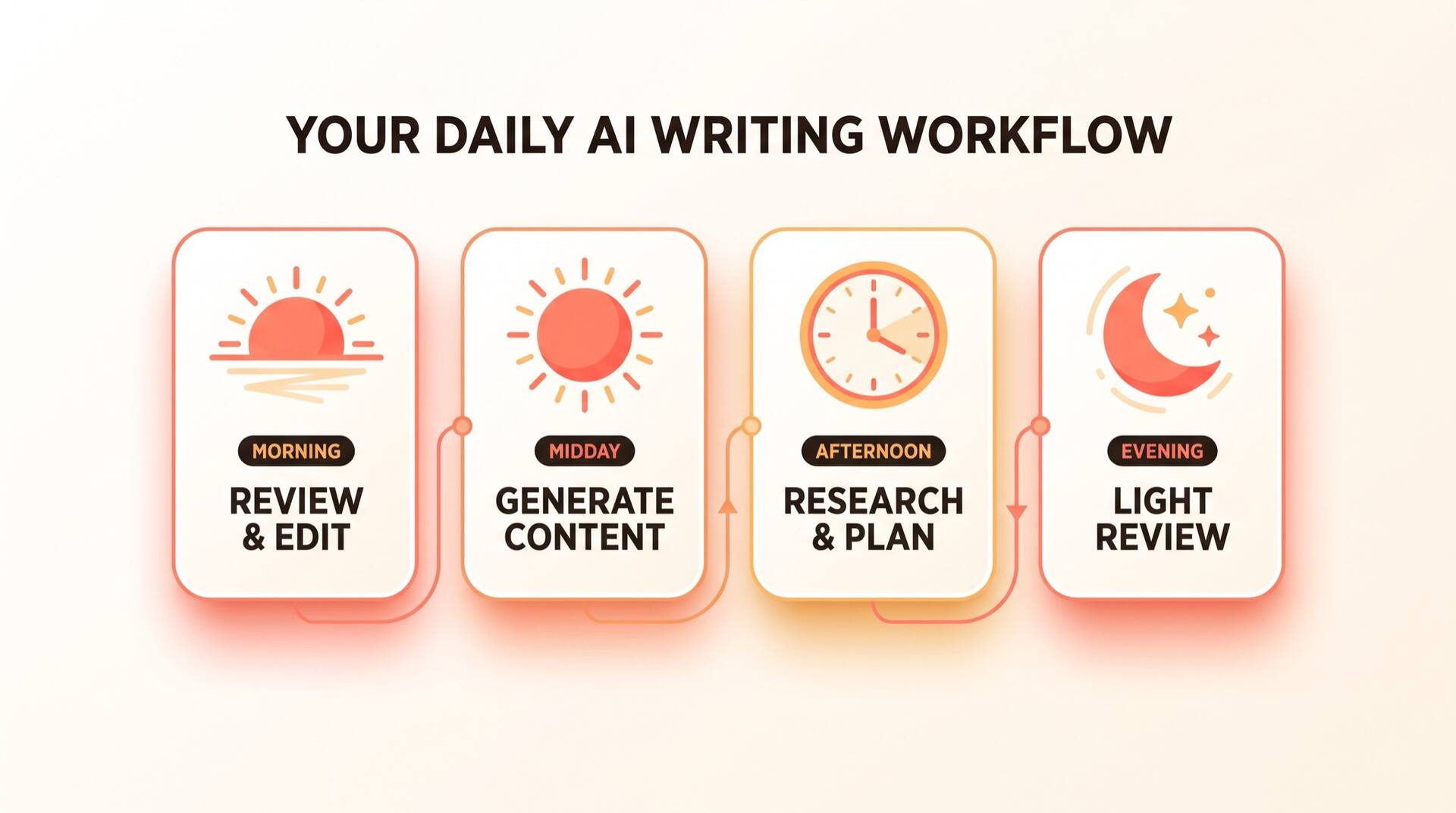
Morning
Review and Edit
Start fresh by reviewing yesterday's AI output. Edit with a clear mind before generating new content.
Midday
Generate New Content
Use your peak creative hours to prompt AI and shape new sections. Iterate until satisfied.
Afternoon
Research & Planning
Use AI for research, outline refinement, and planning tomorrow's writing session.
Evening
Light Review
Quick read-through of the day's work. Note areas needing revision without making changes.
Start Your AI-Assisted Book Today
AI writing tools have matured from novelty to necessity. Authors who learn to use them effectively gain a significant advantage—not by replacing creativity, but by amplifying it.
The best time to start was yesterday. The second best time is now. Begin with a single chapter, learn from the process, and iterate your approach.