

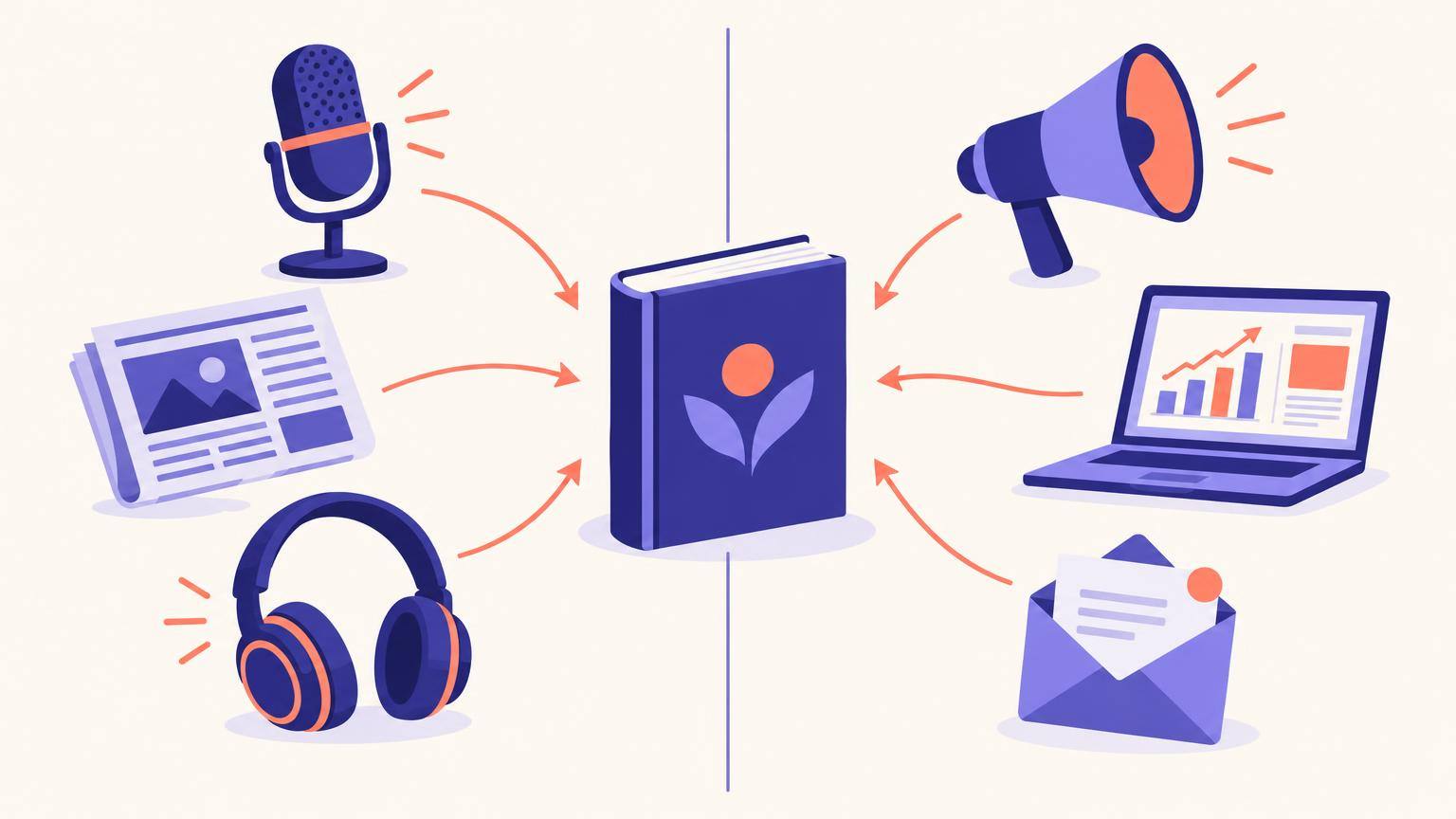
The real difference
Publicity is earned media. A journalist writes about your book, a podcast host invites you on, a blogger reviews it, a bookshop asks you to do an event. Nobody is paid to say those things, which is exactly why readers trust them. The trade-off is control: you can pitch, but you cannot decide who says yes, what they say, or when it runs.
Marketing is paid and owned media. You choose the Amazon ad, the BookBub deal, the newsletter swap, the email to your list, the copy on your book page. You control the message and the timing, and you can see clicks and sales the same week. The trade-off is trust: readers know an ad is an ad.
Most self-published books sell through marketing first. Publicity starts to matter when the book or the author has a story that editors and hosts actually want to tell.
Publicity vs marketing side by side
| Question | Publicity | Marketing |
|---|---|---|
| Who decides | Editors, hosts, reviewers | You |
| What you pay for | A publicist's time and contacts, never the coverage itself | Ad clicks, promo placements, tools |
| Control over message | Low: they write the story | High: you write the copy |
| How fast it shows | Weeks to months of lead time | Same day for ads and email |
| How you measure it | Hard: mentions, reach, a vague sales bump | Clear: clicks, conversions, sales per dollar |
| Best at | Credibility, authority, a launch moment | Steady, repeatable sales |
| Works best for | Nonfiction with a timely angle, memoir, local stories | Genre fiction, series, backlist |
Read the table as a question about your book rather than a ranking. A thriller series lives on ads and email. A nonfiction book about a topic in the news has something a journalist can use, and that is when publicity earns its cost.
Which one should you start with?
Two questions sort most books. First: is there a news hook? That means a timely topic, a surprising credential, a local angle, or a personal story that works without the book. If yes, publicity is worth testing. If not, ask whether the book is part of a series, because read-through makes paid marketing pay back across several books.
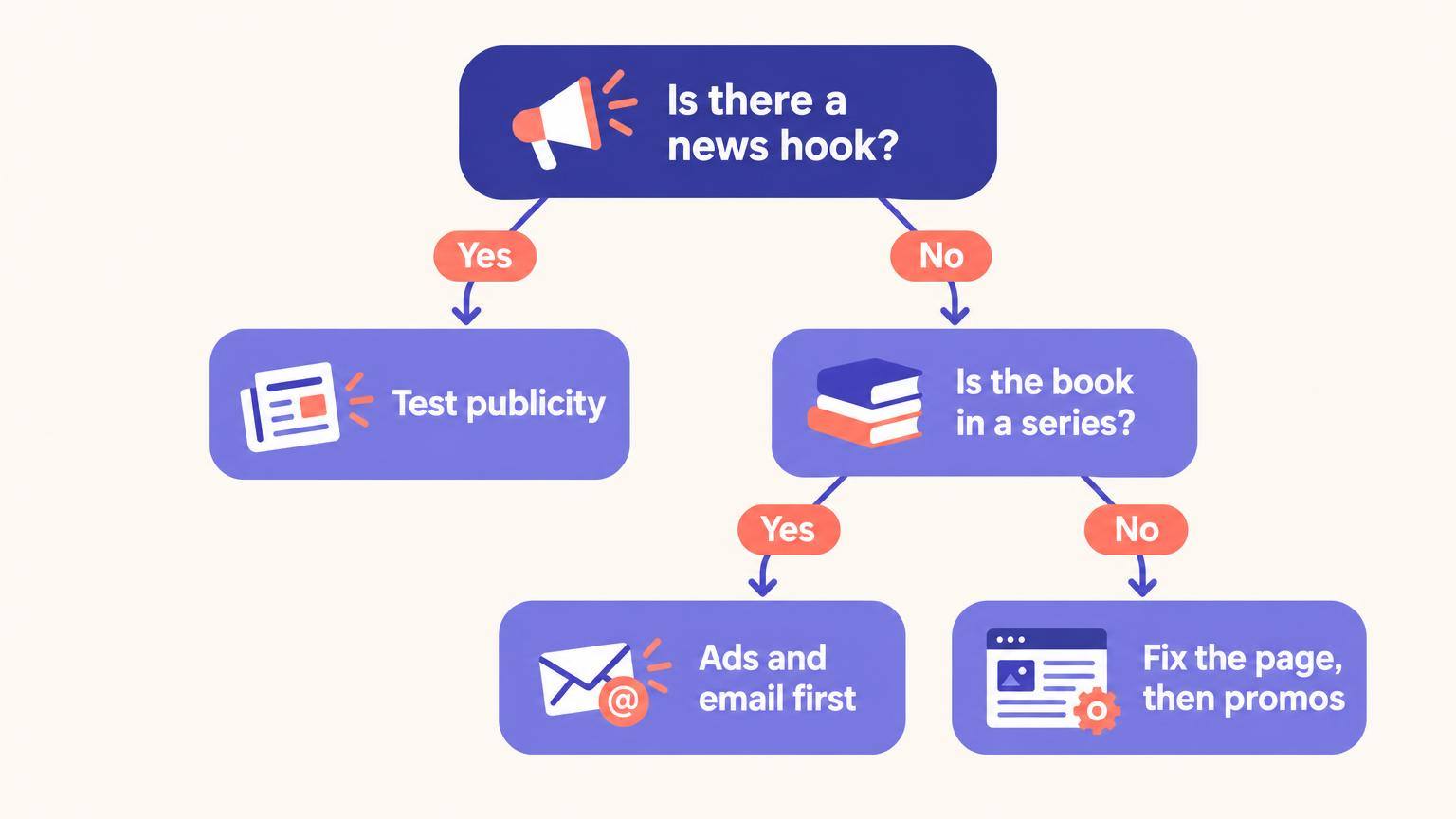
The third branch is the most common and the least glamorous. A standalone book with no news hook needs a strong cover, description and reviews before either kind of spending works. Our book marketing budget guide shows how to split a small budget once the page is ready.
What to buy at each stage
- 1
Before launch
Marketing groundwork
Cover, description, a reader magnet and an email list. Line up advance readers through NetGalley or your own ARC team. If you will test publicity, this is when pitches go out, because many outlets plan months ahead.
- 2
Launch month
Both, carefully
Email your list, run a price promotion, start small Amazon ads. Any interviews or features you landed pre-launch should run now, so the page they send people to already has reviews. Our book launch strategy has the week-by-week plan.
- 3
After launch
Mostly marketing
Coverage fades within weeks; ads, BookBub deals and email keep working. Pitch publicity again only when you have a new hook: an award, a sequel, a news event that makes your topic relevant.
What a book publicist actually does
A publicist sells your story to the media on your behalf. They write the press release and pitch, build a media list for your topic, follow up with editors and producers, and book interviews, guest posts and podcast slots. Good ones know which reporter covers what and which hosts are booking months out.
What they do not do: run your ads, grow your email list, fix your book page, or guarantee coverage. If you hire one, these are the questions to ask before you sign:
Questions to ask a publicist
- Which books like mine have you placed recently, and where did they appear?
- Who exactly will pitch, and how many outlets are on the list for my book?
- What does the fee cover, and is it paid per month, per campaign, or per placement?
- What reports will I get, and how often?
- What happens if a month brings no coverage at all?
Ask for two or three past clients you can email. A publicist who has done good work for authors in your genre will be glad to connect you.
Red flags when buying publicity
Guaranteed coverage
Real earned media cannot be guaranteed. A promise of placements in named outlets usually means paid advertorials or sites built to sell spots.
Pay-for-reviews packages
Amazon prohibits compensated customer reviews. Paid editorial review services exist and label themselves as paid, but a package that promises Amazon reviews puts your account at risk. Our guide to getting book reviews on Amazon covers the safe routes.
Press release blasts
Sending a release to a wire service for a self-published book rarely reaches a human editor. It mostly creates copies on syndication sites.
Vague reporting
If a campaign ends with a list of 'impressions' and no named outlets, interviews or links, you bought activity, not coverage.
Pressure to upgrade
A good publicist will tell you when your book is not a fit for publicity. One who sells a bigger package to every author is selling packages.
Doing the publicity groundwork yourself
Many authors start with a do-it-yourself version: a press kit, a short pitch, and twenty outlets that cover their topic. The writing is the slow part, and that is where tools help. The free press kit generator drafts a media kit from your book details, the author bio generator gives you short and long bios for hosts and editors, and the blurb generator sharpens the one-paragraph pitch of the book.
For the marketing side, the review request generator drafts ARC invitations, and if your book is in AIWriteBook, the book marketing kit builds descriptions, ad copy, social posts and emails from the manuscript itself, so the message in your pitches and your ads stays the same.
Your press kit and your ads, from one manuscript
AIWriteBook helps you write the book, then turns it into launch copy, author bios and marketing assets.
Frequently asked questions
Publicity is earned attention: media coverage, reviews, interviews and features that someone else decides to give your book. Marketing is paid or owned attention you control: ads, price promotions, email, social posts and your book's sales page.
Most do not, at least not at first. A publicist pays off when the book has a clear media angle, such as timely nonfiction, an expert author, or a strong local story. For genre fiction, especially series, ads, promotions and email usually return more per dollar.
No. Earned media is the editor's or host's decision. A publicist can guarantee their work (pitches, follow-ups, reports), not the result. Promises of guaranteed placements are a red flag.
Marketing is easier to tie to sales because you can track clicks and conversions. Publicity can produce spikes and long-term credibility, but the effect on sales is harder to measure. Many authors use marketing for steady sales and publicity for launch moments.
Several months before launch for print and larger outlets, since many plan issues well ahead. Podcasts and blogs often book a few weeks to a couple of months out. Pitch again whenever you have a new hook, such as an award or a sequel.
The short version
Buy marketing for sales you can measure, and test publicity when your book gives someone a story to tell. Fix the book page before you spend on either, and judge every offer by what you can actually check afterwards.
For the rest of the plan, see the book marketing guide, or pick a channel to build: Substack for authors or Instagram for authors.