


On this page
Why sensory detail matters
Sensory detail does two jobs at once. It makes the reader feel present, and it tells them how the point-of-view character feels without naming the emotion. A frightened character notices the hum of the fridge. A grieving one notices the coat still hanging by the door. What a character perceives is characterization.
Most drafts, though, lean heavily on sight. Writers think visually and describe what a camera would capture, so sound gets a line now and then while smell, touch and taste barely appear. The result is prose that is clear but flat, like watching a scene through glass.
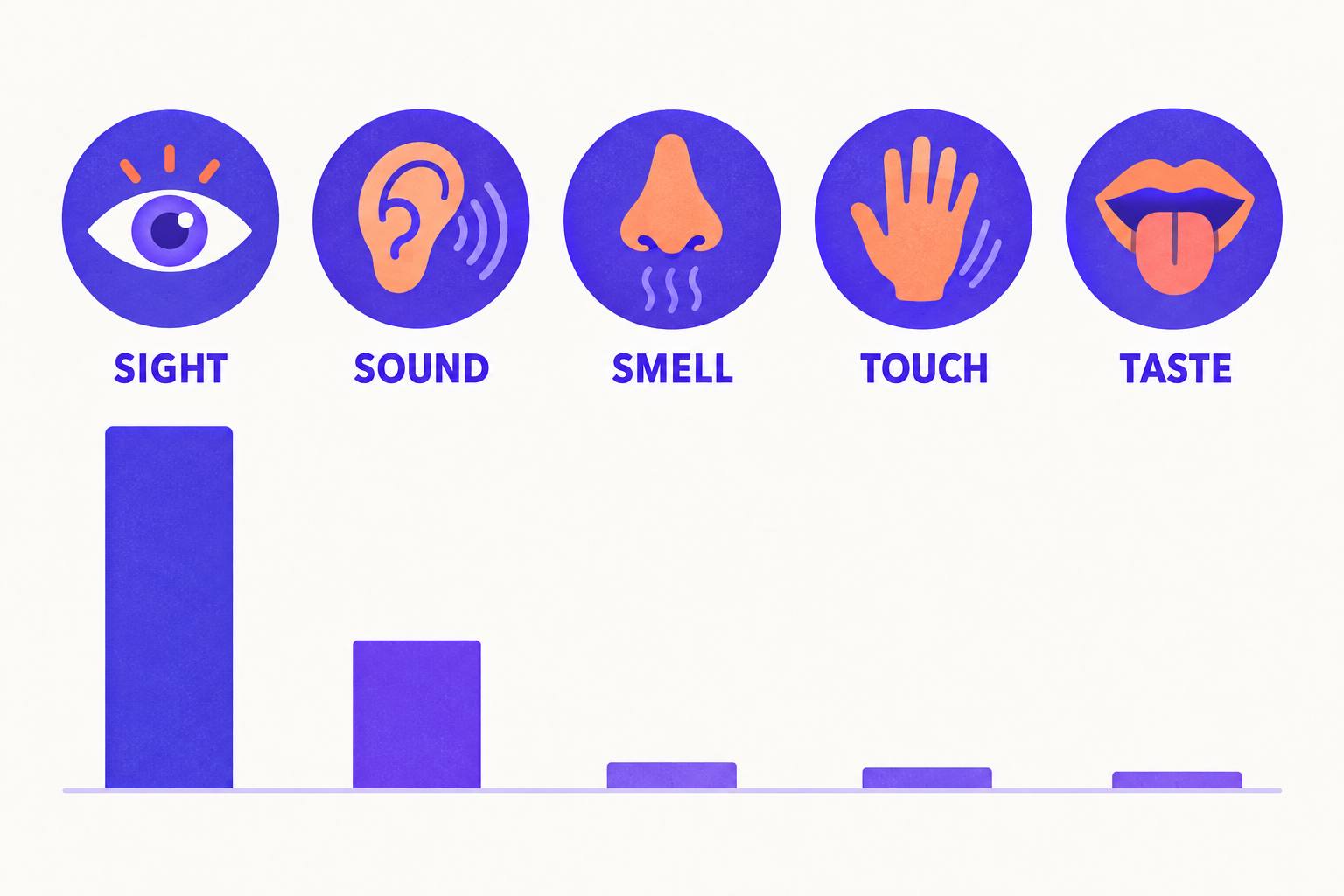
Smell deserves special attention. Unlike the other senses, smell signals reach brain areas tied to emotion and memory, such as the amygdala and hippocampus, without first passing through the thalamus. That is one reason a single well-chosen smell can pull a reader into a memory faster than a paragraph of visual description.
The 1+1+1 method
Listing all five senses in every scene is as bad as using only one. Instead, for each important beat of a scene, choose three details:
1
One dominant sense
The sense the character would notice first in this moment. It sets the mood. In a dark cellar it is sound, at a funeral it may be smell, in a fight it is touch.
+1
One unexpected sense
A detail from a sense readers would not predict here. The taste of pennies during an argument. The smell of oranges in a hospital corridor. It makes the scene specific instead of generic.
+1
One bodily reaction
What the senses do to the character's body: a tight throat, cold hands, a sudden urge to sit down. This is where sensory detail turns into emotion.
Three details per beat is enough. Between beats, let action and dialogue carry the scene.
Sense by sense: weak vs strong
For each sense, the weak version names a category. The strong version gives a specific detail filtered through someone who is there.
Sight
Skip what any room has. Pick the one detail that belongs only to this place, or that only this character would notice.
Weak
The office was messy and old.
Strong
Someone had taped a sticky note over the broken lock: DON'T. The handwriting matched the one on the fridge.
Sound
Use sound for tension and for what happens off the page. The reader cannot see a sound coming.
Weak
It was quiet in the house.
Strong
The house was quiet enough that she could hear the clock in the hall catch on every second tick.
Smell
Name the source, not an adjective. A smell attached to an object is easier to imagine than a smell described as nice or bad.
Weak
The kitchen smelled good.
Strong
The kitchen smelled of onions softening in butter and, under that, the bleach his mother used when she was angry.
Touch
Touch includes temperature, texture, weight and pain. It is the most intimate sense, so use it for closeness and for threat.
Weak
The rope was rough.
Strong
The rope had been wet and dried so many times it bit into her palms like a cheap broom.
Taste
Taste is not only for meals. Fear, exhaustion and anger all have tastes, and readers recognize them instantly.
Weak
The coffee tasted bad.
Strong
The coffee was the burnt kind that had sat on the hotplate since the night shift, and it stayed on his tongue through the whole briefing.
Which senses lead in which scenes
Different scene types call for different senses. Use this table as a starting point, then adjust for your character.
| Scene type | Lead sense | Unexpected sense | Body reaction |
|---|---|---|---|
| Fear and suspense | Sound: small noises, then silence | Smell: something that should not be there | Skin prickling, breath held |
| Grief and loss | Smell: a person's things | Sound: everyday noise that feels wrong | Heaviness, a dry throat |
| Romance and attraction | Touch: warmth, closeness | Taste: something shared | Heat in the face, a pulse in the ears |
| Fights and action | Touch: impact and pain | Taste: blood, dust, metal | Tunnel vision, shaking hands afterward |
| Arriving somewhere new | Sight: one telling detail | Smell: the place's own air | Tired legs, a change in temperature |
For more on suspense specifically, see our horror story writing guide, and for action, our guide to writing fight scenes.
Sense audit: check your own paragraph
Paste a paragraph from your draft. The audit highlights common sensory words and counts them by sense, so you can see at a glance which senses you rely on and which ones are missing.
Five sensory writing mistakes
- 1
Filter words
"She heard the door slam" puts a layer between the reader and the sound. "The door slammed" is closer. Cutting filter words is one of the fastest ways to write tighter prose.
- 2
The inventory list
One sentence per sense, in order, reads like a checklist. Weave details into action instead, and skip the senses that do not matter to this moment.
- 3
Adjectives instead of details
"Delicious", "disgusting" and "beautiful" tell the reader what to feel. A specific detail lets them feel it. This is the sensory side of show, don't tell.
- 4
Too much at once
Stacking modifiers on every noun slows the story and drifts into purple prose. One precise detail beats three decorated ones.
- 5
Senses with no point of view
A detail only counts if this character would notice it right now. A chef walking into a kitchen notices different things from a burglar. Let the senses reveal who is looking.
Worked example: three passes on one paragraph
Here is a short arrival scene revised in three passes using the 1+1+1 method.
Draft
Tom walked into his grandmother's house for the first time since the funeral. Everything looked the same. He felt sad.
Clear, but there is nothing to experience. The emotion is named, not felt.
Pass 1: dominant sense
Tom let himself into his grandmother's house for the first time since the funeral. It still smelled of her: lavender soap and the pipe tobacco she had kept in a tin for twenty years after Grandad stopped needing it.
Smell leads, because grief lives in a person's things. The sadness is now implied.
Pass 2: unexpected sense and body
Tom let himself into his grandmother's house for the first time since the funeral. It still smelled of her: lavender soap and the pipe tobacco she had kept in a tin for twenty years after Grandad stopped needing it. In the kitchen, the radio was still tuned to the shipping forecast, playing to no one. Tom stood in the doorway with the keys biting into his fist and found he could not go any further.
The radio adds an everyday sound that feels wrong. The keys in his fist carry the emotion through his body.
Faster with AI
Draft sensory scenes faster
Once you know which senses a scene needs, AI can help you get a first version down and then refine it.
The free Scene Builder drafts a scene with sensory details built in, which is useful for seeing options before you write your own. For recurring locations, the World Builder helps you develop places so they carry the same sounds, smells and textures every time readers return.
Inside AIWriteBook, ask the chapter AI chat things like "add one smell and one physical reaction to the opening of this scene" or "cut the visual description in half". Each suggestion appears as a diff, and you accept or reject it line by line, so the voice stays yours.
Location sense sheet
Fill one of these in for every location that appears more than once. When you return to the place in a later chapter, you will have consistent, specific details ready.
LOCATION SENSE SHEET
Location:
Whose point of view usually sees it:
Time of day and season it appears in:

SIGHT
The one detail that belongs only to this place:
Light source and quality:

SOUND
Constant background sound:
Sound that means something is wrong:

SMELL
The smell people notice on arrival:
The smell regulars no longer notice:

TOUCH
Temperature:
Texture under hands or feet:

TASTE
What the air or food leaves in the mouth:

EMOTION
What this place makes the POV character feel:
The detail that triggers that feeling:
Five senses in writing FAQ
No. Most scenes need two or three senses, chosen for the moment. Forcing all five into every scene creates the inventory-list problem. Aim for variety across a chapter rather than completeness in every paragraph.
In most drafts it is taste, followed closely by smell and touch. Sight is overused because writers tend to think in pictures.
Name the source rather than a general adjective, compare it to something specific the reader knows, and show how the character reacts to it. Smells tied to objects are much easier for readers to imagine than abstract descriptions.
Sensory detail is the literal information a character perceives. Imagery is broader: it includes figurative language such as metaphor and simile that creates pictures and feelings in the reader's mind. Good imagery is often built from sensory detail.
Yes, and that can be useful. Rich sensory detail slows time, which suits emotional or suspenseful moments. In fast action, keep it to short, sharp details, mostly touch and sound.
Put it into practice
Pick one scene from your current draft. Decide which sense the character would notice first, add one unexpected sense, and give their body one reaction. Then run the paragraph through the audit above and compare.
For more on the craft around this skill, read our guides to descriptive writing, imagery in writing and setting as character, or start from the full How to Write a Book guide.